Pairs well with: pirated space-rum
Traitor-rating: 4/10 knives in the back. Direct rivalry but not too much player interference.

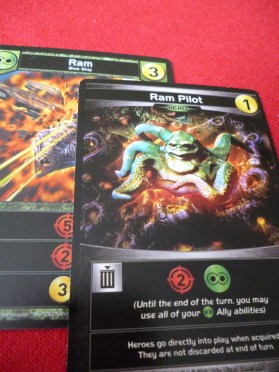
Star Realms works well as a game that you want to play again. In fact, it’s one of those games you’re keen to play again before you’ve even finished the current round. That’s either a point for or against it – you can decide.The game works this miracle by letting you see and plan enough different ways to victory, enough different cards that you want to pick and different strategies you want to use.
Star Realms is a two-player space card game.
There’s a communal pool of five different spaceships and your job is to hire them to do things for you like fight, trade or improve your authority. How do they improve your… authority? We didn’t go to the trouble of looking into it too much, but the little authority symbol on the cards looks fairly harmless, a bit imperial though. We assume the ships carry little flags and sing loyalty songs. That sounds right.

Anyway. The number of ships you can hire depends on how much trade you have to spend that turn. How much trade can you spend that turn? Well, however much trade you’ve amassed from the ships you’ve already bought. And how many of those cards come out in the hand you play this turn.
Yep, it’s also a deck-building game. A lovely, addictive deck-building game.
There are four different kinds of ship – in the basic game, minus expansions, at least – which each come from a different alliance in the galaxy. It’s nice, because each of these card sets also has a different kind of feel to them in the way that they play, as well as just a different name and a different colour. Each kind of ship will play best with certain kinds of tactics, but not in such a strict way that there’s only one good strategy for each set.
Although the farmers of misery spend 90% of their board game lives nerding-it-up with the real-life versions, this is one game where we’re certainly qualified to give a review on the app version as well.
The star realms app is pretty good. It costs money to get anything but the basic version, which is a pretty successful tactic at luring in any unsuspecting gamers (worked on Lizzy!) and, even then, there are a whole bunch of expansions to try to milk even more from you. Luckily, though, there’s still a fair bit to keep you going, particularly for people who like to milk a lot from their games. Each campaign has a number of games for you to win, with some spiel that gets read out by a deep-voiced male who sounds like he’s describing an awful action movie. And each game itself has three achievements for you to keep busy with, and a harder difficulty if that still isn’t enough.

And let’s be fair, nobody here at the blog is beneath giving the app extra credit for having puns in it. Puns that seem specifically designed to just-about avoid copyright trouble. Yeah, we’re looking at you, mission against the Machine Cult called “Rage Against the Cult” and another mission called “The Empire Strikes”.
We gather that not all of the people who read about our humble adventures in farming misery are British. Not even the majority of you, in fact. So instead of just diving straight into a British comedy pop culture reference we’ll have to set it up a little first.
There’s this sketch show we have called The Mitchell and Webb look. In this one scene, Webb and Mitchell are both dressed in war uniforms and making plans on the battlefield. Mitchell’s character looks concerned, and says to his friend;
“Hans… Hans I’ve just noticed something. Have you looked at our caps recently?”
“Our caps?”
“The badges on our caps. Have you looked at them?”
“What? No. A bit.”
“They’ve got skulls on them. Have you noticed that our caps have actually got little pictures of skulls on them? Hans… are we the bad guys?”
Anyway, that’s pretty much what it’s like paying attention to the semblance of plot in the Star Realms app. There’s pretty much fuck all evidence that you’re the good guys. You’re battling for territory, you’re having space fights, you’re showing the enemy who’s boss. But there’s no reason to believe you’re the good guys. No good reason why the space territory is really yours in the first place. At least, none that would hold up in a fair human (and alien) rights court. Someone needs to start talking about the merits of diplomacy, that’s all I’m saying.

Overall, with the app it’s still difficult to resent the way that the app seems to give you a plentiful plethora of content and then slowly reveals the amount of extra bits you’ll need to buy in order to actually play it. Upon first download it looks like you have a wonderful six campaigns to play through, and a whole lifetime of fun ahead of you! Then, one by one, when you actually get round to the next campaign it’ll let you know that you have to buy the full version, the expansion, another expansion.
The app gameplay is good, and it offers a lot that the real life version doesn’t- particularly if you’re sat alone in your room with nobody else to play with. But the app ethics are a little pants.
The real winner is definitely not world peace, let alone space-peace. As usual, the real winner is board games. Over and out.

* Lizzy advises you to be wary of the Star Realms box. She and her ex tore it open when they first got it, to realise that was the only packaging. Whoops. Might be related to why you have a photo of an expansion instead.

 Points are tallied on the kind of number circuit we’re all used to seeing, only this time the counters are adorable, brightly-coloured, wooden bunnies.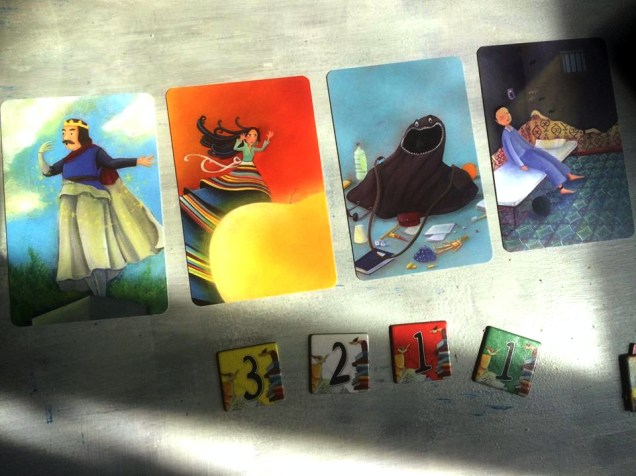




 As we understand it Board in the City has a large collection of games that will gradually be increasing during the first couple of months of its opening. Their page has been publishing some pictures of this as it unfolds. Mmmm, more games, said every board gamer ever. Effectively, the lure to go and play will heighten over time, so basically there is no excuse not to go and check it out.
 Excitingly the venue will be running some special events of their own. But how can they possibly make board gaming with your friends, in comfort, while supporting the community more fun you ask? Well, firstly by running a huge murder mystery game during the opening evening, involving the entire audience which was followed up with some delightful live music by our very own

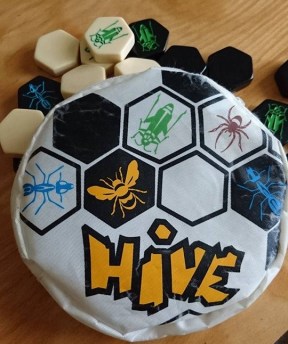
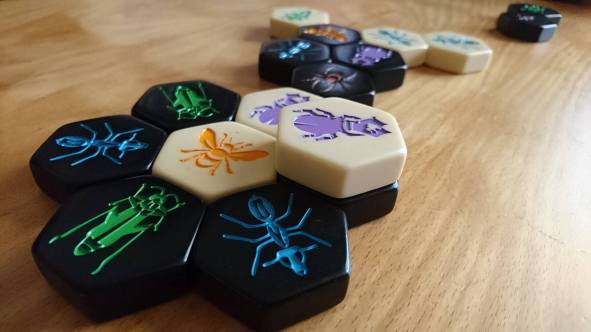


 Bananagrams is probably a game a lot of people have seen while Christmas shopping as it’s sold in a lot of stores that don’t even specialise in games. Usually when we see a game like this we instantly assume it’s terrible – Monopoly and Trivial Pursuit notoriously belong to this same category and have hurt us in the past. Rather amazingly Bananagrams is actually fun. It’s a game very similar to Scrabble where players are given a set number of tiles (usually 21 but depending on number of players) and must make connecting words with them. Unlike Scrabble there is no point scoring system, and instead to win the game you must get rid of all of the tiles in the central pool first. You do this by using all of your hand tiles and then shouting ‘PEEL!’**** Each player will then take an extra tile from the pool and continue trying to form words. For the player who shouted this means that you now have only one letter to get rid of, and fortunately the game allows breaking up and reforming words. The game pitches your intellectual Scrabble ability against that of time pressure and the abilities of the other players. This can be a bit distressing when you think you’re doing really well but it turns out you’ve only been laying two and three letter words, whereas your friend opposite has practically written a novel*****.
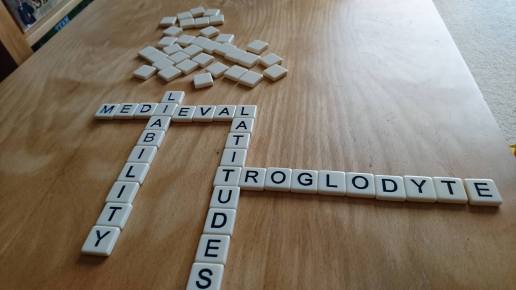


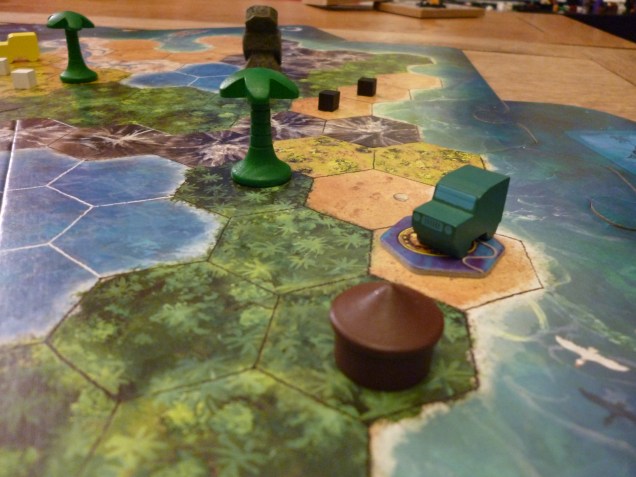
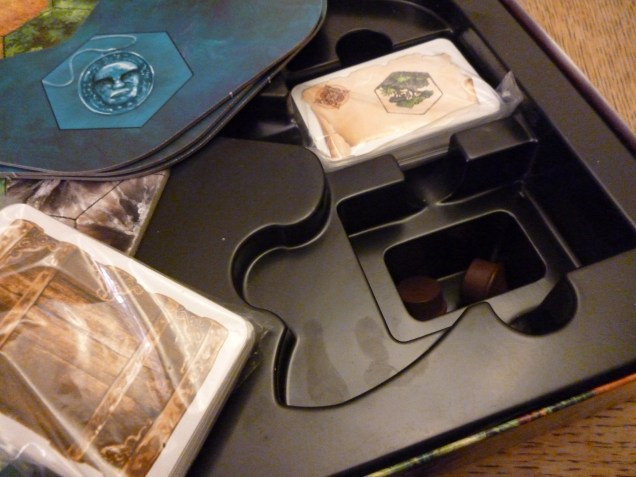
 There are four treasures up for finding at any one time: brown, grey, white, and black. There will be more hidden around the island, ultimately, but presumably you only have enough room for four maps at once, the rest of your pockets being filled with snacks and maybe a board game to pass the time. To find one of these four you will gradually hone in on their location by playing cards which eliminate possible locations until only one remains. The treasure is then dug up and shared out among not only those who dug it up, but also those who contributed to discovering its location (because, of course, researchers share academic credit).
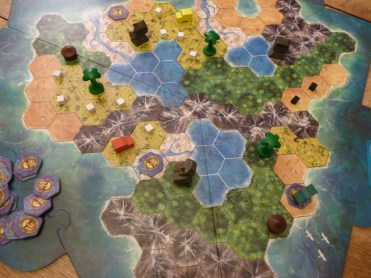 The game doesn’t encourage you to be unhelpful to your expeditions. In fact, it does quite the opposite. Every time you help narrow down the location of a treasure you’ll get a bit more of a share of that treasure. Or, as we call it, “put another finger in the pie”. You’ll want to have your fingers in a variety of pies, particularly earlier in the game, to get yourself a lot of treasures, and the quicker those treasures are found then the quicker you can stick some new fingers into some new pies, you see. Pie treasure for everyone.
 In a startling return to scientific inaccuracy, there’s a chance that the treasure you discover could contain some horrible curses, which can only be protected against with magical amulets or appeased by giving up your greatest treasure (in-game treasure though, obviously. You needn’t be prepared to offer up your firstborn just to play). As soon as a curse comes up then there’s no more of that treasure for anyone, no matter how many of the fingers you had in that pie. That’s why it’s best to not keep all your
 There’s something really satisfying about a game of Tobago. Not just working out locations of treasures, but also the gameplay more generally is rather nice. Those mysterious, giant stone heads that we mentioned at the beginning of the game will spurt out delicious amulets now and again, which make it worth pootling about in your Jeep a little more to collect them. They can enable you to double up some moves and work out some pretty tasty combos, as well as just saving you from the worst effects of the curse cards.

 The cards are a range of colours numbered 1-5. Effectively, what you want to do is put down sets of the same colour, starting with 1 and ending at 5. Simple. Except, you know, that bit where you don’t know what cards you have. Your turns are a battle between putting down your own cards if you think you’ve figured out what they are (or even sometimes if you haven’t! You maverick!) and giving very limited bits of information to one of your team-mates.
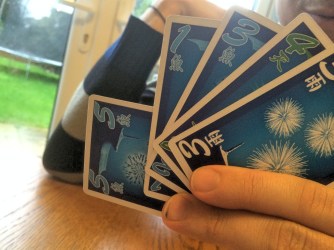


 To make matters worse, the amount of times you’re allowed to give out information is limited by a bunch of clock-faced tokens. When you run out of those tokens then you have to either gamble and play a card, or discard a card to regain a token. As if the pressure of running out of cards and ending the game isn’t bearing down upon you enough already.


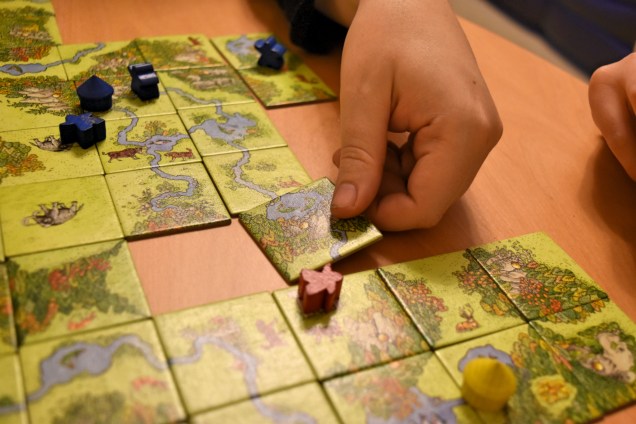
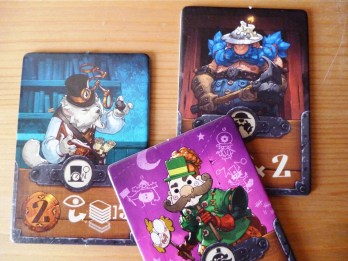

 … Which of course was interrupted when someone knocked over a glass of cider, prompting a chorus of ‘noooooooo’s and scrabbling to save the cardboard bits. This summoned the very lovely barmaid who said that we sounded like a chorus of angels. Aw shucks. Loveliest thing anyone has ever said to us.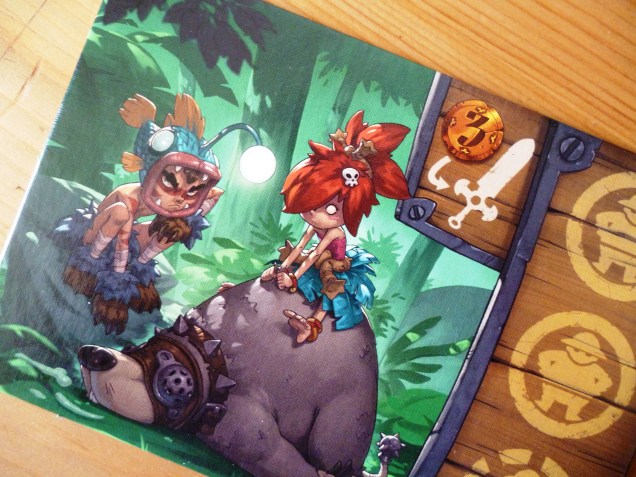
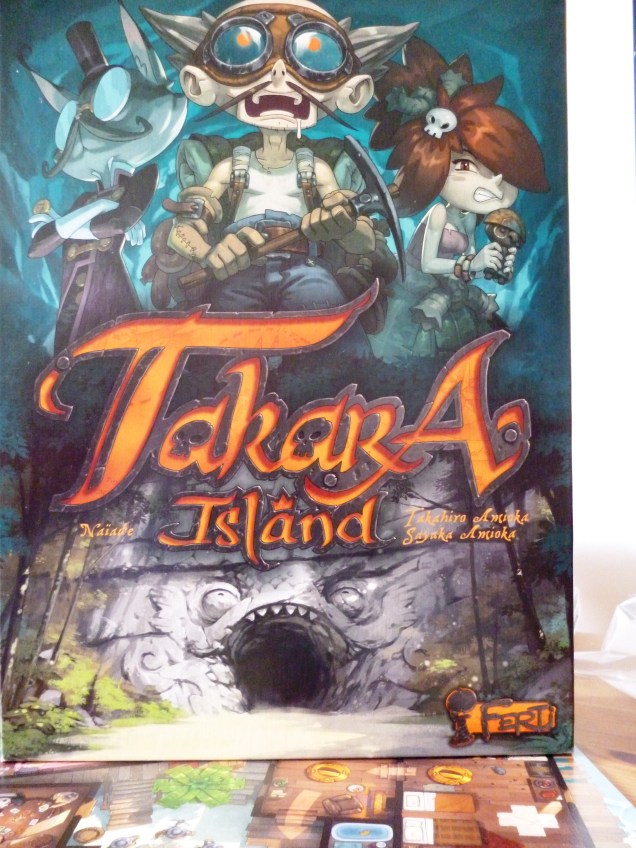
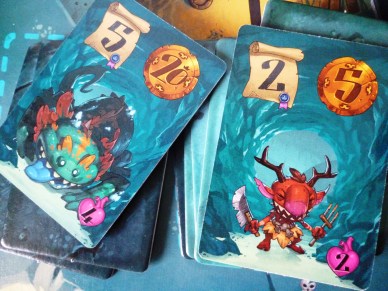 On the other side of the board is the sea, on which are placed six stacks of nine tiles. You must ‘dig’ through these tiles in the search for the fabled Stones of Legend, clearing rockfalls and battling monsters along the way. As you go deeper into the stacks the monsters get tougher but the rewards become greater. Sure you might find a creepy sea-bat-dragon, but you might also find a very valuable glowing-eyed Tiki icon. If you come across a monster while digging it will beat you up and send you to the hospital, causing one of your workers to be out of action for the next turn. Luckily you can also ‘survey’ as an action, which means looking at the top three cards in a stack to figure out if that mess is worth your time.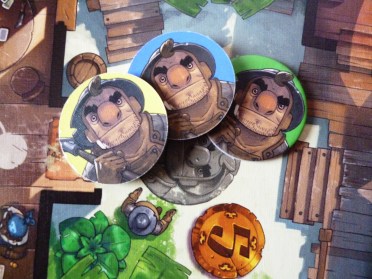
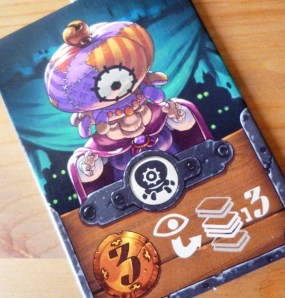


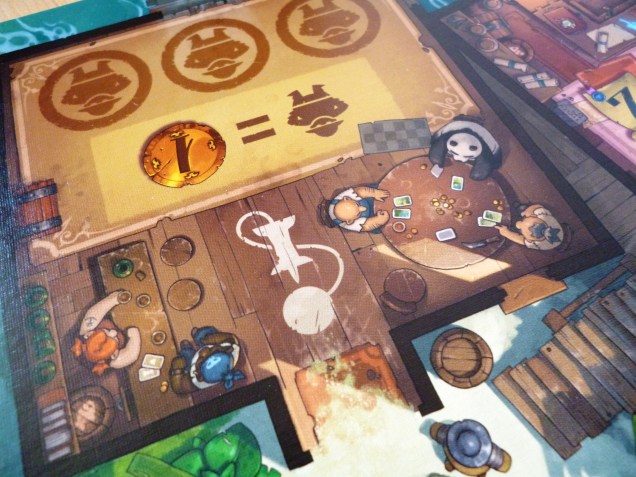


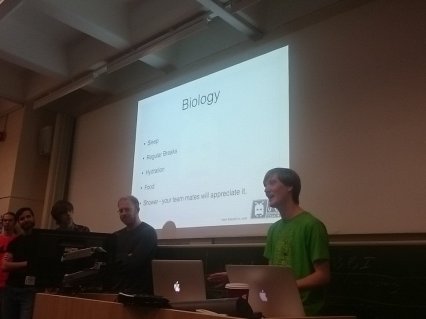


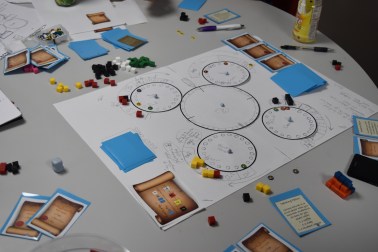
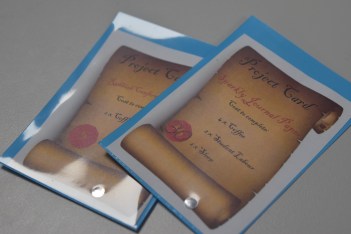 After much tweaking, the first play test actually went well! They came out with a better functioning game (would’ve sucked if it had just got worse) and so they were able to turn their attention to the graphics and other features that needed work. By the end of Saturday evening they had a range of fully written and themed cards ready for use, and had worked out what they wanted the board to end up looking like.

 Misery Farming


