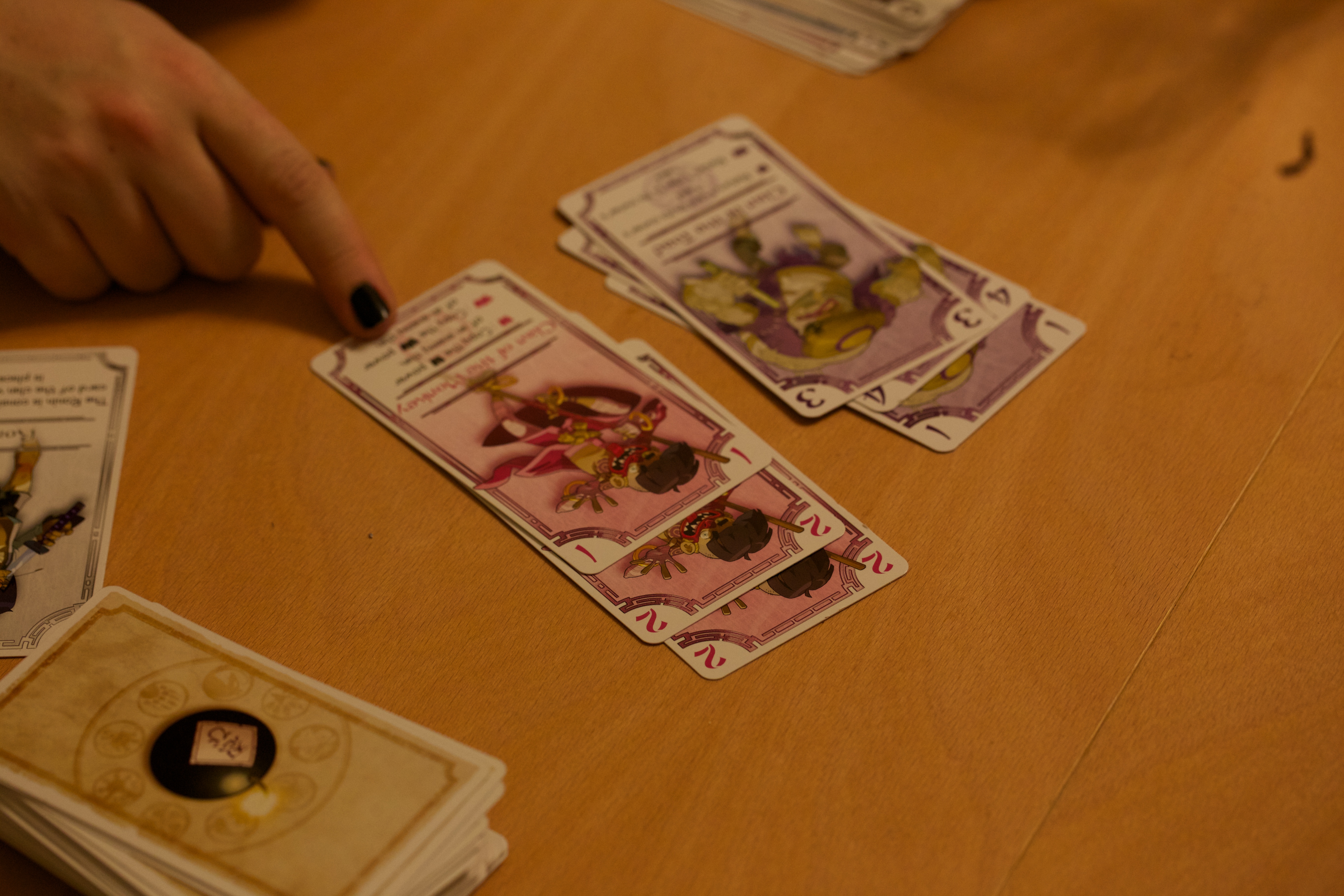
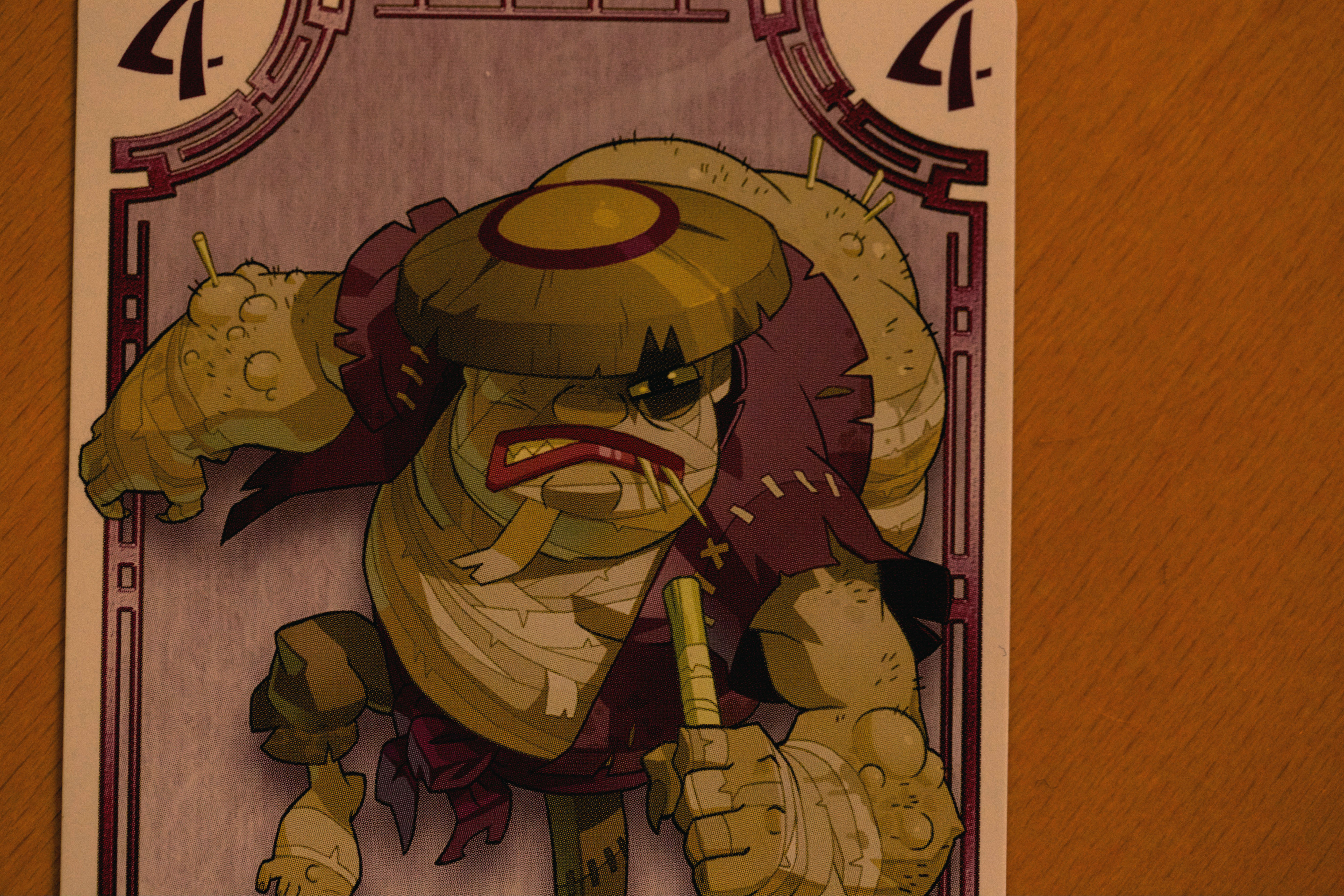
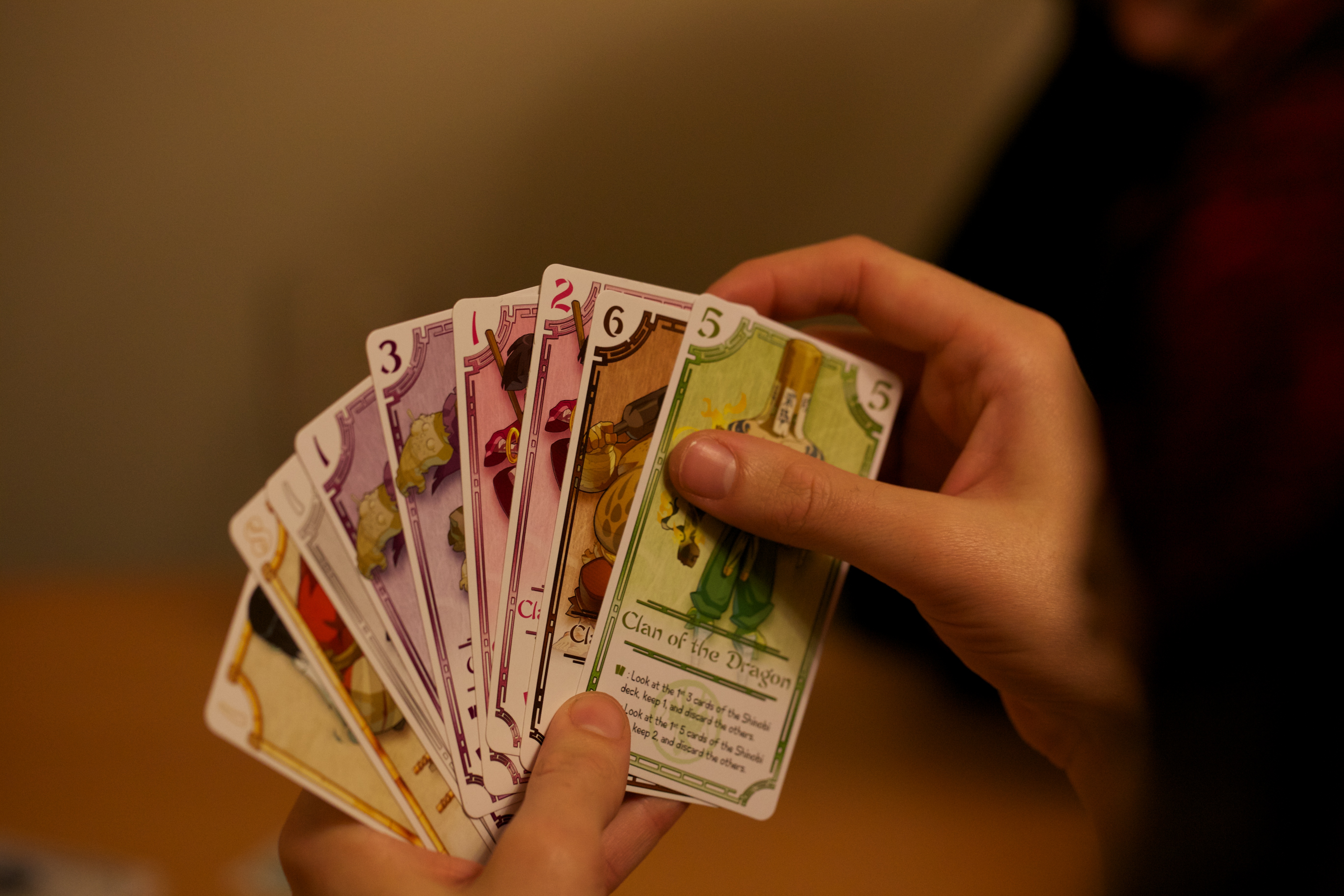
Cthulhu Gloom: The Clue is in the Name

By Bob and Briony

Brutus Rating: 8 out of 10 gruesome daggers in the back
Pairs well with: Port, red wine, some Edgar Allan Poetry.

Cast your minds back to bygone days of yore. Days when still had a deputy Prime Minister to rein in our cartoon-villain overlord, and the horseless carriage was just coming into vogue (wait, no, too far back). The year is 2012, and your misery farming friends have been invited to a wedding. Well, to the reception anyway. Some of us (Bob) arrive way, way too early and have to find creative ways to pass the time while the proper grown-ups do things like ‘say their vows’ and ‘give speeches’. Luckily the wedding is at one of those fancy hotel/castle/stately home affairs with lots of turrets and nooks for exploring. Bob also finds a similarly left-out comrade in the form of former Call of Cthulhu RPG buddy Joss. Joss has a copy of Gloom, and Bob has a bottle of port and a plan.

Image via Atlas Games

You see, here at the Misery Farm we are all about three things:

  1. Misery
  2. Blanket forts.
  3. Board games (obviously).
Just as nature intended.

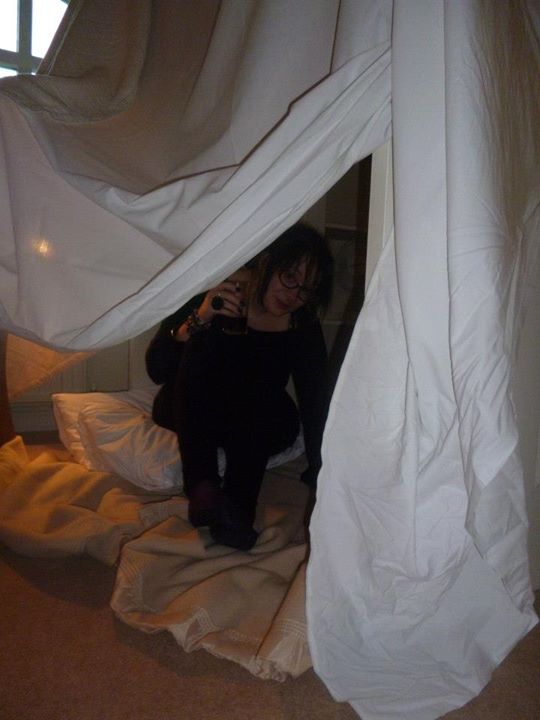
Therefore, it should be obvious that miserable board games in a pillow fort are the best things ever. And hotels, for those of you who don’t know, are prime pillow-fort territory. You simply call up reception and ask for extra pillows and blankets, and before you know it you have yourself a fabulous and comfy little nest – the ideal set-up for a two-player card game. With port.309431_10152381350750317_856648447_n
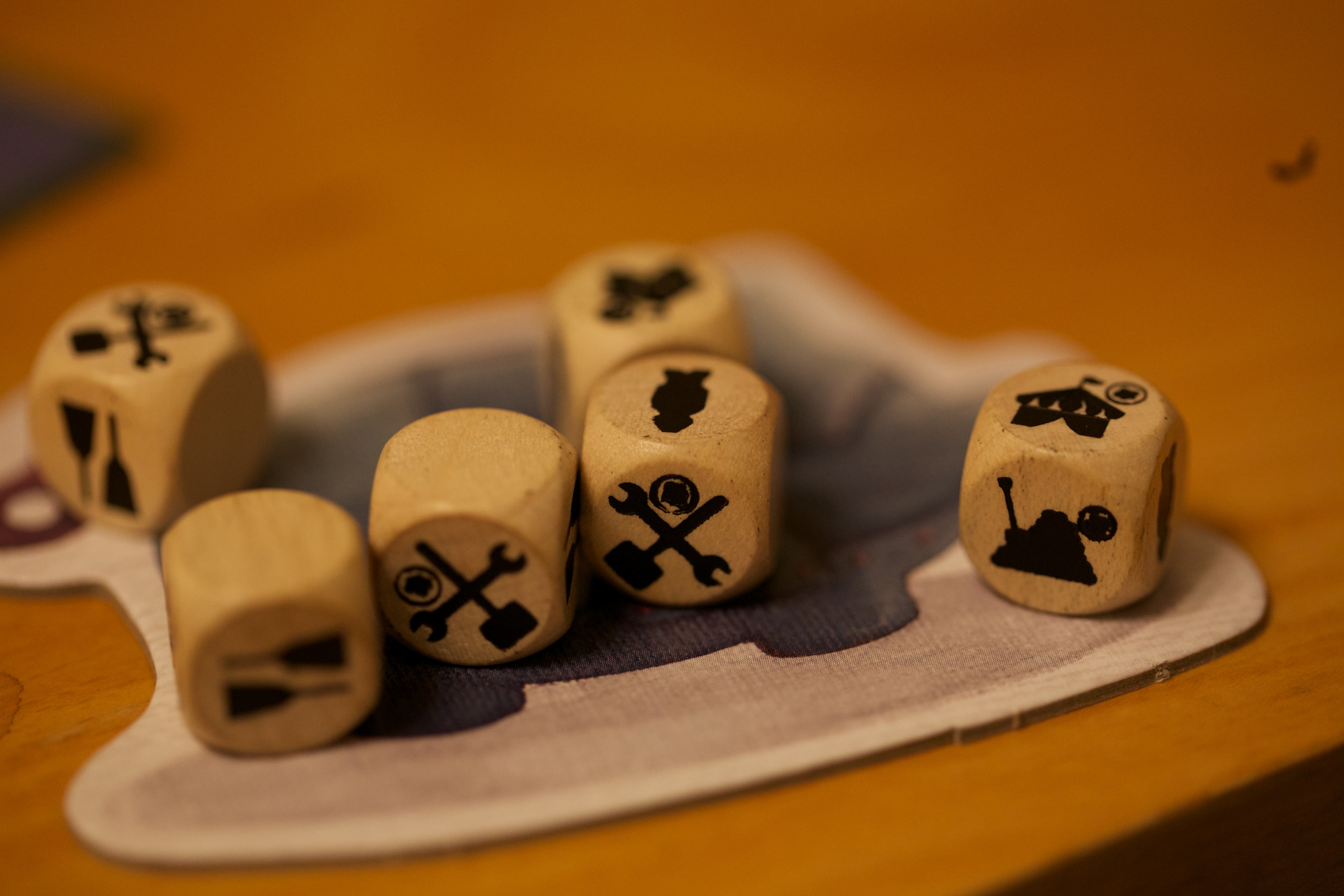
Gloom is simple, cheap, and portable. Cthulhu Gloom is slightly less simple, but just as cheap and portable.*

The card art is appropriately Gorey-esque.

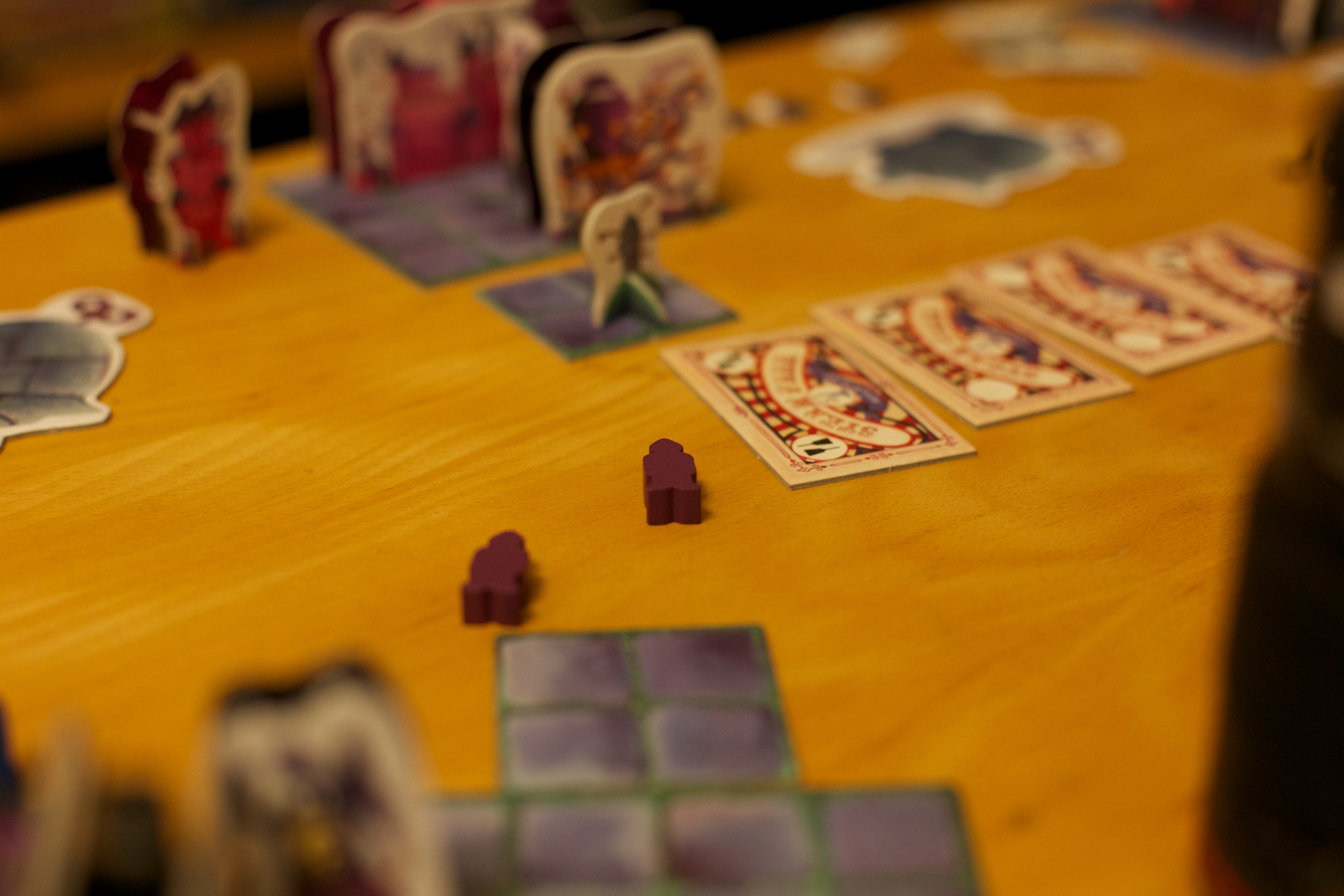
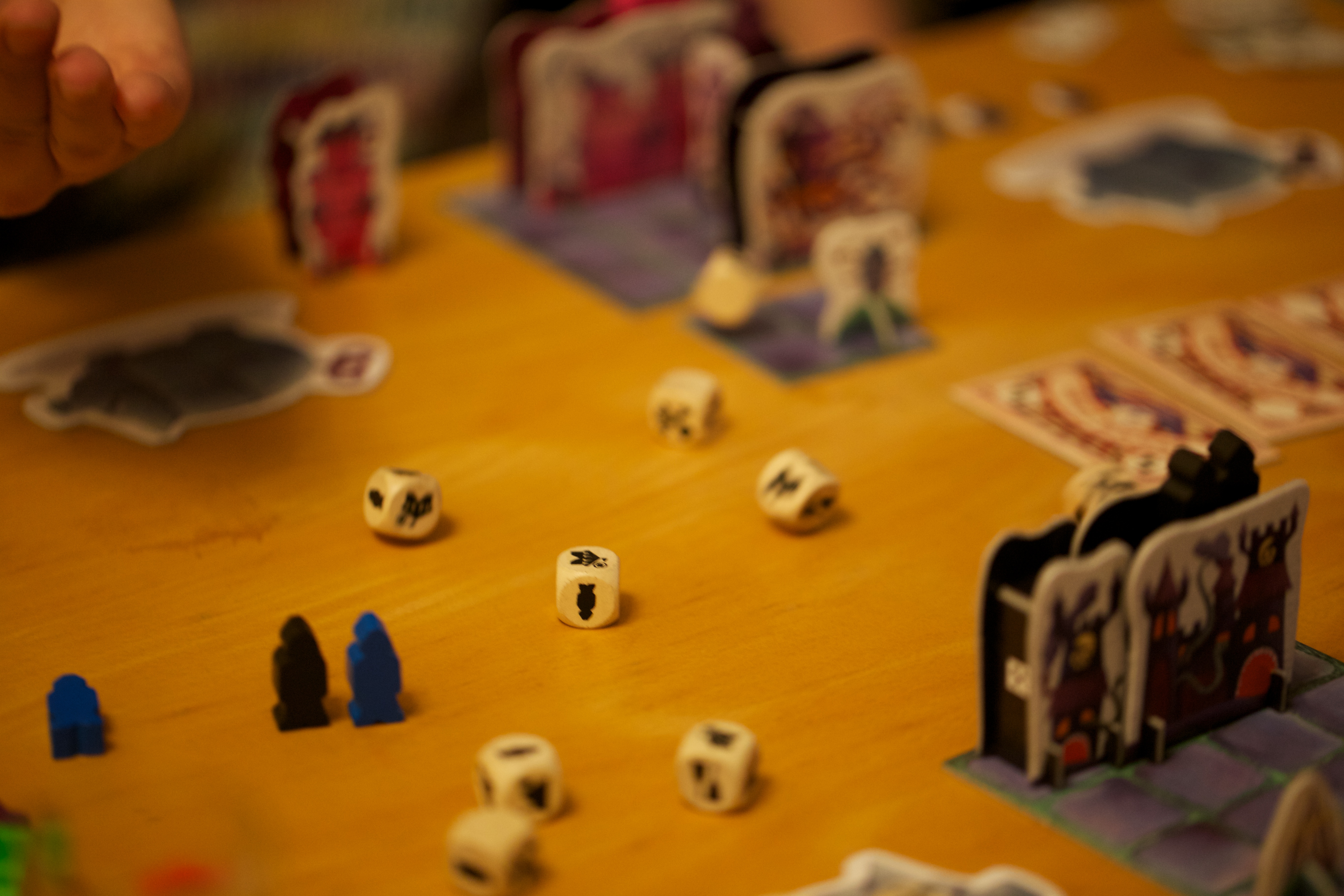
Both games are based on the premise of winning at misery. Each player gets a uniquely melancholic and gloomy card family and the aim of the game is to make them as sad as possible before killing them off. More sad means more points.

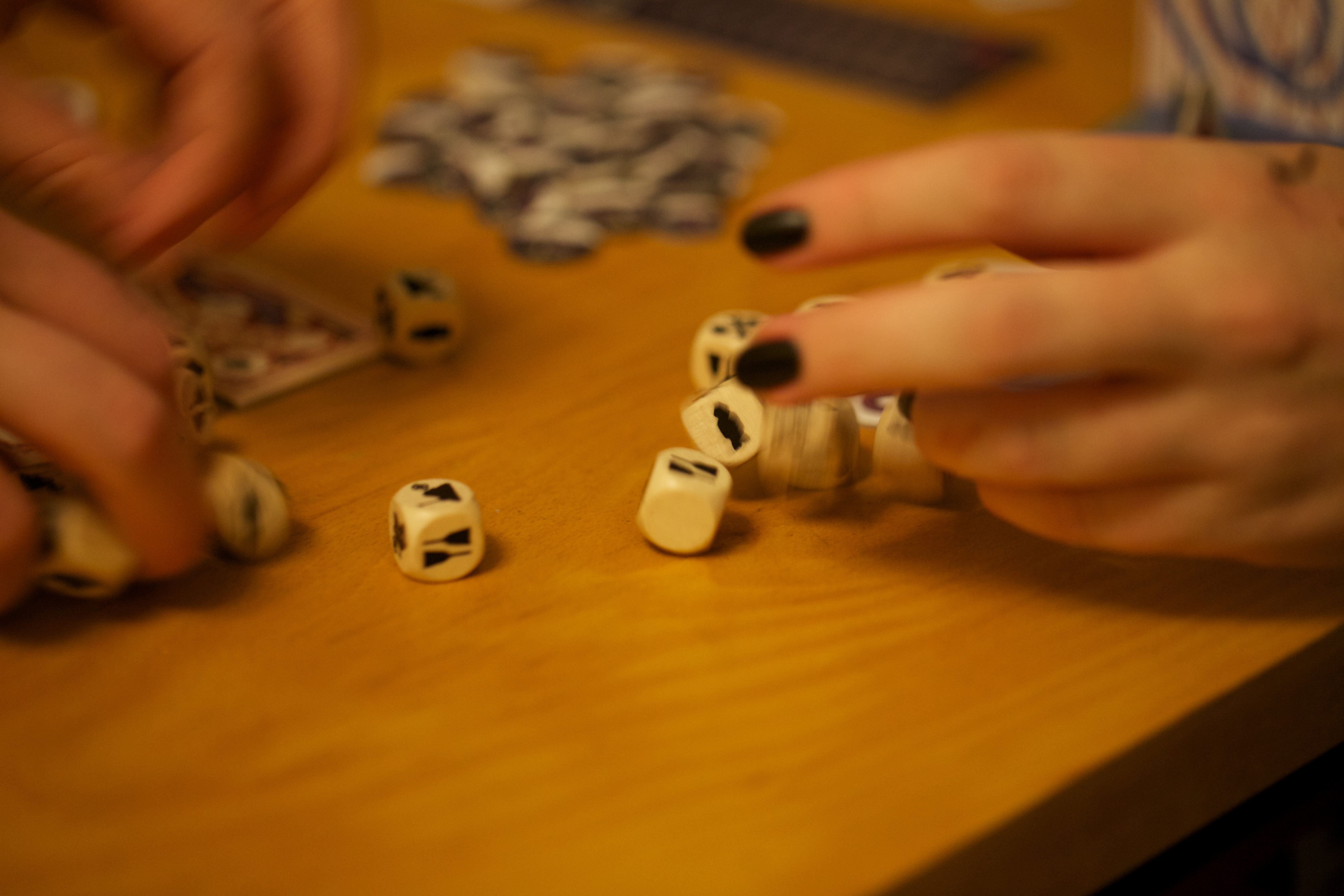
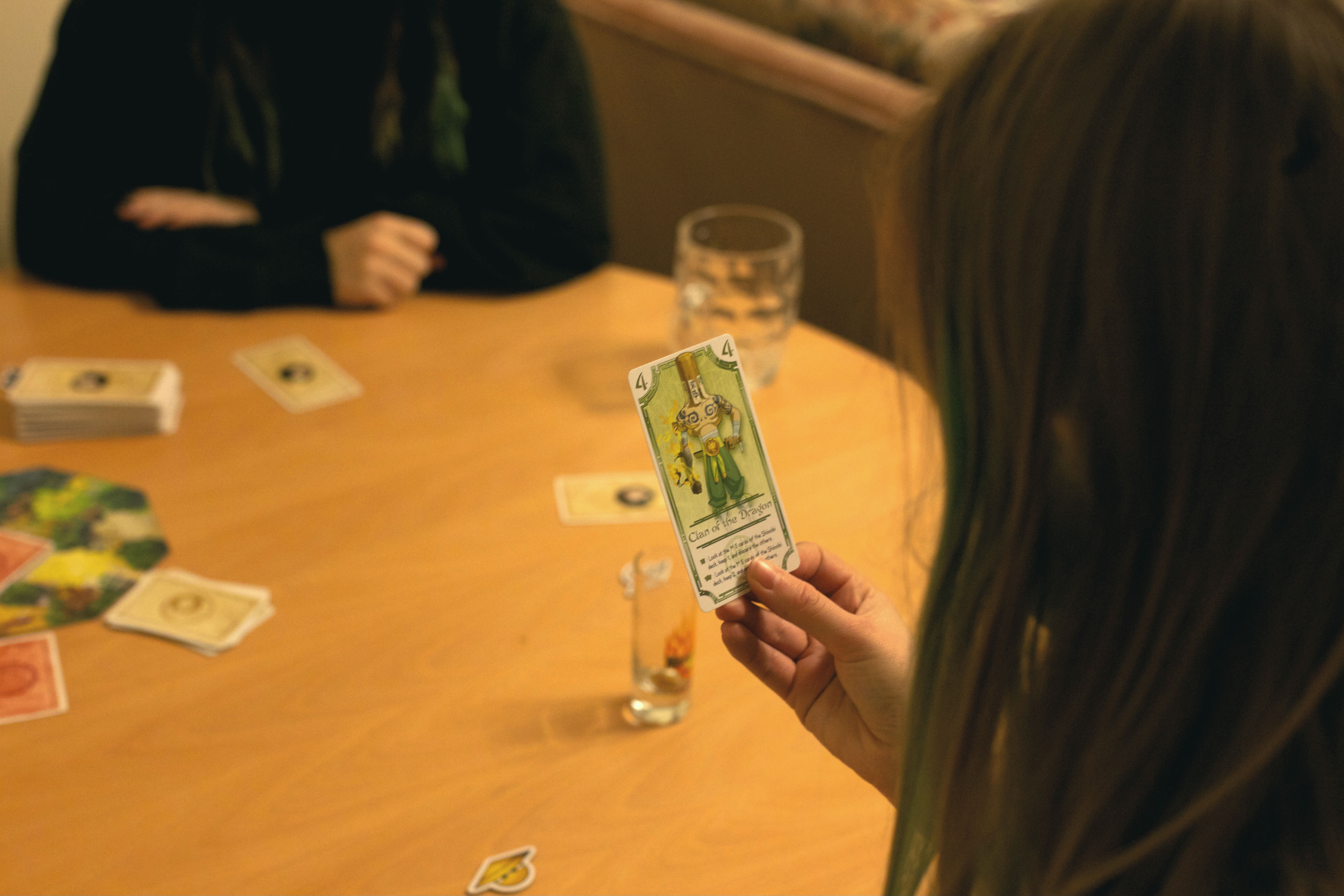
Here’s where it gets interesting. To make your family members miserable (or make other players’ families happy) you play modifier cards on them (see-through plastic, so you can see the modifiers below!), but you must tell a story to explain what happens to make them sad. Luckily there are prompts on the modifier cards so you don’t have to come up with a complete story on your own:

6D-34-97Alas!** Poor Lavinia Whateley, she was travelling a dark forest path, driven in search of she-knew-not-what by dark, insane dreams beyond her comprehension. Suddenly there came before her a clearing, hideously illuminated by the moon, in which she saw mounds and mounds of misshapen mushrooms. And that is how she ‘found some funghi’.’
6D-34-102Then you play the miserable modifier card on poor mad Lavinia and she gets however many negative points it indicates. Once you have deemed a family member to be sad (and therefore point-rich) enough, you kill them off with a ‘sudden death’ card. As soon as a whole family is completely dead the game ends, and you tally your scores. Only dead family members count, so it’s a payoff system between killing them quickly and scoring high. Of course, you can also sabotage other players with some happy points:

6D-34-95
Happy little tentacles.

‘Joy be!*** Lavinia, after her squamous encounters in the dark forest walks through the night and, coming to the edge of the forest, finds before her the incredibly cheerful and fortifying sight of a family campsite. Yes indeed, it was in fact a completely harmless forest in Wales, and a whole host of achingly friendly North-English families are keen to welcome to her to their holiday party. There are breakfast bacon sandwiches and healthy nips of gin all round. And that is how Lavinia came to ‘forget the funghi’.’

6D-34-92
Also pictured: Cthulhu leggings

In Cthulhu Gloom all the family members are based on Lovecraft characters, and modifiers and deaths based on narratives from the stories. Your Whateley family might be minced by Mi-Go or discover a strange new colour. Asenath Waite might finally get revenge on her father, or maybe just show up on your doorstep in the dead of night, dead. Charles Dexter Ward’s infamous cat even makes an appearance, though thankfully with a new name.

When we finally get round to playing it as a blogging cohort it is completely the wrong atmosphere. Late morning on a Sunday and we’re still not quite sure whether what we’re feeling is hangover or just some sleepiness and stress-residue from a busy week of being adults in the competitive world of post-graduate research.****

This mug is inappropriately cheerful for Gloom.

We decide to skip some of the more awkward bits of the rules, mainly because Bob accidentally threw away the rule book and can’t be bothered to find them online. This is not recommended, as the Cthulhu version does have some extensions and changes which means that even seasoned Gloom-players would do well to re-read the rules. There are, for example, full game objectives which will, if fulfilled, add a big pile of misery to your final score. This adds a stealthy strategy element distinctly lacking in the original. Otherwise the expansion mostly just clears up some fuzziness in the original rules like when to play one-off event cards, and how long effects like increased hand-limits last.

Don’t play Gloom, Cthulhu or otherwise, with people who have no imagination. It’s a dire experience as they take so, so long to play the damn card and stop rambling on, and without the stories it can be kind of boring in its simplicity. Do play this game with people who are new to board (card?) games as it’s straightforward and fun but definitely falls into this whole quirky ‘modern age of board games’ era.  Despite the port, this actually doesn’t make a very good two-player game, so we recommend three to four players.

6D-34-147
‘And then they died.’

Bob appropriately wins this game, as she has the darkest lipstick and most morbid outlook. Death to some and misery to all the rest!


* OK it’s not actually that portable. It just looks portable because the cards are clear plastic so you think ‘wow, those are some durable cards, unlikely to suffer any water damage and therefore perfect for pub trips and long car journeys.’ But then you take them to a festival and try to play a game of Gloom in a leaky tent during a sudden rainstorm, but you’re a bit drunk and the tent is full of people and suddenly the cards are sliding around everywhere and you eventually give up on playing but by then you’ve lost a few in amongst the inebriated bodies and sleeping bags. Not that we’re speaking from experience or anything.

** We like shouting ‘alas’ when there’s some fresh woe. Makes the whole thing more dramatic.

*** See ‘alas!’ footnote, previous.

**** Ironically, Bob is actually the furthest-along in her PhD and has spent at least 15 hours this week playing Hearthstone. This was, obviously, a mistake.


Photos by Dr Photographer

Misery Farming on the Road: Misery at Marshals

By Bob, Briony, and Lizzy

Here at the Misery Farm feel like we should encourage our audience to spread your dice and try playing games in some new settings, or even (god forbid) with some new people. In this sporadic mini-series, we take to the wide open road to review board game events all over the world. But mostly in pubs in the south of England.

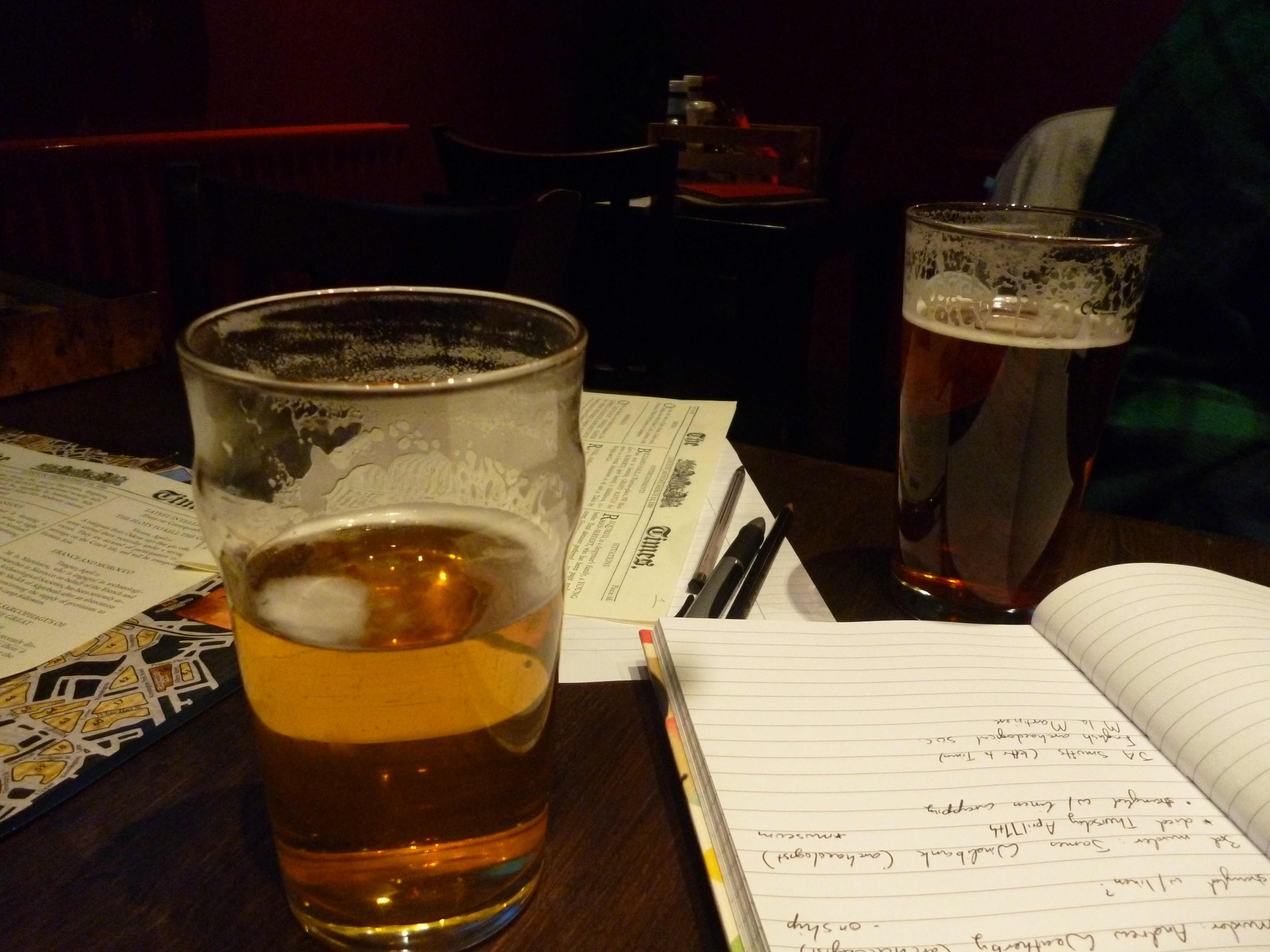
A sick Bob is not a happy Bob. There’s a lot of pissing and moaning and complaining and ignoring good advice. She firmly believes that all you need to get well quickly is a regime of Hot Toddies and vitamin C. So, predictably, when our generic white male gaming buddy Andy invited Bob to Marshals on a chilly Monday night for an evening of board games and Tex-Mex she jumped at the chance. We say ‘jumped’ we mean ‘agreed before really thinking about what this would require’ (leaving the house, dressing like a proper adult, putting on pants). Seeing her hesitation Andy sent Bob the picture on the right and, unable to refuse this level of peer pressure, she blew her nose and made him promise to buy her a beer. For its medicinal properties, obvi.

We’re excited.

Marshals is an American blues sports bar-type place in Southampton which Bob can’t decide if she loves or… eh. Big screen TVs are splashed around the restaurant constantly show worldwide sports channels, but this isn’t terribly annoying as they’re usually set to silent and occasionally show late-night WWF wrestling. The Misery Farm would like to say that they don’t get super excited when the Undertaker shows up, but that would be a lie. A complete and utter lie.

Come to mama!

Marshal’s selection of spirits is frankly, inspiring. Shelves upon shelves of very fine whiskies, bourbons, and rums. They’ve got about 8 flavours of bitters alone. And such cocktails. They’re even perfectly happy to go off-menu or invent you a cocktail based on what you like, though unfortunately they haven’t the cloves on hand to make the tequila Hot Toddy of Bob’s dreams.

As a bonus, most of the male bar staff can all be rated on a scale of Hipster to Pirate. Beards and earrings for all!

Medicine!
Medicine!

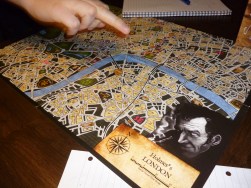
Board games and Tex-Mex is a strange thing to combine. In fact, in many ways it’s the worst-possible combination of food and game. There aren’t many foods that lend themselves to the clean fingers and lack of drip required to keep laminated cardboard in pristine condition (sushi, pretzels, and boiled sweets being notable exceptions). Luckily Bob isn’t particularly precious about the condition of her games and cheerfully gestures for the waitress to plunk enormous plates of nachos unceremoniously among the notes and maps of Sherlock Holmes: Consulting Detective.

P1020661
Nutrionally null but delicious.

Also on offer: medicinal margaritas. The bartender (approximately well-scrubbed Russell Brand on the Hipster-Pirate scale) espouses the virtues of both tequila and lime as cure-alls. Unfortunately he hasn’t factored in Bob’s staggering capabilities for encyclopaedic knowledge about random bullshit. He patiently listens while a twenty-something woman wrapped in a blanket adenoidally tells him about the massively-reduced Vitamin C content of limes compared to lemons, and how the nominative confusion between the two led to the re-emergence of scurvy among such prominent explorers as Scott of the Antarctic in the 19th.  Then he makes a lime margarita anyway because limes taste better than lemons. It’s delicious.


Thus fortified, they turn to the board games portion of the evening in earnest. There are two other groups of board gamers in the bar this evening, but it’s hardly packed to the rafters with nerds. Bob embarrasses the GWMs by bothering a large group to ask what they’re playing (this is something that the Misery Farm has become particularly used to – we enjoy simply appearing whenever a boardgame is being played, like those pretty but useless patterned D10s that everybody’s got at least one of). Eventually Bob is prised away for more Sherlock Holmes: Consulting Detective (our regular hit of addictive self-flagellation) and Shinobi WAT-AAH for its sheer joy.

P1020646
“Leave me alone I’m sick and solving mysteries.”

Sherlock is, as ever, deeply frustrating and intriguing in equal measure. It’s not really a ‘game’ as much as it is a murder mystery which punishes you for needing to read too much of it before figuring out the entire plot and who did the dirty deed. Mr Holmes is always several steps ahead of you and will drop condescending hints, but you can outshine him at detecting by solving side quests. This game has the power to annoy the crap out of you but you’ll still want to play the next case immediately. It is, unfortunately, hard to find, expensive, and translated from French, which leads to masses of typos which are severe enough to cause irritation, if not full in-game confusion (a notable exception being ‘spirit’ mis-spelled as ‘spirbt’ and causing terrible trouble in case five). A stuffy head and snotty nose do not make this game any easier, and we give up unusually early; allowing Sherlock to patronisingly explain the ‘simple’ case to us.

P1020635
Losing graciously to Sherlock.

Shinobi on the other hand is always fun. Contradictory to our official review, Shinobi actually pairs perfectly well with a heady single-malt (nothing peaty or smoky please, Bob doesn’t like drinking old-man-sofa smell). Andy and Mike for some reason bring their C-game so Bob wins each round and, convincingly, the game.

Bob’s not sure how regular of a Miserable event this should be, as it’s not really an ‘event’ as much as it is an evening in a bar. Not that we’re in any way averse to those, it’s just that Marshals is a bit on the pricy side to make a regular haunt. Is it a fun way to spend an evening? Yes. Is it better than ordering Chinese takeaway to your local and playing board games there? Hmmm… But at least Bob got out of the house, and next time, maybe even Briony and Lizzy will venture forth and try new events too.


Images © Cadbury’s, WWF Wrestling, and Marshals Bar (in that order).
Photos © TheMiseryFarm.com


Twilight Imperium: Friendly Space Race

By Bob and Lizzy

Brutus rating: 9 zingy lightsabers in the back out of 10
Pairs Well With: Slurm! Romulan Ale! Anything pumped with sugar and caffeine

Look at this magnificent shit. You know you’re in for some intense game-time when the box art is this expensive and epic.

The story of the Misery Farm and Twilight Imperium begins with Bob and Christmas. Bob spends every Christmas with her family and a number of close family friends (as South Africans the lot of them are constitutionally incapable of negotiating ‘small, quiet’ events). There’s lots of food, wine, dogs, excited children and merriment.

It’s hell.

Initial plans were to go from family home to Reading for new year’s eve with the friendly robot boyfriend (FRB) before looping back round to the blessed isolation and wonderful silence of home in Southampton. Then the kids got an honest-to-god noisemaker as a Christmas present. The electronic kind, which plays loud, tinny jingles and farty sounds at the push of a button. Far from being a form of passive-aggressive punishment inflicted by child-free friends on their parents it turned out that their mum (!) had actually bought this thing (!!) herself (!!!) as a gift for her own kids (!!!!).

Naturally, Bob wanted to leave as soon as humanly possible. Unfortunately there wouldn’t be room for her at the FRB’s house until the late in December, and he had planned an all-day Twilight Imperium 3 game on that day. But there would be a constant supply of tea and biscuits if she was interested. Sold!

She had no idea what she had gotten herself into.

First port of call if you need a game overview is of course the blog Shut Up and Sit Down. If you are living under a rock and are somehow reading this without having heard of them, then know that they are nice young men who combine informative game reviews with a quirky and funny presentation style (so pretty much the opposite of us). Their review of the game as fun, complicated but not arduous, and epic in both scale and style was encouraging, and Bob proceeded to download the rules with a view to getting a rough idea of the components, win conditions, and what a turn generally looks like (the holy trinity of basic game understanding).

Here she hit a snag. Having only recently become the kind of special, habitual nerd who can visualise a game to any sort of degree just from reading the rules, these presented something of a challenge. It wasn’t the length of the rules which intimidated her, nor their complexity, poor structure, or incredible, gasping dryness. It was more that better things to do than reading them seemed to repeatedly crop up. Taking a nap, for example. Eating all the Christmas jelly beans. Re-watching Star Trek, Frozen, and the Muppets Christmas Carol (with all the scary bits fast-forwarded so the kids wouldn’t have to hide behind the sofa). If she weren’t under strict instructions from supervisors to Chill the Fuck Out and Take a Holiday then some work might even possibly have gotten done. Maybe.

This wasn’t entirely unfair, in hindsight. TwImp heralds from an era of Fantasy Flight games (i.e. their entire history) when writing down the rules was considered an unfortunately necessary afterthought to game creation. The amount of text in the FAQs on their website exceeds that of the written rules by a factor of about fifty, and even the super handy-dandy cheat sheet on board game geek (second port of call for the game explorer) is twelve pages of tightly-packed and colour-coded terror. Bob refused to be deterred though, forging bravely ahead. It was either this or another day of confiscating her mum’s 11am gin and being forced to watch a ten-year old play Pokemon Platinum* on their shiny new 3DS**. To some long-term gaming buddies this mission to Read the Damn Rules seemed one step away in terms of desperate foolishness from considering a career in crippling heroin addiction. Eventually even Bob had to admit defeat at page 14, and instead downloaded the TI3 app***.

Game day rolled round with an inauspicious start. Bob arrived late and without all the necessary supplies of crisps, cigarettes and sugary beverages that would make a ten-hour game bearable. Luckily the FRB has excellent friends. Ones complete with mandatory nerdy graphic Tshirts and an exquisite layout of appropriate snacks including Gagh (gummy worms), Slurm (Mountain Dew), and a handy supply of delicious codeine and Marlborough Reds to alleviate the crampy terror brought on by driving. FRB did his part by making Bob two whole cups of tea without complaining more than 6 times.

Delicious caffeinated sugar water.
Delicious caffeinated sugar-water.

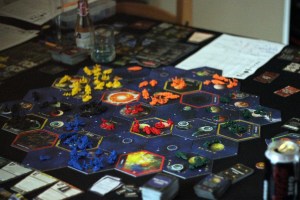
And it only took an hour to set up the game and go over the rules. Briefly: a central planet IMG_0414(Mechatol Rex), the seat of political power in the galaxy now mired in civil war and petty bureaucratic struggles. It is surrounded by planet and space hexes, which generate resources if you invade take them under your wing. You play as a race fighting for dominance according to certain objectives. First to ten victory points wins. You can usually get a point per turn, and a turn takes an hour. No joke.

Okay, so this game. This game, guys. It’s insane. No one playing it for the first time can
possibly have any idea what the hell is going on. Going over every single rule would be exhausting, and remembering them all on the first try is impossible. It’s entirely plausible that everyone was cheating the entire way through but the fact that we were playing with two extra expansions (and therefore a whole bunch of new and expanded rules) meant that no one noticed or really knew what was going on themselves.

Luckily it’s definitely the kind of game that can be played without a fully-fleshed strategy as IMG_0419long as you have a rough overview of what you might want to do on a turn, and there’s someone around the table willing and able to walk you through the fine points. Some things, like spending resources, invading planets, and building technologies and spaceships are very knowledge-dependent, unfortunately, and messing them up can really ruin your turn. Mercifully the sheer size and duration of the game makes it weirdly forgiving until the very last few rounds.

Some parts are refreshingly simple, such as the straightforward dice-rolling ‘pew pew’ of combat. On the other hand some elements, like playing a political action card in order to pass a law in the galactic senate, are almost like bizarre meta/minigames in themselves, as you try to bribe each other for votes while assassinating other players’ delegates. Sometimes, if another player is particularly annoying you with their piractical trading methods or pointed demilitarisation of strategic planets, you can even assassinate them twice*****.

Romulan ale, for when your girlfriend has passed a motion to have you executed by the senate. Again.

The potential for greatness is there (and beginners can do just as well as experienced players with a bit of strategic placement and luck), but it is absolutely exhausting on your first time round. After having your ass solidly kicked across the galaxy by the Winnarian traders you might even swear off it entirely.

But then find yourself thinking, at odd moments, how you could improve your strategy to finally conquer Mechatol Rex and really show those damn space-lions who’s boss.

As you play and get comfortable with the rules (which can take several long, long games) it all starts seriously picking up in terms of mad, bonkers, shooty fun. Despite its enormity the strategic elements are reasonably flexible. Alliances are made and broken based on objectives and the layout of the planet hexes (ah, that nebula of hugs sure looks protective. Wait, guys, why are you launching that dreadnought? Guys…?). You learn the particular skills and weaknesses of your race and start to posture with great big spiny hedgehog death stars war suns.

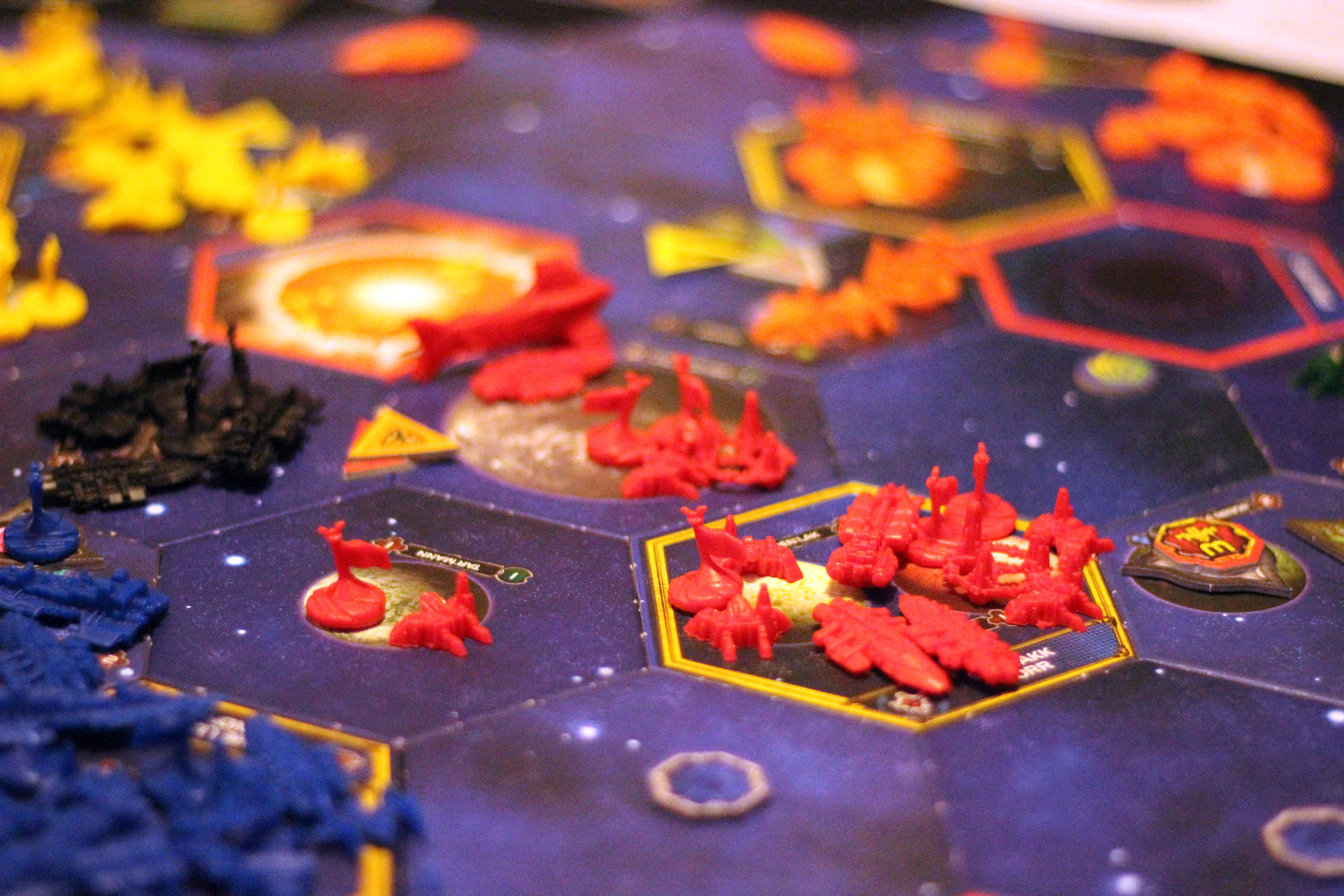
This. This is what posturing looks like.
See that weird little fish-looking guy in the background? Flagship. 'Pointing the wrong way' apparently.
See that weird little fish-looking guy in the background? Flagship. ‘Pointing the wrong way’ apparently.

Bob’s first race comprised spooky space ghosts who love wormholes and for some reason have a super-90s-wildstyle-graffiti-looking symbol/crest thing. They have the unique ability to build an enormous flagship which then acts as a wormhole itself, allowing fleets of warships to pop up all over the map (entertaining but not recommended for beginners). Incidentally the flagship looks an awful lot like a fish with antennae bits all over it. Bob assumed this was to streamline it so that it might effectively fly through the massive friction and air resistance of outer space, but it turned out that she did in fact have the ship flying backwards. Other races include incredibly combative swarms of cockroaches led by a shadowy matriarchy (who for some reason no-one trusts. Damn speciesists), clouds of fungal spores, lion-people with civilisations built on the backs of elephants slowly traversing their desert home-planets, cyborg remnants of the once-ruling race spreading their mindnet low-cost broadband internet through the galaxy.

All that remains of the galaxy after a number of mad alien races have tussled over it.

This game is fun, and mad, but very very long. Set aside a full day for it, and don’t play it without an experienced player to guide you through.


*Sidenote: Pokemon game names are really dumb and not-intuitively chronological. Dem crazy Japans amiright?

**Sidenote 2: This kid wouldn’t let Bob take a turn and had the bloody cheek to tell her that an Umbreon was a kind of Pokemon in a tone of voice usually saved for the hopelessly elderly and out-of-touch. Since being informed that we had in fact had Pokemon when we were kids it’s been non-stop Poketrivia quizzing of seemingly every Pokemon except the original 152. She calls them the Pokemon from ‘back in your day’.

*** More useful than the 12-page cheat sheet**** by a factor of about 300. It helps you keep track of what technology you’re building and are able to build, and keeps an eye on your various battle stats.

**** This is a ridiculous fucking thing anyway. It expects you to print out the pdf on legal paper and then fold and staple it into a booklet. What is this, 1963? It has the potential to be amazing but only if it were turned into a beautiful, easily-navigated hypertext doc. With a fucking contents page and some kind of fucking recognisable structure. One day. In the future.

*****Sorry Chris. That’s what you get for not letting me invade Mechatol Rex.


Photos courtesy of Nick Lanng and Chris MacLennan


Catan: Has anybody got any wood?

Brutus scale: 7/10
Pairs well with: cola and vodka. you know, the stuff you drink when you first start drinking and haven’t acquired much of a refined taste yet. 

6D-33-285

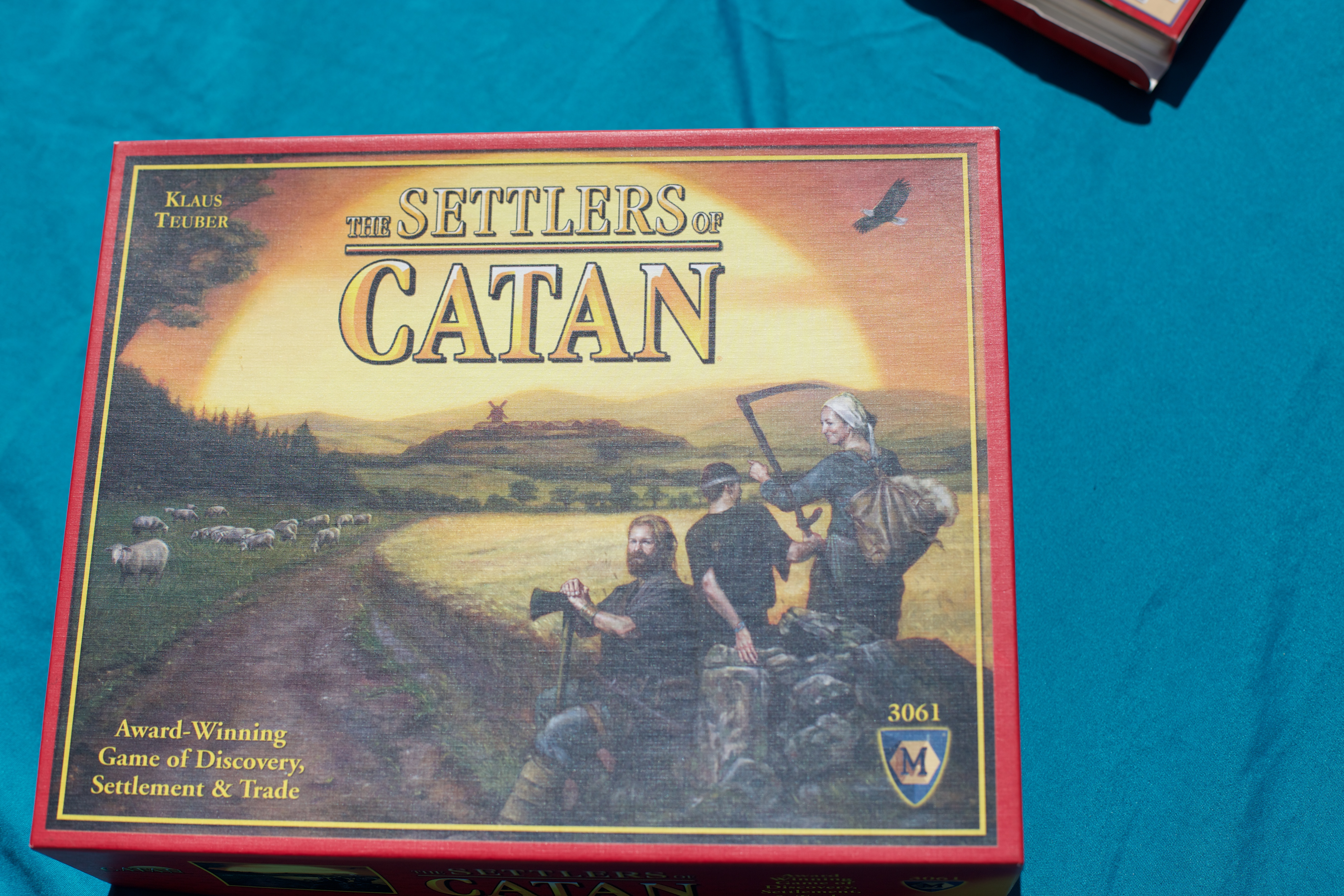
So we’ve just been informed that Settlers of Catan has now actually been renamed to just ‘Catan.’ This is presumably a move to make it ‘catchier’, ‘edgier’, more ‘down with the kids’. It’s also a move that could be described as ‘dumb’ and ‘unnecessary’. All of the expansions are already called ‘Catan: Slightly More Convoluted’ or ‘Catan: Now with Pirates AND Robbers’ or whatever, it just seems a bit redundant.

‘Wanna play some Backgammon?
‘Oh we just call it Gammon, now’,
‘But that’s already a thi-’
‘GAMMON!’

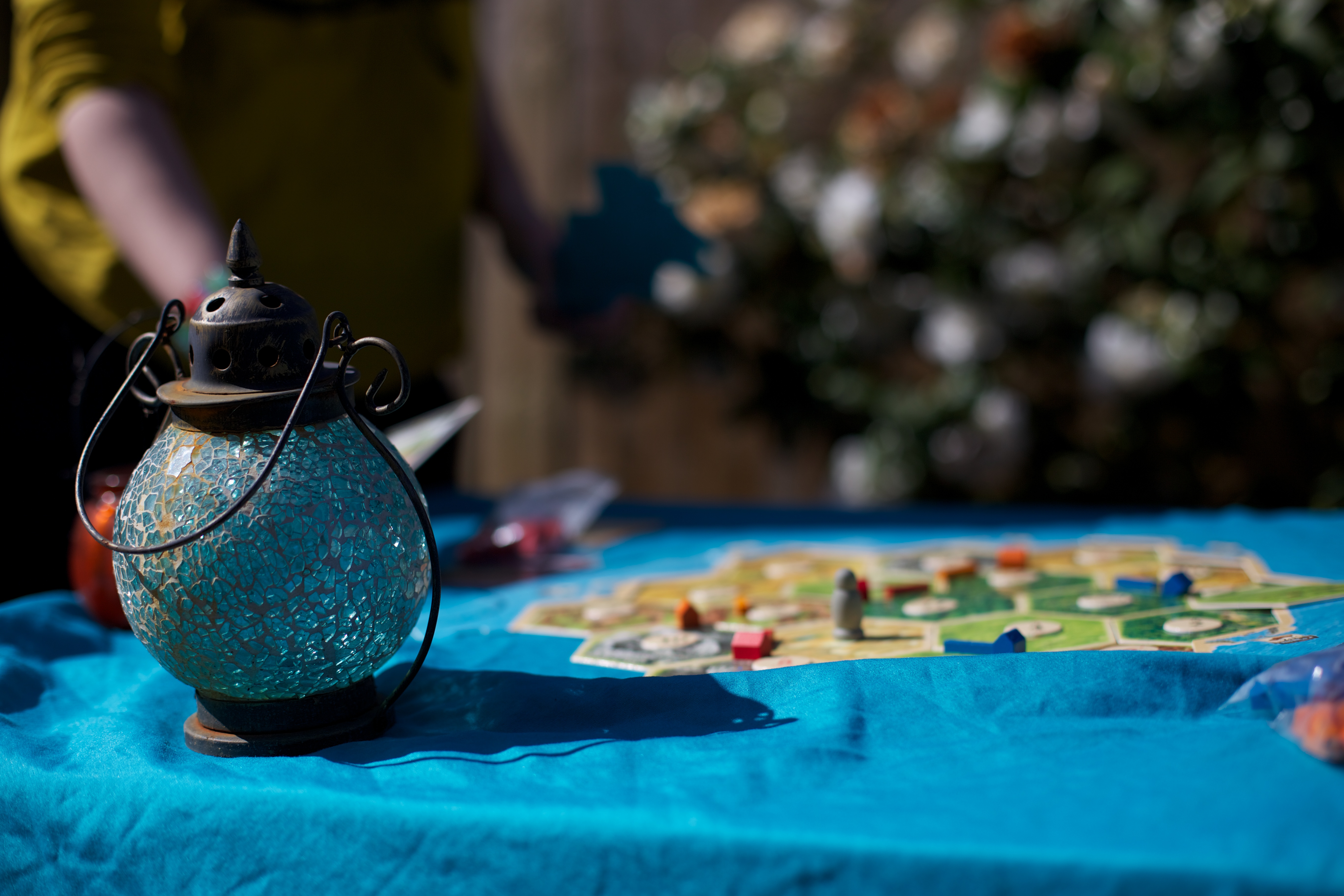
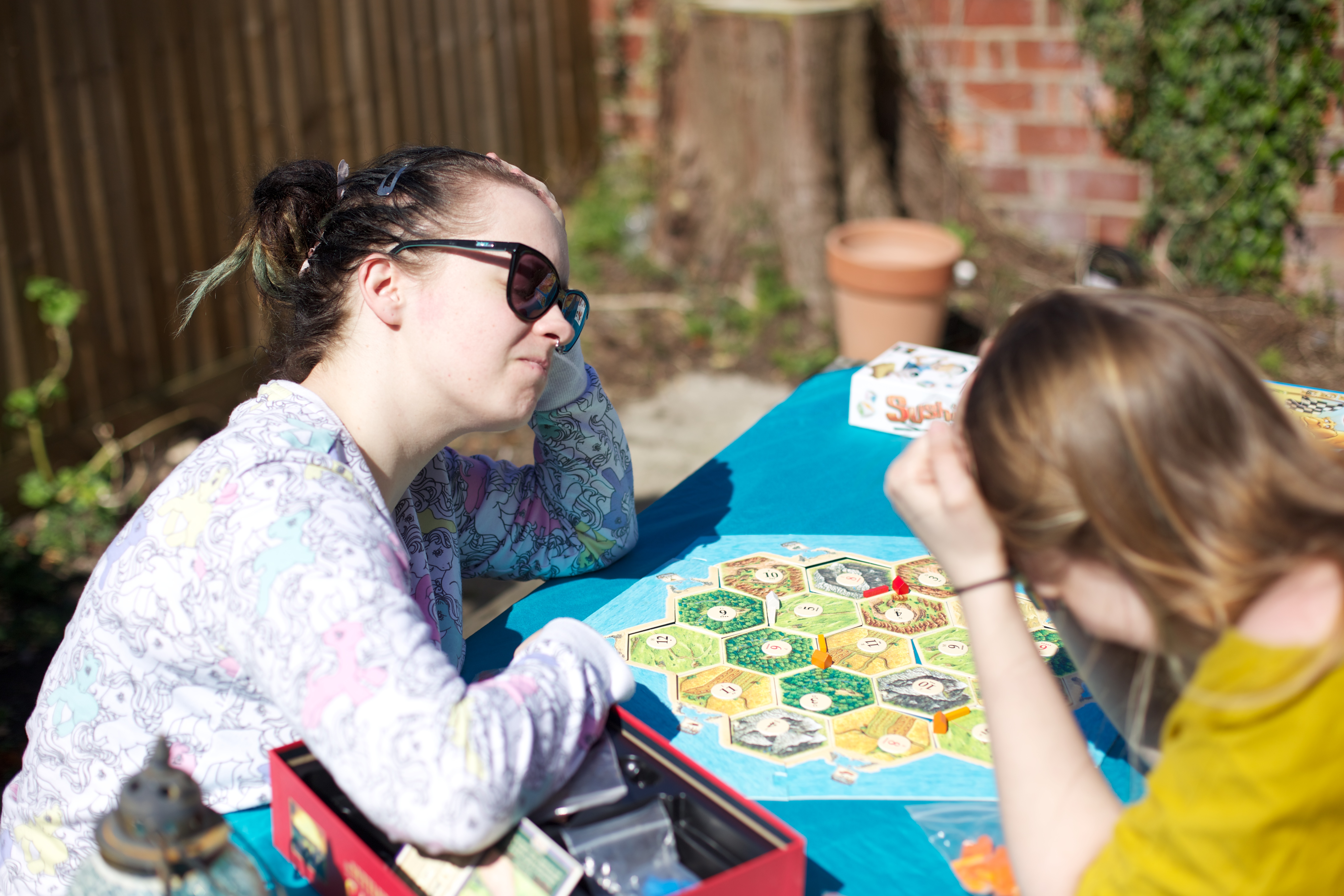
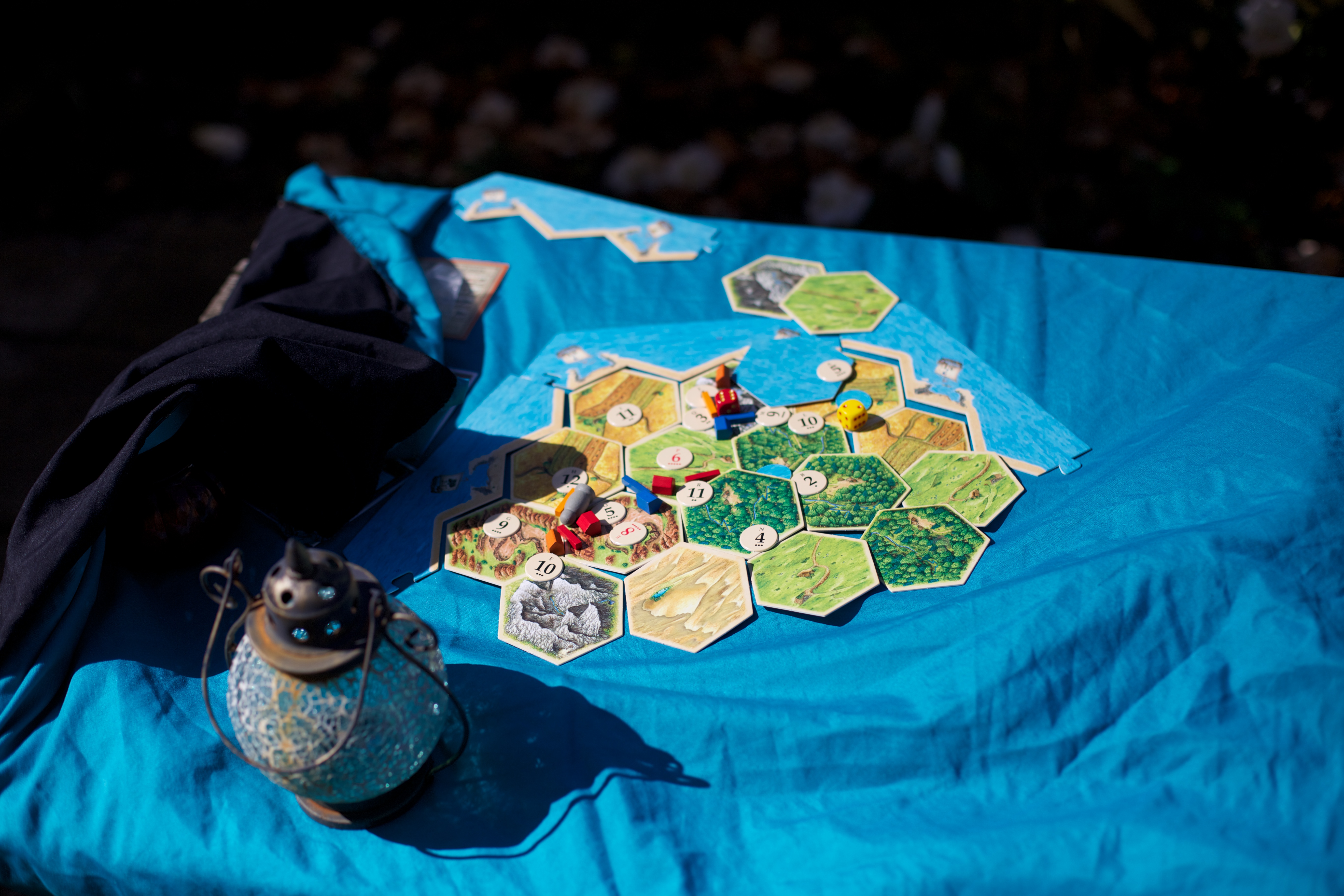
Nice game of Catan in the garden! What could go wrong?

Anyway. Let’s have a show of hands, who hasn’t played Settlers of Catan yet? It’s OK, this is a safe space. There’s no judgement here (except probably from our German readers. Over there I believe it’s as ubiquitous a part of family game shelves as Scrabble or Monopoly in the UK). Until recently, Bob was one of you. In fact she still sort of is. Despite the fact that Catan is THE gateway board game for future board game addicts it just somehow passed her by. There were always newer, flashier games to play, or no one around with a copy handy and a willingness to explain the rules.

Ehehe. Wood, anyone?

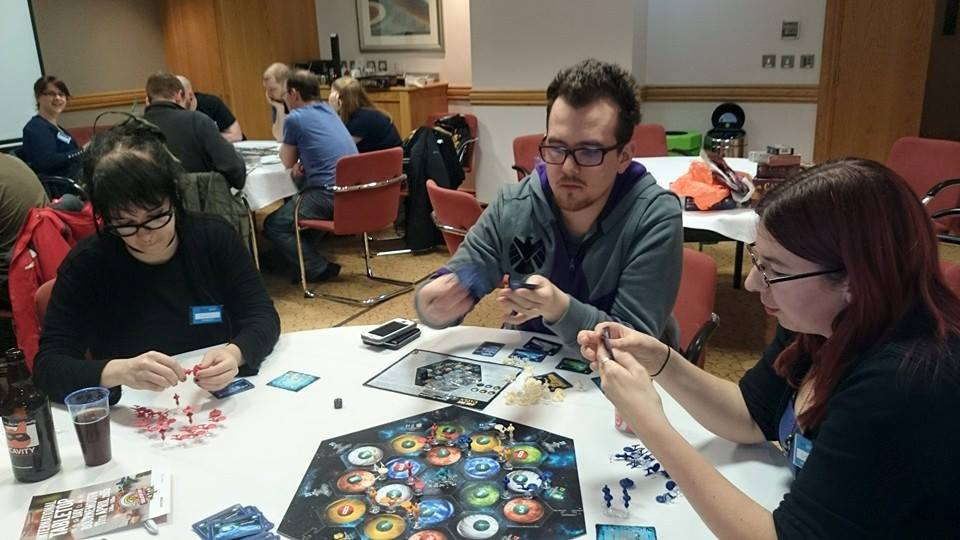
By 2015 this state of affairs had become something of an embarrassment. What kind of board game reviewer hasn’t played Catan? A piss-poor one, that’s what kind. Luckily salvation was on the horizon in the form of a local mini-convention. Lots of friendly local nerds gathered at a hotel to share their (collectively enormous) stash of games, make friends, and carouse until the early hours. When the incredibly friendly and helpful in-house vendor heard of her plight he cheerfully not only conjured a show copy of Star Trek Catan to learn on, but a couple of experienced players at a loose end and willing to teach a newbie. Despite Bob’s ordeal, Briony’s first Catan experience was simply to be told to play it. She then won. Like, by a lot. And since those friends were the only people she knew with a copy, has never been asked back to play it again.

6D-33-269

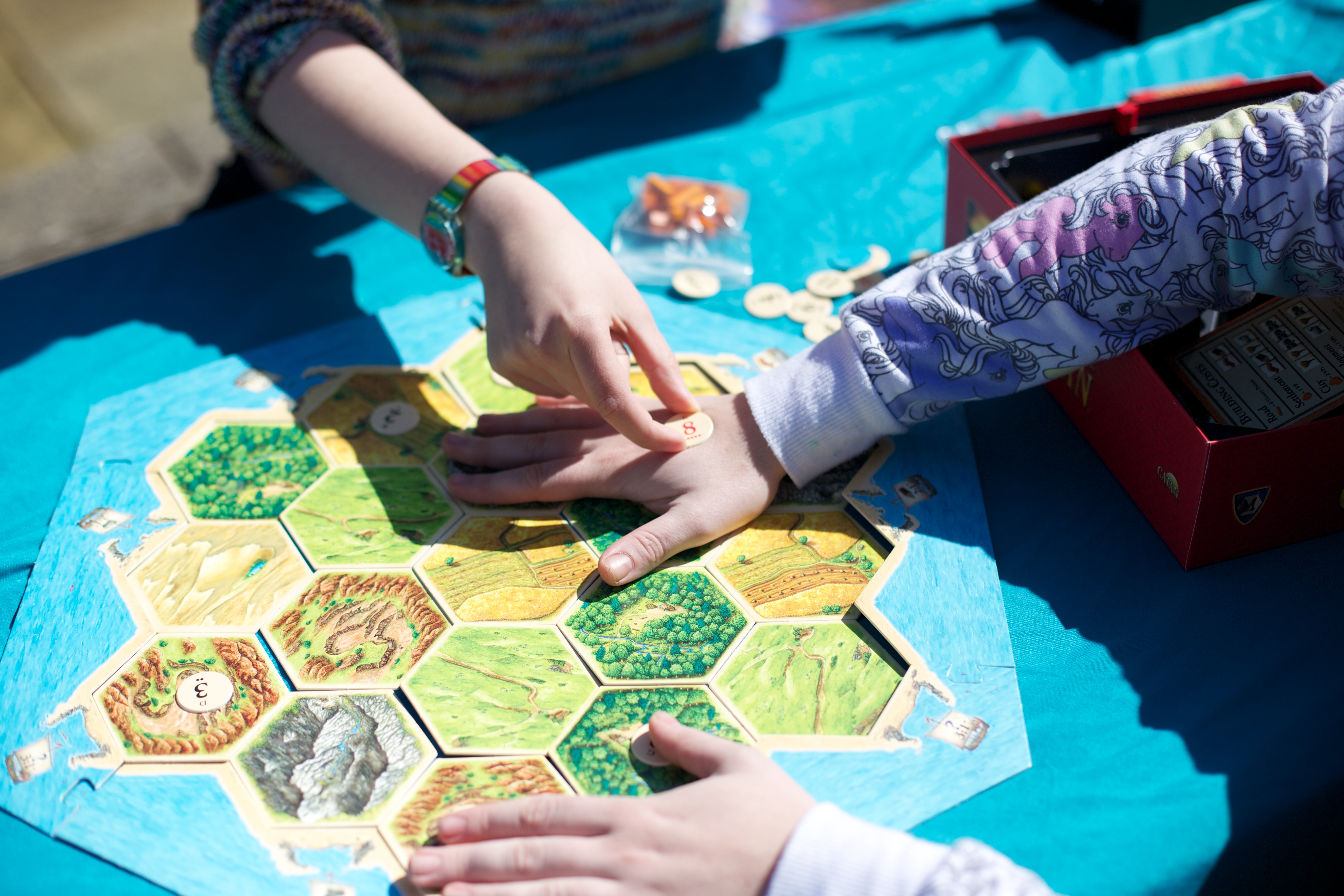
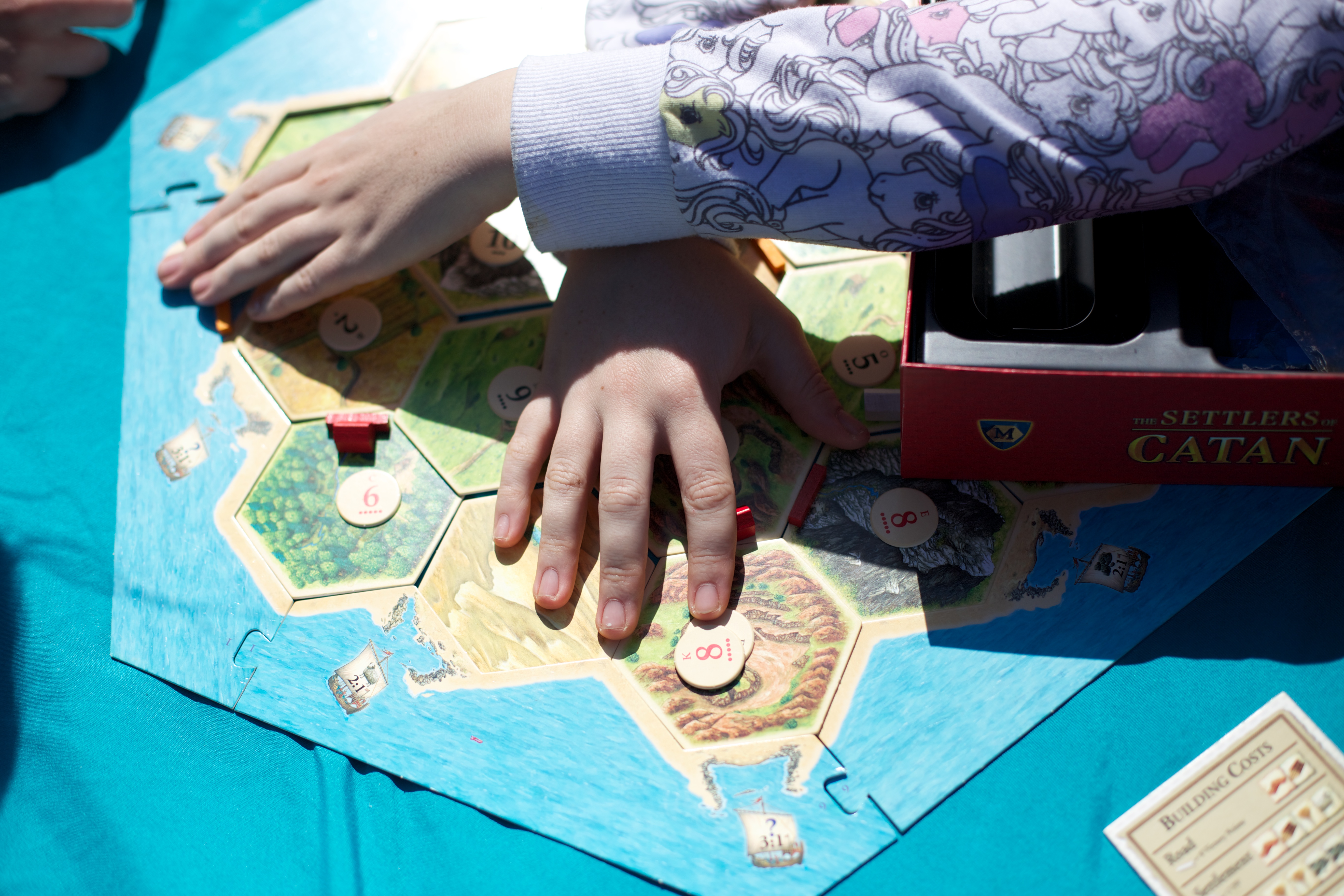
Catan was one of the first European-style agricultural resource management board games to gain mainstream success. In case you have also lived your life under a rock until now, it’s comprised of a randomised modular board made of cardboard hexagons, so no two games are ever identical. The aim of the game is to build towns and cities which generate resources from nearby hexes, depending on dice rolls. Mo towns and cities = mo victory points. Longest road between settlements also = mo victory points. Instead of making your settlements bigger and more numerous you can instead choose to earn points through development cards, which grant favours like extra roads, resources, or knights. Get the most knights in the game, earn some victory points. Get 10 victory points and you win the game.

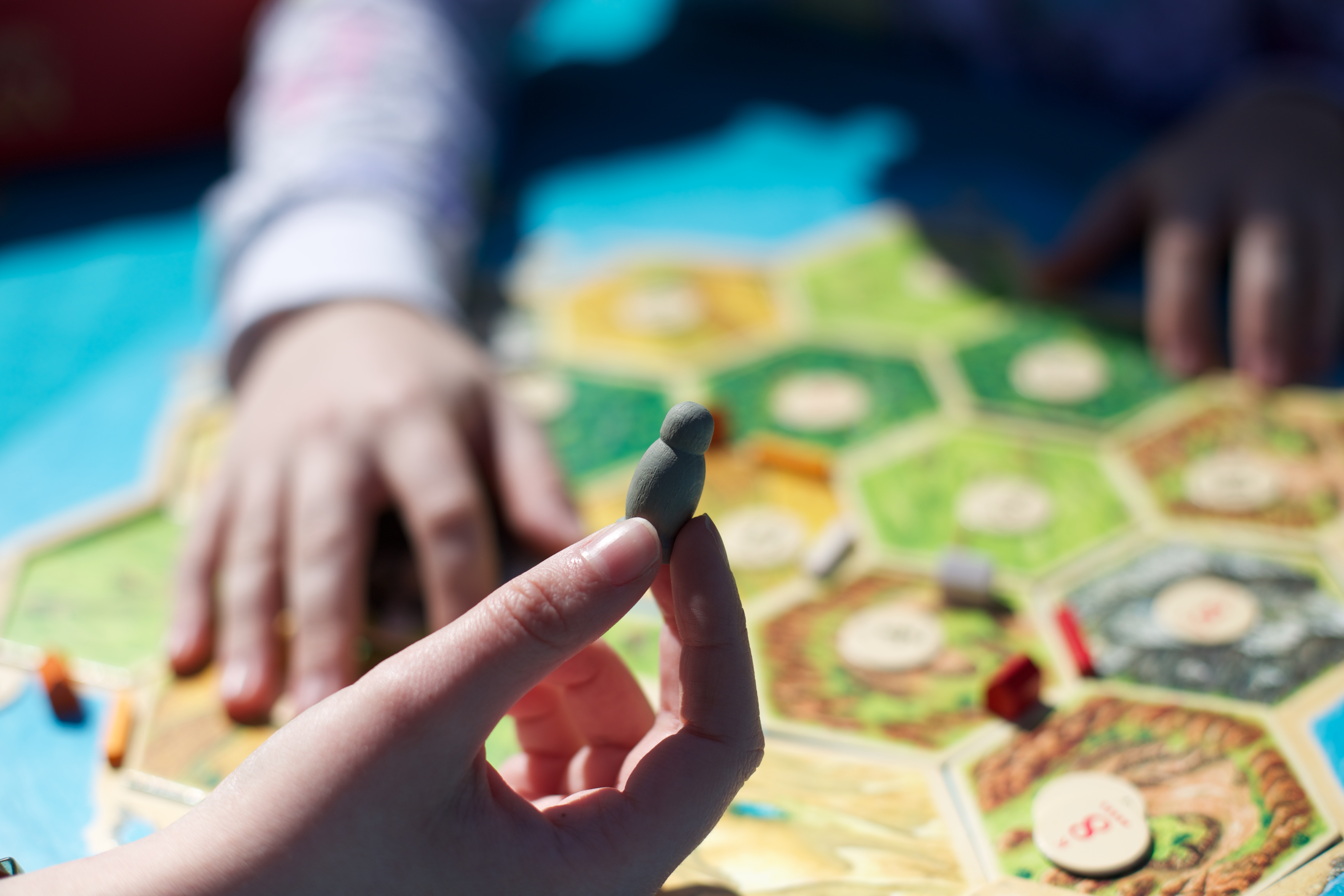
The little grey douchecanoe

There is also a nasty mechanical implement in the Robber. He’s a dick who shows up every time a seven is rolled. Because every player rolls two dice on their turn, he is statistically likely to show up pretty damn often to annoy the crap out of you. His job is to sit on a hex so that it denies you resources, and steal from you.

Star Trek Catan! Credit to  Richard Harris-Abbott for this one
Star Trek Catan! Credit to Richard Harris-Abbott for this one

Star Trek Catan is pretty much regular Catan with a Star Trek: TOS makeover. The robber is a Klingon battle cruiser. The resources are things like dilithium, tritanium, and oxygen. Roads are itty-bitty starships and towns and cities become outposts and starbases respectively. It’s pretty damn adorable. The only real difference is that the ‘Helpers of Catan’ expansion is integrated into the game in the form of Kirk, Spock, etc. showing up to give you a hand.

It is not an easy game to get the hang of right away. While it doesn’t immediately punish you for every mistake, and strategic errors made in the early game can be overcome, this very much depends on the savviness of the other players. There is no open conflict mechanic, but there are definitely ways to stab your fellow settlers right in their puny, exposed backs, enough for a 7/10 on our ‘Brutus Scale’. This game is war. Gentle, cerebral, agricultural, sly road-blocking war. Any fault made in another player’s turn should be harshly punished, while any obvious strategy should be blocked or made unfeasible. Sun Tzu’s wise advice to ‘know your enemy, especially if it’s Lizzy’ is to be heeded here.

Misery Settling
Misery Settling

Success means being able to tally this awareness with an overall strategy based on early settlement placement, as well as being flexible when the fucking dice keep rolling nines and you’ve banked heavily on an ‘eight’ hex. A new player is at a distinct disadvantage. Bob’s first game is marked by banter, desperation, and a pair of dice that refuse to roll anything but a seven. You may think this is an exaggeration, and that in any case sevens are the most likely outcome so it’s not a surprise anyway, but really this was ridiculous.

Argh! A terrible gust of wind devastated the island!

After eight turns which included six sevens someone brought out their freshly bought, unrolled Firefly-licenced dice, reasoning that the stacked dice was probably the reason for this being a show copy. Luckily Momus, the god of irony and mockery, was grinning down and sent another two sevens in a row before letting the players get on with the damn game.

Bob managed to earn four whole victory points, and the winner was a Settlers savant who sat down with no prior knowledge of the game just as the rules were finished being explained and asked to join.

More scenes of destruction

This is not the end of the review, gentle readers. Oh no, Bob had only just whet her appetite for sheep and wheat. Despite a miserable score the potential for fun in Catan was unmistakeable. By sheer coincidence Catan: Creators Edition (the latest Catan ‘videogame’) showed up in the following week’s Humble Bundle along with Ticket to Ride, Smallworld 2, and some other crap that no one cares about. Pennies later, the download was quick and running the game only made Bob’s elderly and increasingly senile laptop fall over and die twice. It includes the original vanilla game, Catan: Seafarers, and Catan: Cities and Knights.

Rebuilding efforts
Rebuilding efforts

In general it’s a faithful but cheap and somewhat nasty port. The rulebook, for example, is dreadful. It has no easily-searchable index, bundles all three versions together in its explanations (confusing as fuck, yo), and is remarkably brief on the details. This is fine if you already know the rules, but not great if you’re trying to find the expanded rules which apply only to Cities and Knights, for example (it looks like there’s a dragon involved? Is that right?).

It does, however, come with some pretty great little game ‘scenarios’, which alter the gameplay to make certain strategies more viable or difficult, and reward you in different ways. There is also a whole gang of computer-generated characters to play against, including knights, mothers superior, craftsmen and nobles. They curse you in different ways when you screw them over by plonking a settlement in front of their longest road, and have a rotation of phrases during their turns. The game also makes a variety of noises to let you know when somethings happening (gained some sheep? Have a sheepy ‘baaa’ noise. Gained some wheat? Have the sound of… uh… some grains? Being scattered? Whatever, they tried.)

Very helpful, Lizzy
Very helpful, Lizzy

Of course the best thing about having a digital version of a board game is that play is much faster, meaning you can play several games in a day instead of doing your PhD research, which all of the misery farmers approve of. Although computers don’t make the same mistakes that humans do, you can definitely begin to identify winning strategies and refine them to work in different situations. ‘Desperate resource-grabbing Bob’ is long gone, having been replaced by ‘longest-road-builder of Catan’ Bob, ‘successful sheep-farmer’ Bob and ‘fuck you and your army I’ve got a monopoly on the supply of wheat so good luck building a city’ Bob. Lizzy better watch her back, harbourmaster Bob’s a-coming.

6D-33-282

Lizzy is tempted to counter that the game is actually a lot better as an app, after you’ve played it your first few times and have been gently welcomed into the gaming world. But that may be because there’s just too much opportunity to ruin each other’s game. If, for example, you’ve earned a reputation as someone who’s ruthless and always wins games, then nobody will ever trade with you. Ever. Even if you’re desperate. Even if they’re desperate. At least the AI on Lizzy’s phone won’t bully her quite that badly.

Hold onto the island! The gentle breeze is back!

Bob is very enthusiastic about Catan. It’s a bit like watching a grown adult who’s never eaten peanut butter before try it, go mad, and refuse to eat anything else for three weeks straight. Suddenly a whole new world has opened up to her, and she tries to tell all of her friends about it, but all of her friends already know about peanut butter. It’s actually quite surprising that she’s eaten five jars of it in a row and neither thrown up yet (metaphorically) nor gotten bored of it.

Soon she’ll realise that peanut butter involves far too much dice-rolling, luck and reliance on other players. Until then, we’ll have to cope with playing more Catan than is healthy. (Are you sure you wouldn’t like a nice game of Caylus? Bob?)

Even this bearded dragon has played the game too much

Briony has only played Catan several times, and unlike Bob has not gotten hooked. Any board game that has memes about sheep trading are way too cool for her, and she prefers to instead to engage with these types of games by turning up, ignoring the rules, being mysteriously silent and then thrashing anyone else without batting an eye. The good thing about this strategy is that you can get away with doing it once, and claiming that it happens as consecutive times. But, she supposes, at least Catan is a good way for normal people to be swayed to the way of the board game nerd.

Credit for the incredibly sunshiney photographs go to Dr Photographer-Friend. Credit for the photographs, that is, not for the sunshine. He hates the sunshine. And happiness.

Caylus: Is that a lot of rules or are you just pleased to see me?

By Briony, Lizzy and Bob.

Brutus rating: 6 knives in the back out of 10
Pairs well with: The best French wine that £4 can buy and a crushing sense of defeat.

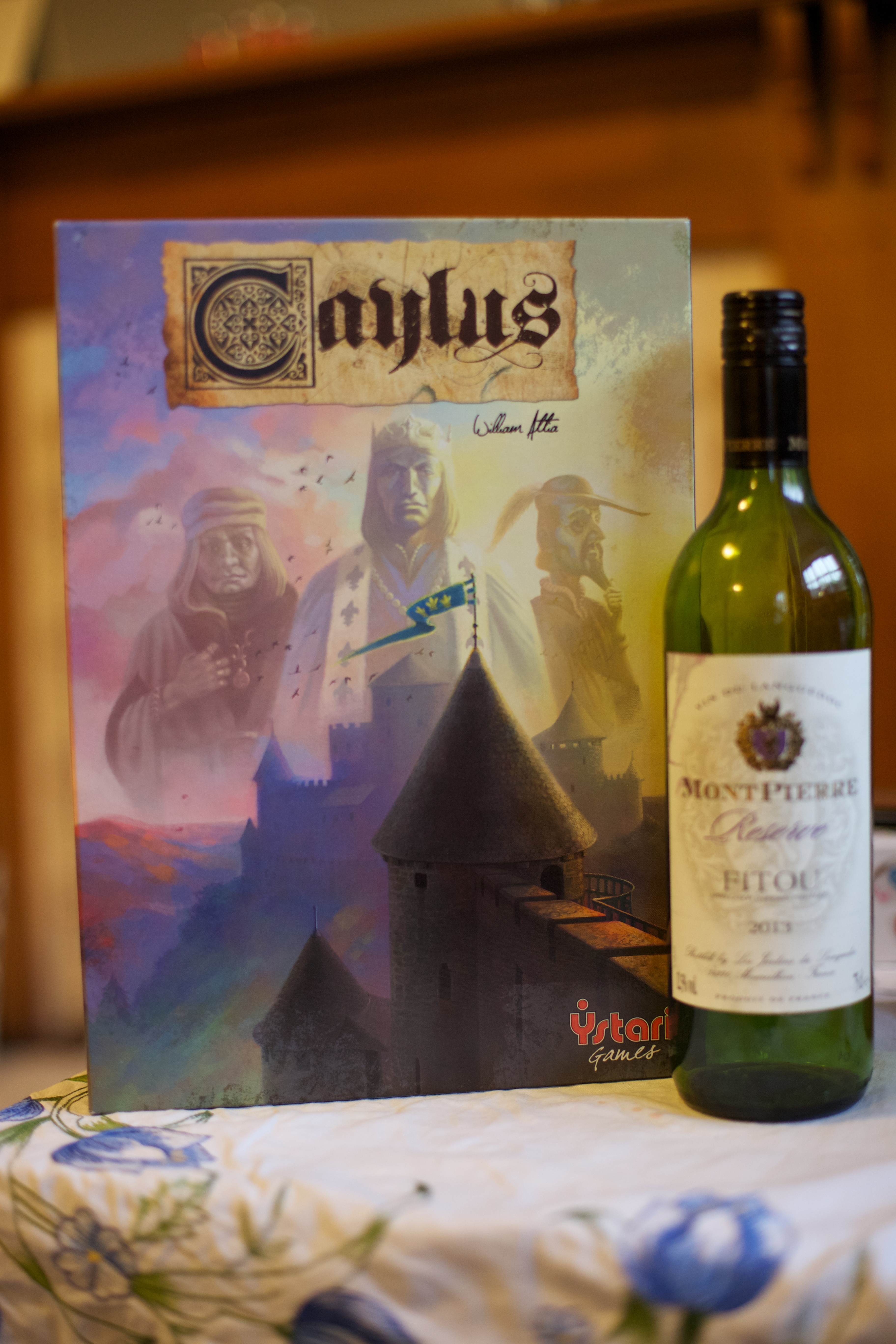
The bottle's empty for a reason
The bottle’s empty for a reason

Recently your friend Bob has been ‘Doing Exercise’. This is deeply unpleasant (and if you’d like to charitably sponsor her ill-advised half marathon you are welcome to do so here). Anyway, as part of this whole fitness drive she decided to give ‘Tough Mudder’ training a go. For those of you who don’t know what that is, congratulations. Nor did Bob until last Monday, when she found herself army-crawling across a muddy football pitch with the prospect of push-ups at the end of it, while a group of athletically-attired strangers whooped and cheered her on. The cheers straggled after a few minutes; it’s difficult to stay enthusiastic when you’re standing in the cold watching an overweight goth clumsily wriggle across some grass. It felt an awful lot like PE at school, and even ‘giving it your best shot’ did not make the experience of doing walking lunges while overhead-balancing a car tyre more pleasant.

Getting into the spirit..

It turns out that ‘Tough Mudder’ is just like Caylus. That is, just like crawling along a muddy pitch ‘Doing Exercise’ and wallowing in despair, particularly at yourself and your abilities. Caylus has a reputation that precedes it as being a particularly difficult and frustrating game. It is long, it is punishing, and it wants you to know that it’s all your own fault for getting yourself involved in the first place. And now you’ve fucked up your turn, well done you. “Those jumping jacks/turn order mechanics were just a bit too much for you, weren’t they?” says Caylus. Yup, they were. Once you’ve knobbled yourself over once there’s very little you can do to get your enthusiastic strategy back on track, and instead you’re left to be cynical and grumpy in the corner while everyone else carries on with a lovely evening, occasionally encouraging you not to give up and to stick it out. This introduction to the game might make a person think ‘why would I ever play something that makes me so disappointed in myself, not to mention cold and muddy?’ (OK the metaphor’s getting a bit stretched here), but it is impossible to stress enough how amazing that ‘eureka!’ moment feels when you get it RIGHT. Displacing water in a bath never felt this good.

And now for some game context – ‘The year is 1289. To strengthen the borders of the Kingdom of France, King Philip the Fair decided to have a new castle built. For the time being, Caylus is but a humble village, but soon workers and craftsmen will be flocking by the cartload, attracted by the great prospects and desire to please the King.’

Building things out of your pieces: the real game

Slowly but surely you and your fellow players will be building up the board with buildings and farming resources, turning the village into a thriving mercantile city with a glorious castle dominating the skyline. Also, the castle is going to be built out of pigs. Pigs and velvet. Honestly, you may as well wildly point at the nearest object to yourself and declare that it will become part of the castle. That, my friends, is how castles were build back in the day. Foolproof.

6D-32-72Alongside building the castle you can reap victory points by various other means: gold mining, collecting favours, exchanging money, etc. Going through each of these individually would be deeply tedious and abstract and therefore better left to ‘real’ board gaming blogs (or even (gasp!) the rulebook). Instead let’s talk you through some turns of the game using a recent game between Lizzy, Briony, Bob, and a generic white male gaming buddy (here known as ‘Gord’) as an example. This way you’ll hopefully get an idea of the mechanisms, type of play and how scoring works. From there we’ll highlight some particularly good strategies we’ve come across, and discuss some select ones in a bit more detail. We’ll also discuss the crushing misery of failure. Woo!

You call this a meeple?

A turn of Caylus has a few different phases. Firstly, the worker placement phase in which each player places a worker in turn on an existing building. This lasts until you run out of workers (6), run out of money to place workers (it costs one franc per placement), or you choose to pass (i.e. if there is nothing more you want on the board). The meeples, by the way, are just disappointing cylinders. The pigs are just cubes. We take this to be an artistic statement about capitalism and despair in medieval France.

A pile of pigs, velvet, gold, stone and wood

We’ve kicked off with Briony’s workers claiming a broad range of resources intended for castle building, while Lizzy’s workers are grabbing up some stone and wood and generally sturdy things (stone and wood? To build things with? Ridiculous. It’s almost like she’s seen a building before.) Gord has gone for a construction angle using some architecturally sound pig and wood, and Bob has got some velvet as it is the most flamboyant and least buildy resource available.

Secondly, there is the job phase. As all buildings are built along a road leading from the castle, the jobs are resolved in the same order as if we are travelling down the road ourselves6D-32-88 (Fortunately we don’t actually have to move for the game, which is good because, ya know, moving). Each building will offer something like resources or the ability to build, and you take the things that your workers were placed on in the order of the road. Order in this game is extremely important, and worryingly easy to forget. To both generate resources and to build stuff you need to work out at what point you are receiving things, which must occur before building in the castle, or having enough resources to build other buildings. We advise the use of the medieval equivalent of a stock-checker at all times.

6D-32-16Thirdly, there is the castle building phase. This can only be done if you place your worker in the castle position during the worker placement phase. A vital part of this is actually having the right resources to build, which sounds simple, but when you’re collecting multiple different things in the previous phase and having to plan out steps far in advance then it’s very easy to accidently pick up a velvet when you really needed a goddamn pig (One of the few games that can trigger the lesser known phenomenon ‘pig-rage’). In order to build in the castle you must have 3 resources, one of which must be a pig, and each of the others must be different types (why, why is a pig a major building resource? This is never addressed anywhere in the rules. This sounds like an extremely inefficient and wriggly way to build a castle. Does anyone have any theories?). Again, a simple premise, but if you organise your stock slightly wrong or spend something you weren’t intending to then it’s pretty easy to rock up to the castle with two pigs and a stone and be disappointed when the king laughs at you. Foolish peon, bringing two pigs with which to build a castle, he needs only one pig! And some velvet! And a rock of indeterminate size!
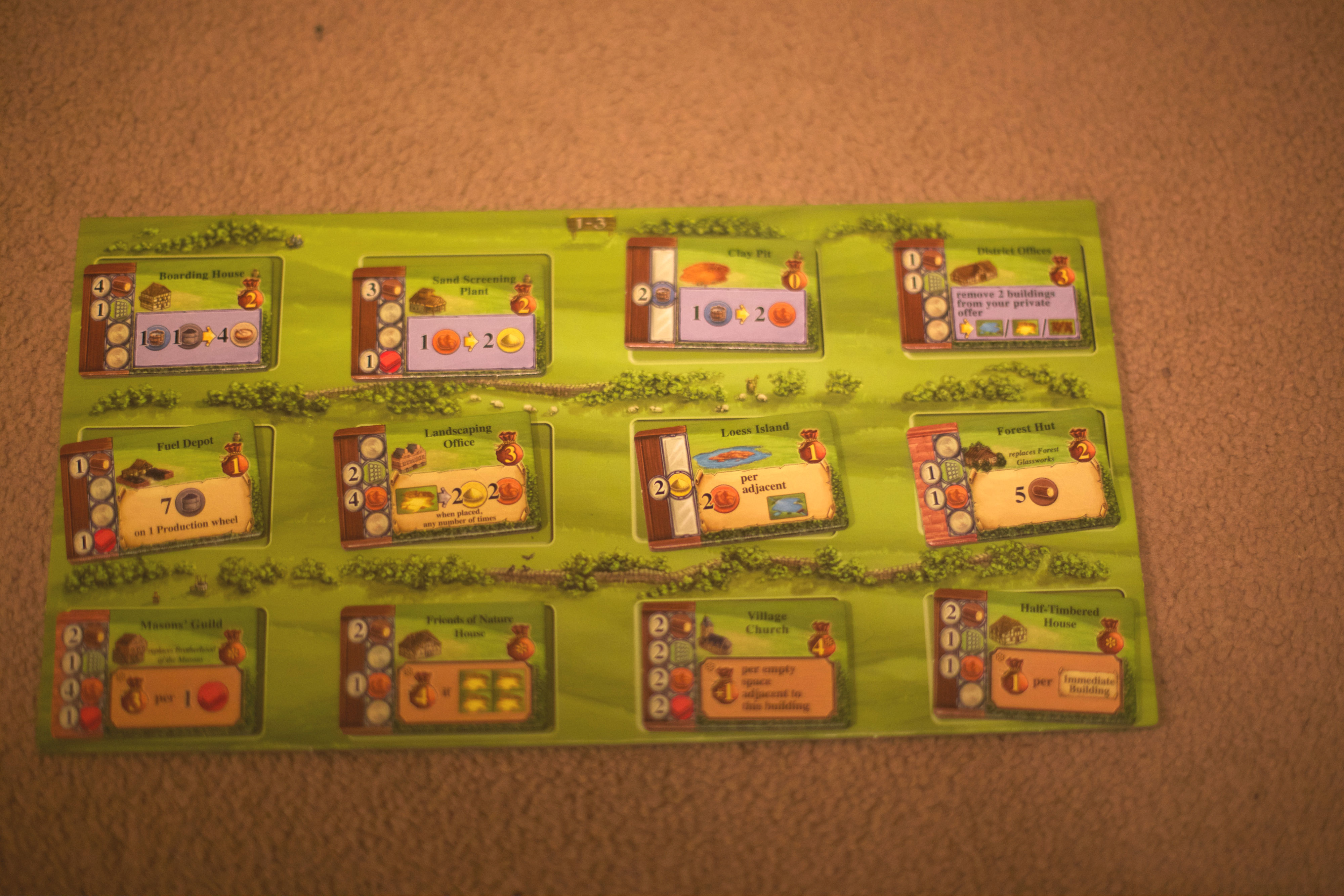
Another important aspect to bear in mind with castle-building is the extremes that it produces.

Bob's score definitely going in the wrong direction
Bob’s score definitely going in the wrong direction

If you build the most castle in the turn then you receive a favour (which is spent in the favour-reward track of your choosing), however if you place a worker and don’t have the resources to build then you immediately receive minus points. His royal highness is mightily pissed. Bob has demonstrated this consequence beautifully in her very first attempt at getting some victory points, and is now sat sulkily at -2 points, hoarding velvet.

As with many worker-placement games, a viable early strategy is to simply farm resources until they dribble (painfully – in this game they’re represented by wooden cubes) out of your ears. Making more resources happen more easily is therefore an even better strategy, but difficult to do consistently. The very best strategy (that we’ve found), is to be given resources as an idle tax while other players are trying to gather their own. There are three buildings which have this effect, and if you manage to construct all three of them you have effectively broken the game. It’s ridiculous. Especially when you combine it with building green buildings (which have to be built on top of existing non-taxed resources, therefore forcing players to give you extra resources AND generating extra income from green buildings).

A quick break for blog-notes

This is the only real mechanical issue we’ve found with Caylus, but it’s a biggie and is very difficult to stop. No strategy should be that OP, unless there are other big earners that we’ve somehow missed (entirely possible, somehow we don’t get round to playing Caylus all that often). And no, we’re not going to tell you which buildings they are; that would be cheating.

As the game progresses and other players’ strategies become clearer, the daggers come out. Let’s be clear: the biggest dick in this game undoubtedly belongs to you, and it’s aimed at yourself. Even people who are normally competent in their everyday lives can just repeatedly screw themselves over in this game, more than seems statistically probable. You’ll miscount your resources, you’ll forget how to build anything, you’ll even forget when the game ends.

Having said that, there are some excellent ways for other players to knobble you over too, such as by taking the resources that you can see other players eyeing, muscling in on their share of the castle, or by moving a little white token called the Provost. 6D-32-27This little guy, combined with the Bailiff (upon whose head the Provost gently sits), determines how far down the ‘road’ your workers can be placed and have effects, as well as when the game ends. If you can end someone’s turn before they’ve got all the resources or victory points they want, then you can really make their day unpleasant. Luckily, despite the constant shifty eyes and threat of skulduggery as pacts get made and broken, players are often far too focussed on their own misery to try and inflict it on others. That’s what keeps the Brutus Rating at a 6/10.

Despite its typical Uwe Rosenberg-patented Agricola-esque misery this game is, in many ways, perfect. It’s an incredibly ‘pure’ game, in that it relies on a strategic understanding of the mechanics’ abstract interplay. In fact it’s so computational that Chris* maintains it’s not actually a game. We would disagree; its dry strategy, intricate game scenarios and yet almost absurd lack of flexibility makes playing it surprisingly intense. It brings out serious turn-narcissism** as you desperately and meticulously line up your strategy. And when it works… oh god, when it works…. The feeling of relief, pride, and joy is, we imagine, much like giving birth. No exaggeration. This game is definitely not for everyone, requiring a fair amount of time and dedicated concentration, but it’s so very worth it, and makes you genuinely feel like you’ve accomplished something at the end of it.

As a final tip we strongly advise keeping tabs on the timing and resources you have at all times, and be aware of when the round, or even game, will end. Briony has solved this in a rather eloquent way on her copy of Caylus. The kind of eloquent way that was triggered by in-game anger and a sharpie. Be warned, folks, but also enjoy trying new strategies.

HS-1-25

We recommend it more highly than Tough Mudder training, at least.

*Friendly robot boyfriend, see Steam Park and Shinobi-WAT AAH! reviews, previous.

** There’s a fairly well-known concept in the psychology of narcissism called ‘conversational narcissism’, in which a speaker in a conversation pays almost zero attention to the other speakers, instead focussing entirely on what they want to say and simply waiting until a moment when they can take their turn to talk. Bob insists that ‘turn-narcissism’ is the same and totally real, but applies to when you’re waiting to take your turn in a tense game.

Credit and thanks to our pal Dr Photographer for the photos

Glass Road: Why would you build a road out of glass?

Brutus rating: 4 daggers in the back out of 10
Pairs well with: Bavarian beer, some sort of spirit in a flask that can be carried around while toiling in the German forest.

6D-32-209

6D-32-45
But why would they build a road out of glass, though?

Glass Road is a self-proclaimed ‘celebration of the 700-year-old tradition of glass-making in the Bavarian Forest’.* Just hearing the rules being read can make someone on the other side of the room sit up and ask ‘Are you playing Agricola?’. That’s right kids, it’s an Uwe Rosenberg game! For those that don’t know, this guy is arguably the king of European board games. His other offerings include Agricola and Le Havre, a game Briony has owned for more than a year and never played. It is said just looking at the rules booklet can cure insomnia. If you’ve any experience with European board games generally, and Rosenberg’s games in particular, you might reasonably expect this one to be heavy on the worker-placement, fairly abstract, and deeply German. Surprisingly, it’s only one of those things, and even then not as badly as some others**. It’s not even hideously long or punishing, and doesn’t make you curl up in a corner after screwing up your 3 hour long strategy in one single turn.

Let’s take a step back and tell a story. It’s the beautiful tale of why this game makes sense on both a conceptual and mechanical level, and is nerdily satisfying in the same way that all good game-lore is satisfying. Imagine you’re a rural baron in pre-Industrial Germany. You have a fair6D-32-202 bit of land, though a lot of it is green and covered in trees. Lizzy informs us that these are called ‘forests’. You also have lots of extremely hard-working peasants who are happy to do your bidding. They’re invisible, but they’re there, toiling in the harsh German sunshine. For some reason you also have a glassworks and a brickworks. This is a bit odd because you don’t have any of the raw materials to make glass and brick yet, but just go with it. I’m sure you’ll find some sand and mud soon enough.

6D-32-29
Why?

Your neighbourhood barons seem to be making a lot of money off this whole ‘production’ trend, so you decide to jump on board. You hire experts in the fields of farming and food production, irrigation, building, and quarrying to help you turn your land into useable raw materials. You can even get on board with a local feudal lord who has some excellent architects on exclusive retainer (‘The feudal lord is suitably fat. That’s good’ – Briony). Your invisible hordes of hard-working peasants, as soon as they’re given sufficient food and resources, immediately set to it in the glass- and brickworks and before you know it you’ve got some luxury items. These you invest into building factories, luxury second homes, and highly-efficient farming conglomerates. Eventually the buildings and luxury items earn you a bunch of cash moneys and then the game ends. Whoever has the most cash money at the end of the game wins. In this it’s very much like real life, and also extremely like Puerto Rico.

There are, of course, some complicating factors. If your neighbouring barons also want the use of the expert artisans then you will have to split the amount of work they can do. If you hack and burn all your forests to build farms there will be no pristine land to place a successful hunting lodge. If you accidentally over-feed your workers they’ll continue to produce glass and brick even when what you really wanted were the raw materials they were sitting on. Briony has a degree in geography and says that this is sort of how rocks and stuff work: cool stuff is usually underneath other more boring stuff, and it’s a shame medieval peasants didn’t know about taking core samples.

6D-32-192This game is actually kind of adorable and well-designed (though it is, according to Briony, geographically inaccurate). Some of the little resource tiles have unique bits of illustration, and spotting them is a treat. Not gonna lie, it has some haters, who seem to dislike it for the same unusual mechanic that other people love. That is, the big individual cardboard dials that tally6D-32-199 your basic resources (coal, food, etc.) and determine when they get used up and turned into the more luxurious brick and glass. Tzolk’in lovers will probably have some familiarity with this from that game’s corn-and-worker gear machines, while Caylus players will enjoy the familiar feeling of not having tallied their resources properly and fucking up their entire turn. Some people blame this on the game rather than their own fuzzy-minded planning, but that’s on them. A more reasonable criticism of Glass Road is that it has no easy or clear way to tally point-scoring. There’s just an awful lot of counting at the end of the game, again a little bit like fuzzy-strategies during Puerto Rico.

At the start of the game it’s pretty difficult to know what you’re trying to do. However, like most worker-placement games, collecting resources is usually a good start. Each player begins by selecting 5 of the 15 cards which represent your agriculture/industry specialists (a water carrier, a slash-and-burn farmer, a sand-quarrier (is that a thing?) etc.). On playing these experts you will be able to transform the cardboard tiles representing your land (initially representing such useless things as ‘trees’, and ‘lakes’) into resources of charcoal, food, sand, and water. Briony begins by selecting 5 cards more or less at random and plays a fish farmer. Unfortunately she’s apparently either very good or very bad at determining a useful specialist to hire, as both Lizzy and Gord (today’s Generic White Male Gaming Buddy) reveal that they also wish to hire the fish farmer. This means they only get half the use out of their fishing expert. The fish farmer, being a dick, doesn’t like sign a contract of exclusivity saying he’ll finish one job before starting another; he just does two half-assed jobs at the same time. Again, this is much like real life.

6D-32-186Once the great cardboard dials of industry have turned, you may use the product of your workers’ labour to further your cause as a budding capitalist. Buildings have unique effects on gameplay, which can be long-term, such as upgrading your glass factory; one-shot, such as generating a wad of cash; or end-game, giving bonus points with the caveat of certain accomplishments like ‘not turning all your lakes into factory run-off’ or ‘flattening vast swathes of land into sandy Depression-era dustbowl wastes’. Which buildings are more useful and desireable becomes clear as the game progresses. Once Briony and Gord had gotten the hang of their first game she became quite adept at snagging all the buildings that Lizzy wanted.

6D-32-28
Why?

This game requires flexibility as well as forward-planning. A perfectly-devised strategy is likely to go awry as there’s no way to be sure of which buildings will be available to play, or which specialists you’ll have to share with your opponents. This is why Bob loves this game. She has a lot of very clever, strategically-minded friends who can logic out the best path through a game like a shark swimming through custard. Bob has a slightly more… lateral (ass-backwards) approach, picking up whatever strategy looks best at the time and throwing her toys out of the pram when it inevitably goes horribly wrong (we don’t talk about Black Fleet. So many little cubes were lost that day…). Somehow this really works for Glass Road. Unfortunately, Bob was busy cleaning up gaming-snack detritus and sat out this game.

In conclusion, it’s a nicely designed game, with just the right of in-game mechanics. It’s themed well, and has multiple strategies that my lead to victory that keeps intense direct competition to a minimum. The dials, ever becoming more popular in modern board games, certainly give a new dimension to resource collection. We recommend it highly. Also Lizzy wins again.

Laid out in all its glory. image courtesy of boardgaming.com

*Fun fact, you can totally go to Germany and tour the black forest’s monuments to the real glass road. There are glass museums and craft workshops and everything.

**The most unashamedly German board game is quite possibly Glück Auf (and then only until someone with a name like Rosenmüllentheimermassbergsohn invents a game called ‘Strategic Worker Placement in an Industrial or Agricultural Setting’***). It’s set in the Industrial Revolution-era Ruhrgebiet (basically the Black Country of Germany) and is about coal mining profits. The title is traditional German pit-lingo for ‘good luck’.

***’Strategische Arbeitereinstellung in einem Industrie- oder Landwirtschaftsszenario’. Catchy, no?

Photo credit and thanks to Dr. Photographer

Steam Park: Robots Just Wanna Have Fun

By Bob, Briony, and Lizzy. Go team!

Brutus Rating: 2 or 3 grubby knives in the back, depending on the number of players.
Pairs well with: Oil, petrol

6D-31- 360

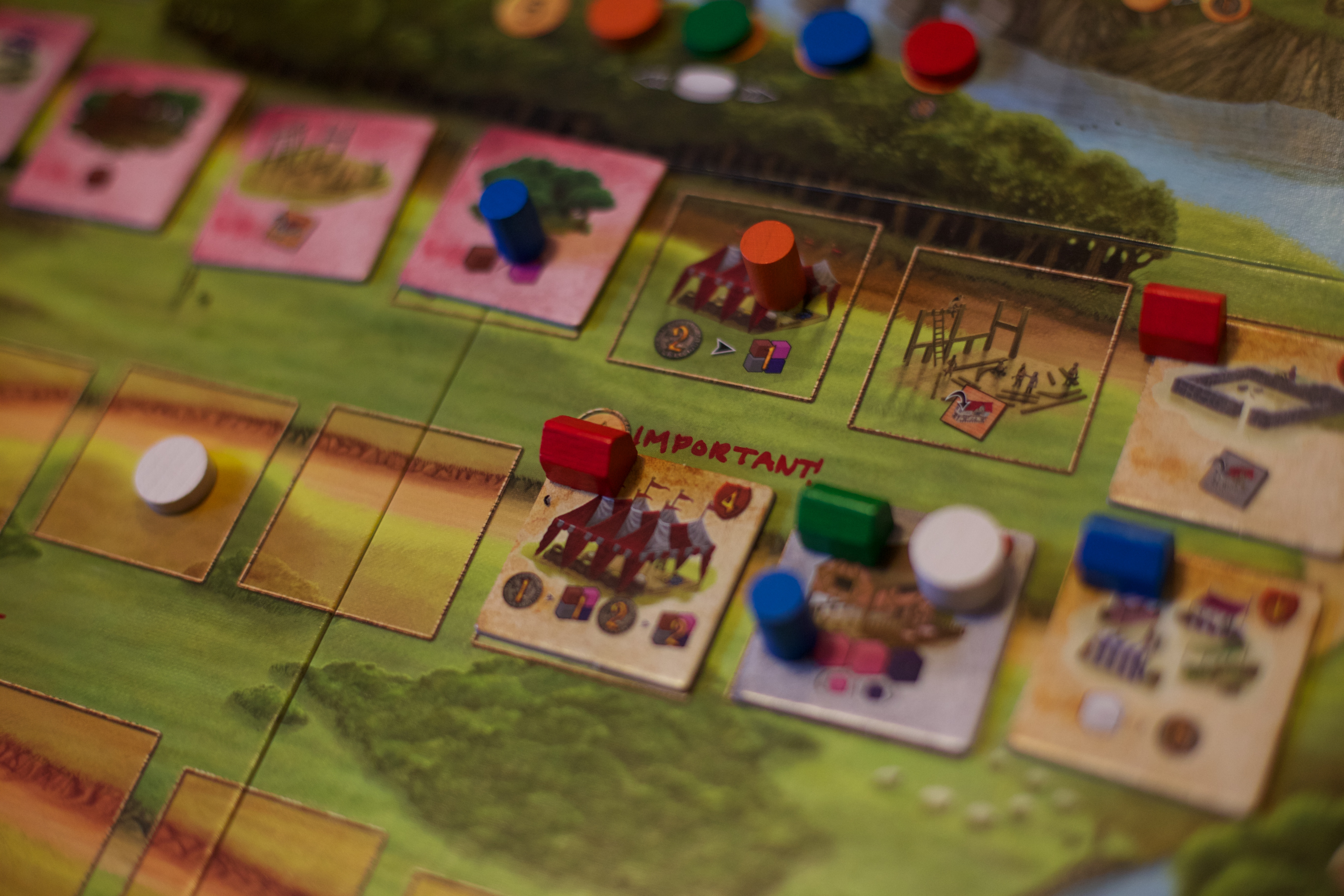
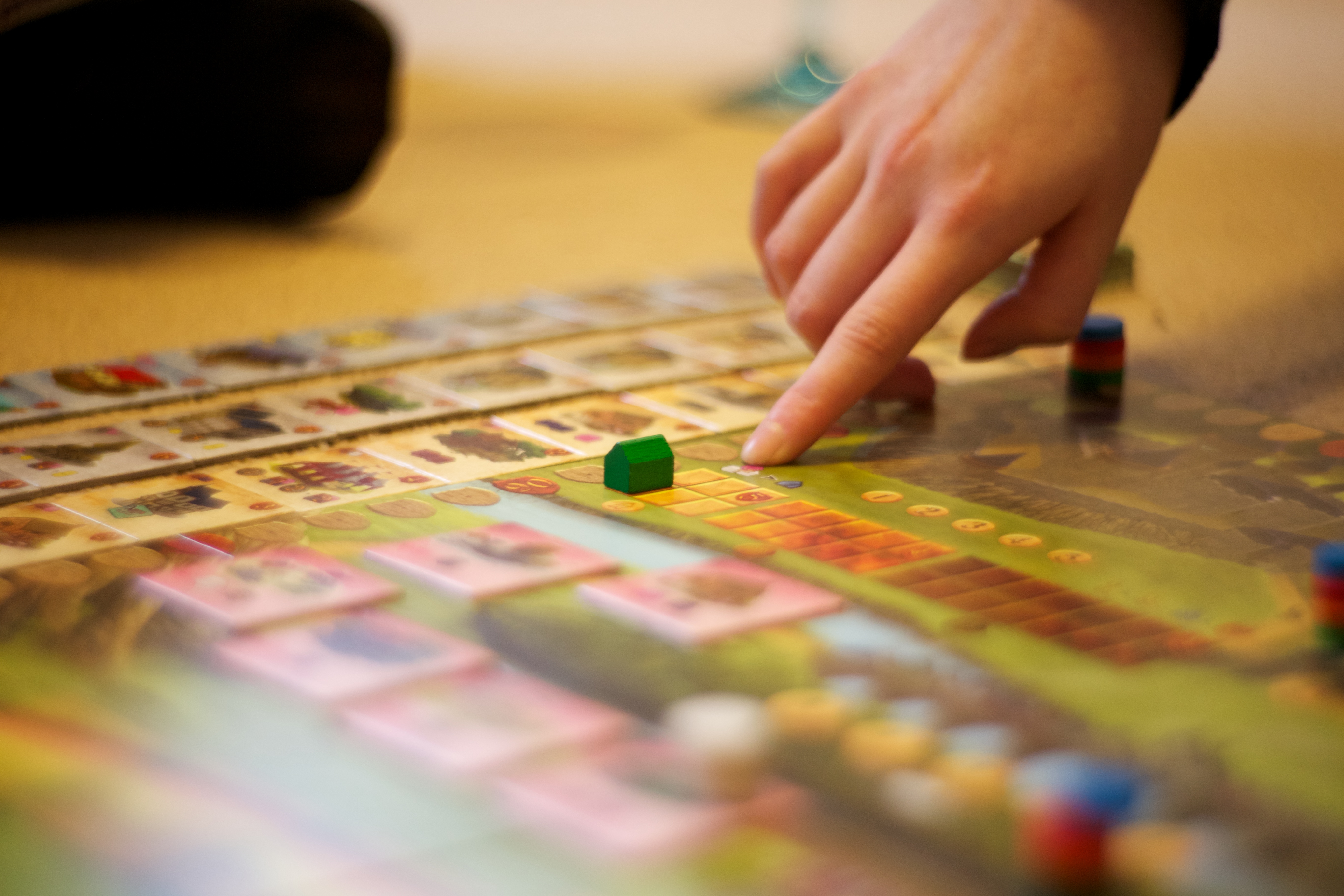
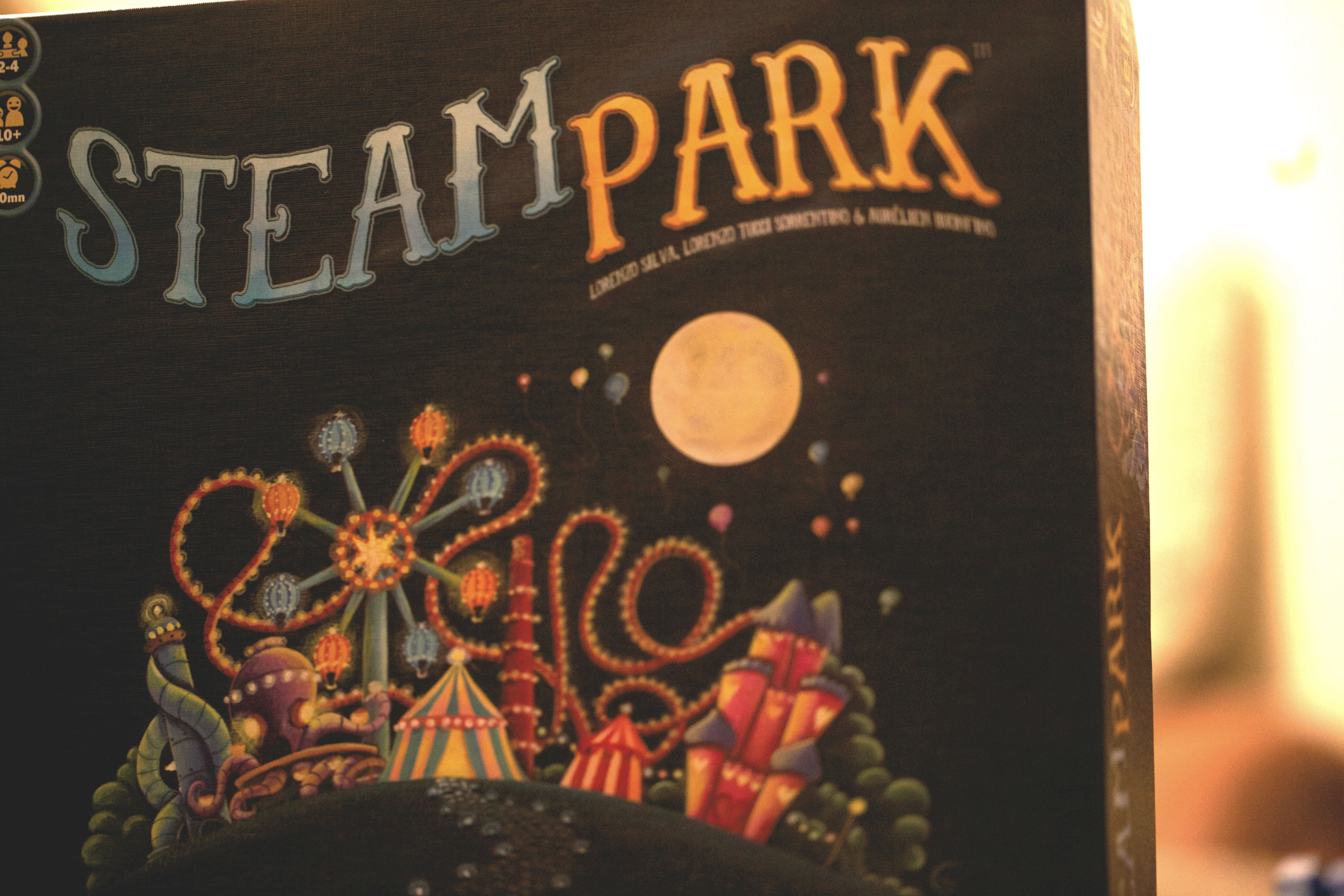
Steampark is a beautifully steampunky game in which you can build your own little rollercoaster theme park with such mechanic-altering extras as casinos, tents and toilets. If there’s one thing Briony has learned from years of Rollercoaster Tycoon, it’s that you should never ever think “that’s enough toilets now”!

06_steam-toilet
Though in this game you can actually only build one toilet. What would your robot guests do with more toilets, anyhow?

Yet another Essen find; this one is light, frenetic, and sometimes blackly humorous, bordering on the dystopian. Bob obviously had to buy it as it was the gothest game at the convention.*

Team Awesome Blog came together with our generic white male friend (this one we call ‘Andy’ for short) for a game together as we wrote this review. For the sake of maintaining a strong sense of ethics in board-games journalism we should disclose that we forgot to invite Dr Photographer to play on this occasion and all of the photos are reconstructions.

As the many, many pieces of game are unpacked Briony looks more than a little apprehensive. 6D-31- 344She is, after all, the team’s dice-hater and the handfuls of dice coming out of the box do nothing to alleviate her fears. Contrary to popular belief, it’s entirely possible to develop post-traumatic stress disorder from playing Risk, Warhammer and Blood Bowl too many times. Dice! So many dice!

Plethora of dice aside, there are some friggin’ awesomely-designed rollercoasters and tents and such, easily making up for it. It’s a very enticing game.

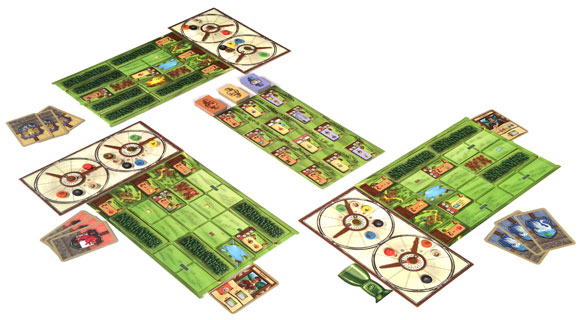
Right, we should cover the rules. Each player is allocated a plot of land in the form of a grid of squares on a small board, on which they can construct their steampark. Rollercoasters, or any other buildings, cannot be built within one square of anything else, making board-space efficiency a good part of the game. Each player also receives a buttload of dice (that is now the official measurement of ‘too many’ dice. It’s approximately 6). Instead of numbers the dice have a different symbol on each face which corresponds to an action you can take during your turn.

6D-31- 353There are 4 pucks in the middle of the table which only become available once a player has finished rolling their dice, and which determine turn order. The sooner you finish rolling your dice, the better puck you pick. This phase is particularly stressful as all players roll at the same time, and can re-roll the dice as many times as they like in order to get what actions they need, until there’s only one player left to roll.

Seems nice, right? Light-hearted fun? Forgiving of bad rolls? No. Instead, it becomes a stressful dice race!

Suuure, Briony says. She could get the perfect set of dice she desires with enough time, but Bob 6D-31- 319has already finished rolling and can now grab the first player puck! Panic for everyone! This gives her park-building benefits, while getting the last puck actively punches you in the guts by filling your park with ‘dirt’. Ultimately the dice-rolling stage is more like the ‘throw your dice around the room, swearing violently, resenting anyone who looks remotely calm or close to finishing, madly panicking to find said dice, praising the ones who rolled correctly, and hoping that everyone else is having as much bad luck as you’ stage. Andy’s method has been to roll a perfect selection of dice and then knock half of them off of the table. We’re going to rename it ‘The Panic Stage’.

In addition you must place your rolled dice onto a flat cardboard mechanical piggybank otherwise they don’t count. Because that’s what all the other board-games are missing…

6D-31- 356
Wind-up piggybank dice mats. Officially the future of board gaming.

We’ve given this game an ambiguous Brutus rating because of the way that taking a puck can royally screw your competitors. In a larger game this won’t make too much difference: if one extra person finishes ahead of you then you’ll maybe have just a small amount more dirt in your park. If it’s a two-player game then the difference is much greater, lending a distinctly more cut-throat flavour to the game.

6D-31- 347Back to our team play-through. ‘The Panic Stage’ is over. Looking around the table we each have 6 dice which represent the actions we would like to take for that turn (or to the nearest approximation of that). Now each player can do stuff and things according to this, beginning with whoever has most effectively managed the Panic Stage to get the first-player puck. Unfortunately, Bob doesn’t actually know what to do with this mighty privilege, and a chorus of sighs ensues. Briony got the last place puck as she was writing (taking one for the Misery team), and as such this is all of the suck. To better deal with her frustration she decides to build a super-awesome octopus-coaster. It’s holding tiny teacups with its tentacles. Adorables.

In the interests of staying calm, let’s move onto some of the scoring components of the game. Lovely, rational scoring. Or not. Victory in this game is determined by cash moneys (what is the point in running a steampunk theme park if not the money?), which is made by having little robot meeples ride your theme park rides, forever.

6D-31- 318
Don’t worry about them, they don’t get bored or run out of money or anything, they’re robots.

You also have two cards that have a bonus feature for scoring, for example ‘For every purple rollercoaster you own, take 5 more money at the end of a round’. These are essentially your 6D-31- 347victory cards. Playing a victory card is one of the options given by the dice. The dice decide all, and it is supremely irritating when you’ve especially built a purple octocoaster to please your victory cards, then forgotten to make sure that at least one of your dice allows you to play a victory card. Once every player has finished the round ends and you collect your park revenue, which is the sum of all of the things you have built plus any bonuses from cards. And then there’s dirt. Dirt is bad (but calling other players ‘dirty’ is fun). Dirt is made by the meeples riding your rides, by building rides, by being too far back in the turn order, by making the eighth ‘Tim Burton’s theme park’ joke of the evening, etc. Dirt seems to build up more rapidly than you can clear it away by rolling the appropriate dice, and punishes you at the end of the game by taking away your revenue. Dirt is bad.

6D-31- 333There is another slight hitch in our fantastic upcoming parks. You know when you’ve built your first attraction in Rollercoaster Tycoon and it’s utterly underwhelming? Think, Ferris Wheel. This is the current state of your mechanical park. In order to get a really awesome park you need to invest both into getting more people to ride the rides, and in park maintenance. To get more people (or, in this case, fun-consuming robots) you should roll the ‘get visitor’ action with the dice, and then selecting randomly from coloured robots in a bag. Only robots of the same colour can ride on a correspondingly coloured ride so there is some mileage in a strategy that has attractions of many colours. There’s some chance involved with this but being persistent pays off.

How many rounds does a game of Steampark have you ask? 6? Does it ever really end? Those robots are going to be riding and having fun forever while you age and eventually die. But for us mere fun-lacking mortals we only get 6 rounds to make our parks the best.

And here’s the happy ending to our playthrough:  Briony stopped writing and turned her game 6D-31- 324around, winning the first player puck for most of the game. This is a viable strategy because you can almost always find a use for all of the dice mechanisms, even if they’re not ideal. Andy slowly but surely generated little more than a pile of dirt, and is probably still sat there quietly contemplating his little mound. Bob and Lizzy were solid throughout, but victory was ultimately Briony’s. The real winner, as ever, was board games.

In summary this game has some great design aspects and some cool mechanisms. To be honest there are slightly more mechanisms than necessary, but that doesn’t draw away from your goals. It’s simple to learn and has a relatively short play time with a distinct lack of hatred for your fellow players. I recommend trying it, and at the very least you should find someone who owns it and stare at the pretty little components in awe.

Why is there a one-robot Tunnel of Love? Why indeed.

*In fact Chris (friendly robot boyfriend) very nearly simultaneously bought it for Bob as it was the gothest game at the convention. Being deeply predictable sometimes has its dangers.

Photos credit to Dr Photographer
The toilet art is directly from the Horrible Games website

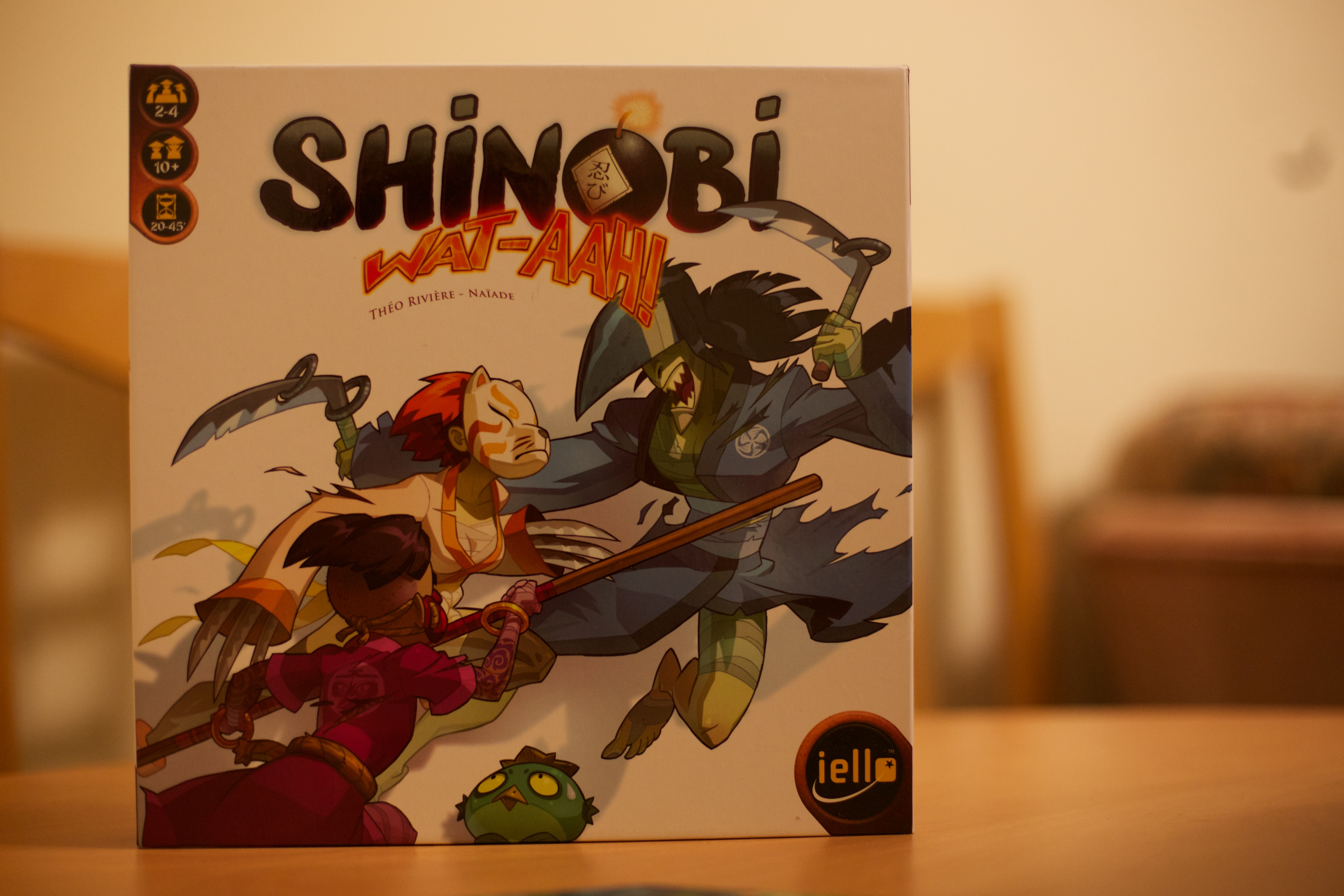
Shinobi WAT-AAH!: Everything changed when the fish nation attacked

By Bob, Lizzy, Briony

Dicks in ear: 7/10
Pairs well with: Sake, meditation, wisdom. All three at once, no cheating.

Note before playing: Everyone always asks if yelling WAT-AAH is part of the game, and, if so, when you shout it. While the parameters for shouting WAT-AAH do not appear in the rules, it is said the shouty samurai spirit has been inside you all along, and all that is needed is for you to free it when you feel the call. We enjoyed a house rule of shouting WAT-AAH whenever you put cards down. Or pick up cards. Or look at someone funny.

Shinobi1

This is a game about ninjas with magic powers. And that’s pretty cool, but much more cool is the fact that this game might even have magical powers of its own. We’re pretty sure it’s impossible not to enjoy playing it. Genuinely, we’ve not found a single person who disliked it, and we know people who dislike everything.

Shinobi7
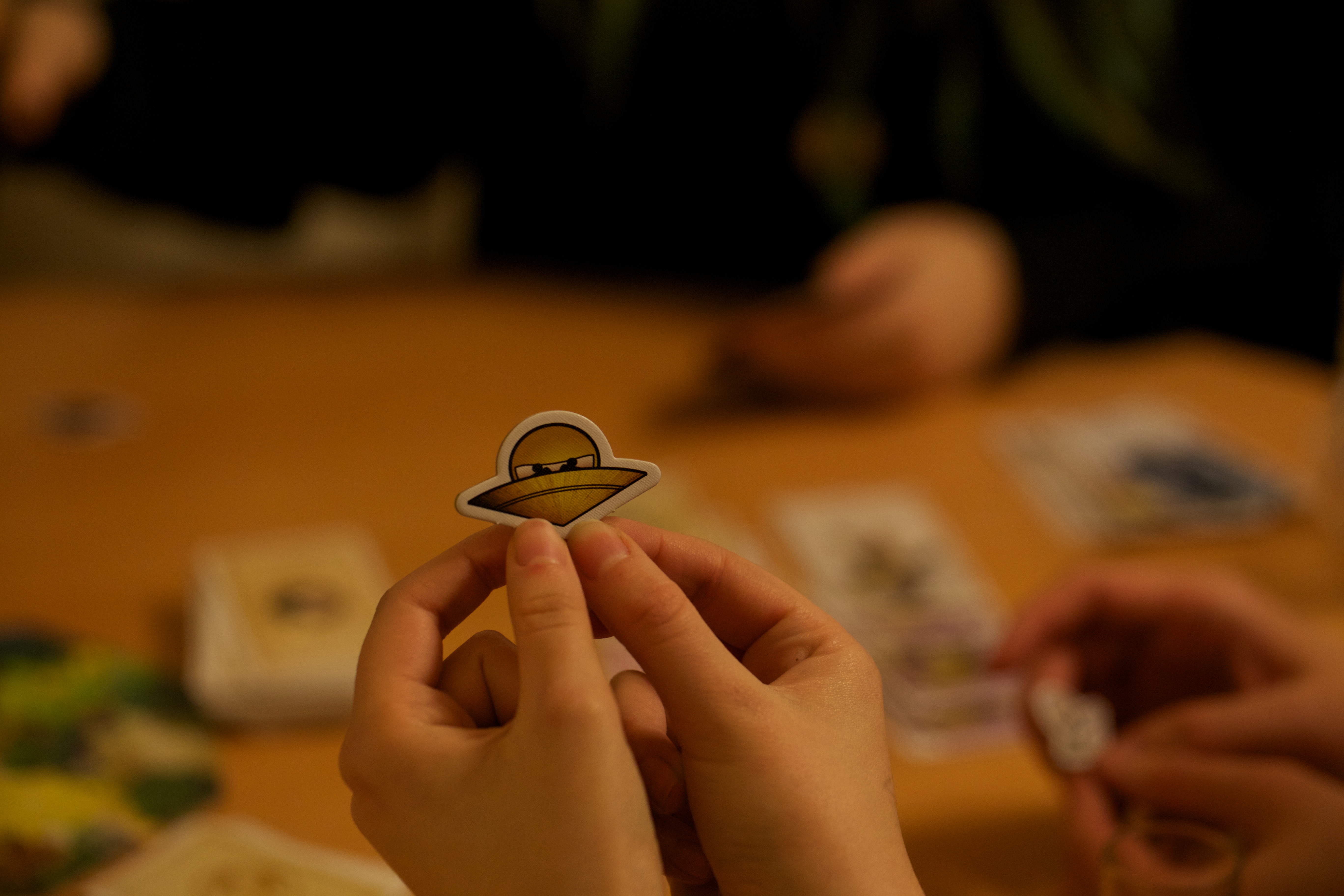
Check out this little guy. Is he an upside-down dude in a hat? Or two tiny men in a plane cockpit?

It’s another Essen find, and a very fortuitous one at that. Essen is a wonderful and exciting four days of board games but it is, nonetheless, four very long days of board games. By Saturday Bob was flagging. She hadn’t slept well in her overheated German hotel room and had more or less twisted her gastrointestinal tract into origami with German ham hock stew and pilsner (from this and the Sanssouci post you might have guessed that she has something of a complicated relationship with Germany. You would be correct). Running through pouring rain to catch our tram to the convention centre did not improve the mood and by the time we Shinobi6arrived, damp and itchy-eyed with tiredness, Chris (friendly robot boyfriend) was detecting all the signs of a classic Bob-style rage-quit (pouting, tearfulness, The Grumps). Worse; we had arrived early in order to be first in line to play Hyperborea and hadn’t even managed to secure first play spot.  Nor, despite a mad dash, did we make it to Tragedy Looper before its first clientele of the day had casually picked up the instruction booklet and started reading (the boardgame convention equivalent of yelling ‘dibs!’).

Chris later confessed that when we spotted an available table with Shinobi WAT-AAH! laidshinobi 11 edit out on it that he was more or less praying that it would be good, or a full-scale tantrum was going to occur. Bob of course informed him that she is an adult woman and she does not throw tantrums,* to which we all obviously agree, but conceded that the appearance of the Shinobi table was still pretty well-timed.

shinobi something edit
Explaining rules is the most fun Bob can have with her clothes on.

Mechanically it’s a fairly straightforward deck-building card game in which you’re a royal lord (or lady) trying to unite clans of epic fighting ninjas in order to trigger their epic ninja fighting skills so that you may defeat the final demon boss (WAT-AAH!) and place your royal rear upon the Imperial throne. The epic ninja fighting skills fuel conflict in the game as you fuck with other players’ cards, peek through the Jigoku (the discard pile – literally translates as ‘hell’), or copy other clans’ powers. We give it a rating of 7 dicks-in-ear for the irresistible opportunities to knobble each other with these powers. Although some of the clans’ powers are more friendly (pick up some cards, look at some cards, etc) you’ll almost certainly find yourself plotting some nasty moves and stealing an entire hand of cards from someone you sometimes consider to be a friend.

Shinobi10 edit

Shinobi5
Clans!

There are two modes to play in: Grasshopper and Grand Master. In Grasshopper mode you simply play turns until someone has laid four fully-formed clans (WAT-AAH!) on the table. You then tally up the scoring value of each clan on the table and the player with the highest number wins (not necessarily the person who ended the game). Grand Master mode begins the same but after the tally you retain the cards still in your hand (fully-formed clans already on the table get discarded) and receive a number of The Shuriken of Winning depending on your place in the running. You can spend your Shuriken of Winning on cards which will give you bonuses (WAT-AAH!) in the next round, or toward battling the final boss (which could be zombies or creepy old lady-demons or whatever).

You do this for three rounds and then the final showdown happens. The showdown is6D-31- 458 much more anti-climactic than it sounds, as it’s really just a scoring of a the number of shuriken you’ve already put toward fighting the final boss against the (hidden, mysterious) number that they want in order to give you the best possible number of points. There is no epic battle between ninjas and demons, sadly, but interestingly more Shuriken of Winning doesn’t always translate into more winning points.

Shinobi8 edit
Beautiful art

It’s hardly the most complex or rich game in the world, but it is unashamedly fun. It’s the feudal Japanese card game equivalent of a pew-pew video game. Dicks fly everywhere and the art is about as fantastic as you’d expect from the guy who also did Seasons and that most scenic of games, Tokaido. It has a cartoonish feel that is both beautifully detailed and very bold and clean. This perfectly reflects the style of the game – simple, fun, yet with captivating little details. For example the wild cards which can be used to simply make up numbers in a clan are called Ronin – a feudal Japanese term for a samurai without a master or lord. Similarly, the powerful single cards which can be played as one-off additions to a clan are called Yokai6D-31- 462 spirits or supernatural beings present in Japanese folklore. This is exciting if you’re incredibly nerdy and contributes to the immensely satisfying feeling of a well-balanced, well-designed game that just works.  The cards are also taller than you’d expect, which is aesthetically very pleasing. It’s a neat touch.

Price-wise it’s a bargain. For some reason it seems that the more board games cost the more polarising and more rarely-played they become. Everyone will play a round of Coloretto or Hanabi but you actively have to search out friends interested in a game that costs hundreds and takes 6 hours. Twenty quid might not get you meeples of every colour and shape or a giant, detailed board but it will get you a game where even friends whose opinion of pretty much everything is that it’s ‘bullshit’, will sit up halfway through a round and mention how much fun it is.

Lizzy won again. But the real winner is board games.

6D-31- 417
The winner is always board games. And Lizzy.

* She does kind of throw tantrums a little bit. But only when she’s really tired. Or hungry.** Or drunk.

** Before Essen she gave Lizzy a bag of Cadbury’s éclairs, with strict instructions to feed them to her if (when) she got cranky. It was a good strategy.

Image credit and thanks to Dr Photographer

Quantum: Space Dice!

By Lizzy, Bob, and Briony

Number of dicks in ear: 6/10. Dick size will grow in inverse proportion to the size of the map.
Pairs well with: cheap vodka. (It’s what people drink in space.)

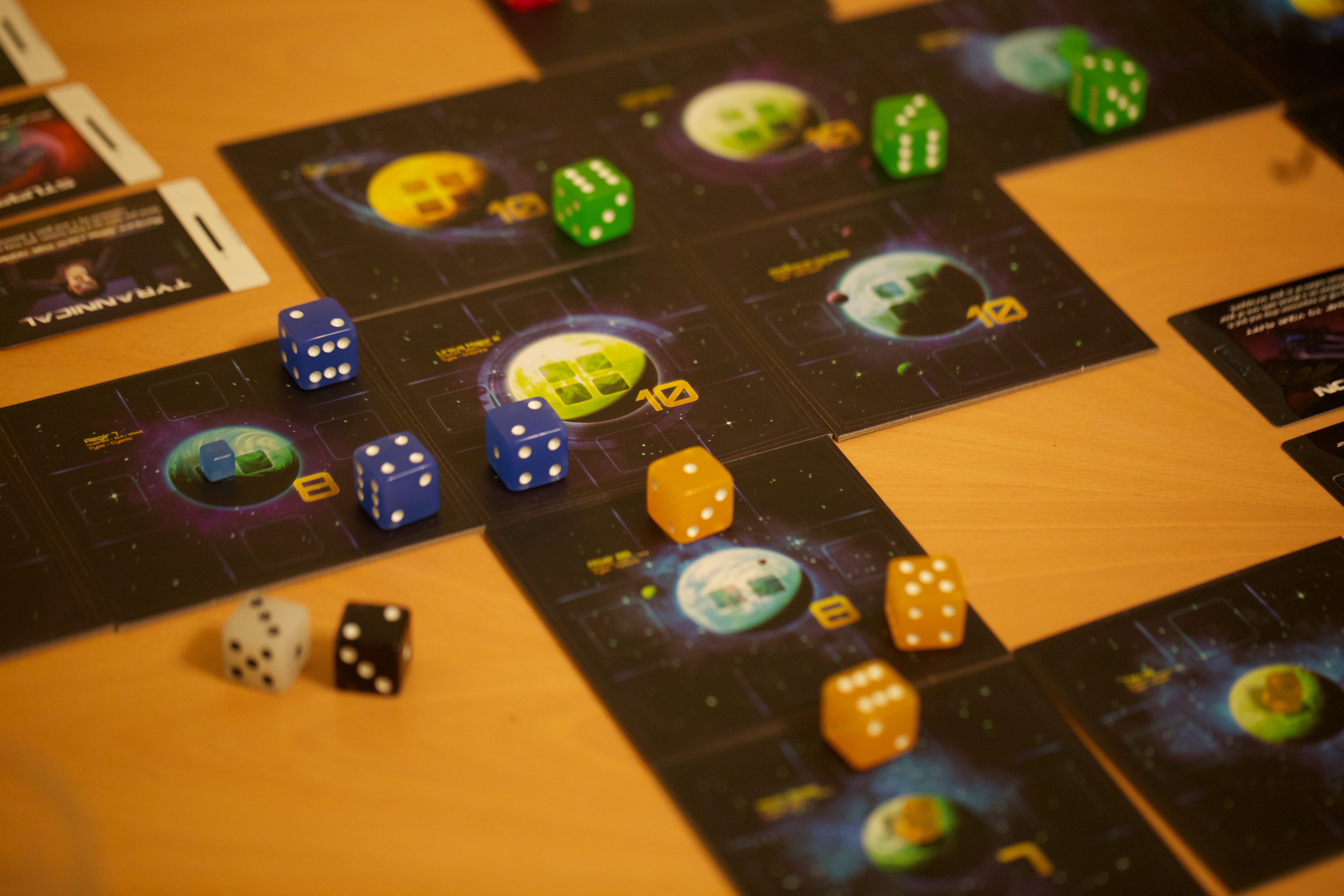
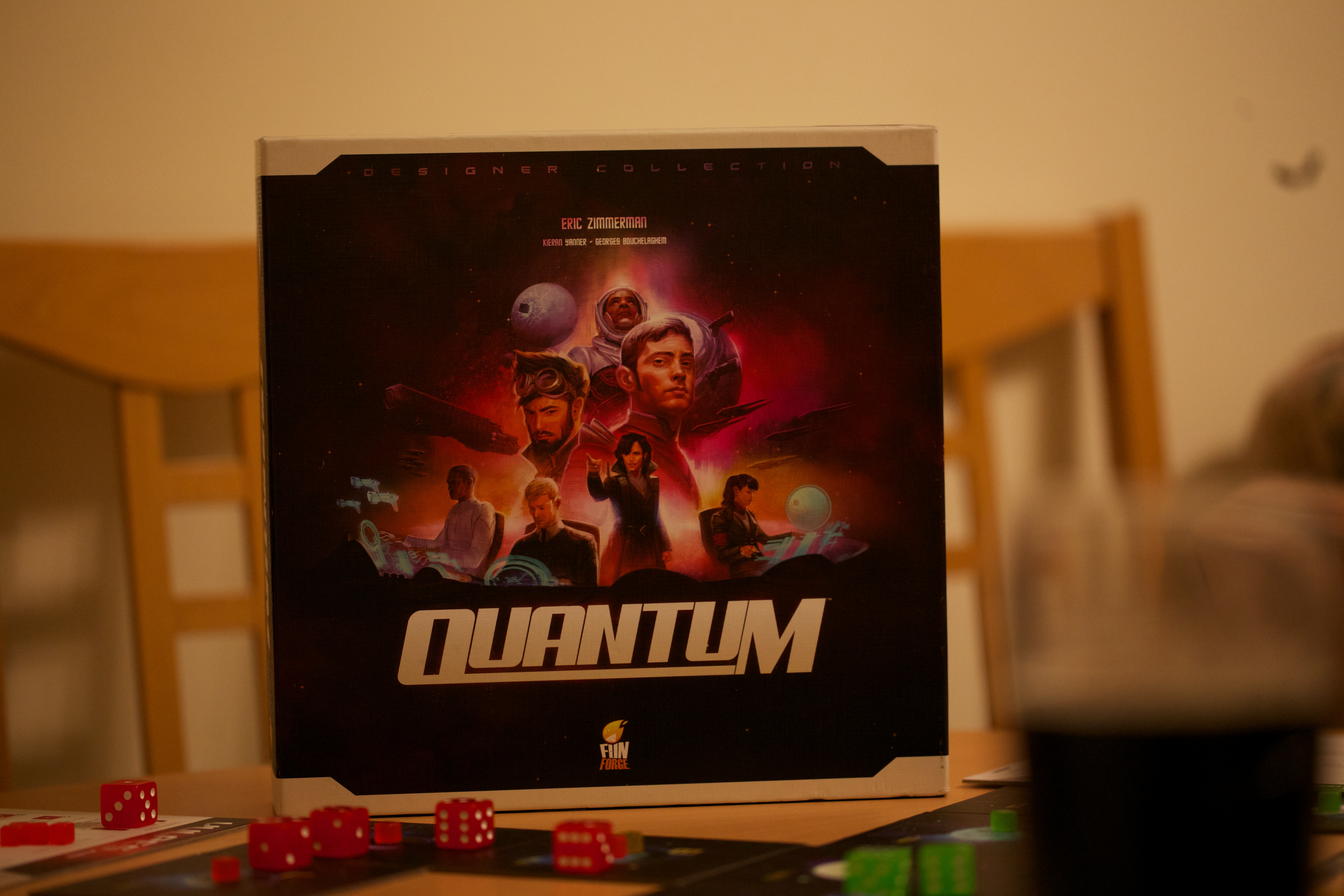
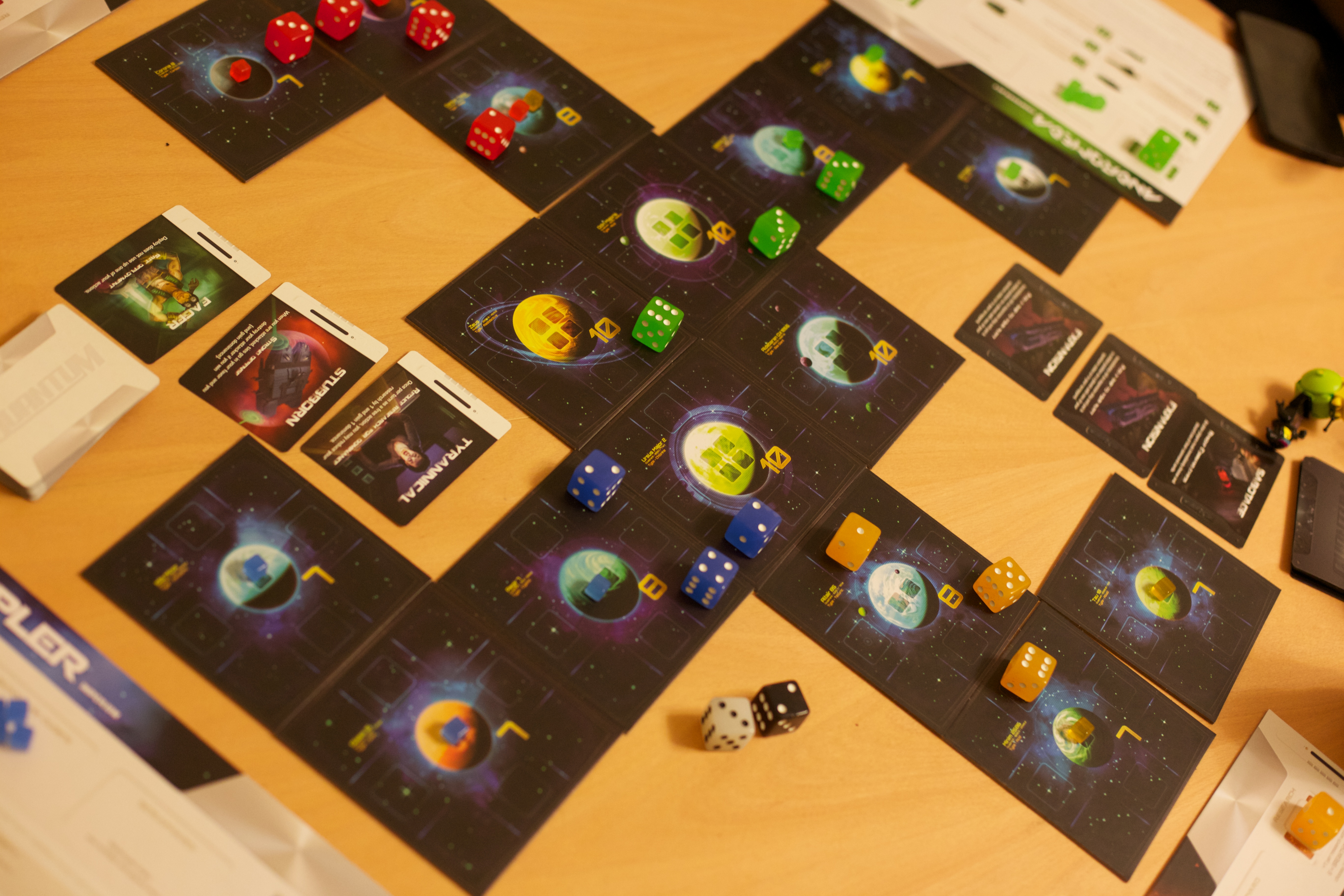
6D-31- 365 Quantum1 Lizzy loves a game where you know who you are. Where you really know what your motivations are and why you’re collecting <Generic Resource!>. Quantum is a game about space, and it does this quite well. It has a space background. You play as a kind of space conquistador, colonising the stars using cubes. Cubes are very important in Quantum, because cubes mean victory and the ownership benevolent leadership of galaxies.

“Which galaxies?” you cry!
Whichever galaxies you like!

Quantum3
‘Which map shall we use?’ ‘The one that looks like a swastika!’ ‘That is absolutely not what a swastika looks like, Bob’

The layout of the map is quite variable; there are several possible galaxies to choose from for each player number, and each has its own name. You can fight over the Outer Reaches, the Barren Empire, Terra Major, Terra Minor.

Even the planets themselves each have a name. Tau 18, Ursus Major 2, you get the idea. They even have lore and geography, if that’s your bag. It’s all very good sci-fi. Points for sci-fi.

Quantum4
Here’s Bob posing for a photo and pretending to attack her own ships. That’s not how the game works. Silly Bob.

For further points, each of your dice are your loyal spaceships and the number on the die represents the kind of ship it is. Even better, there’s some kind of story to the mechanics behind each number! A lower number is a lot slower but better at combat because it’s a bigger ship. A 1-die, for example, is a battlestation, which is the best at fighting but can only move 1 square at a time. A 6-die is a scout, they can zip around like crazy but aren’t too hot behind the weapons. At this point in the game your in-house Bob or Bob-substitute can demonstrate agility by throwing dice around going ‘pew pew’. It’s helpful or something.

As well as the changing planetary layout, gameplay is also affected by cards, which affect the kind of play which your space-conquering race can undertake. After invading landing on a planet you can, as they say in the trade, ‘do a research’ and so learn to do fun stuff like shoot more effectively and fly across the entire galaxy to thrust your dick in your team-mate’s ear.

Quantum7 Quantum2 Quantum6

If you are the kind of person who hates dice combat you might hate this game. But even our friend ‘Dr Hates-Dice’ loves this game! And he hates dice, or any attempt at putting randomness in a game. Briony, of course, is sadly unable to roll dice or dice-shaped objects and so found this game something of a challenge. She also hates dice.

Tons o'dice
Tons o’dice
Space Cards
Space Cards.

In the words of Lizzy it is a game of learning and fun, if you understand how basic maths works. Bob, for her part, is unable to count, making the ‘fun if you know how maths works’ description more of a threat than an incentive. She has, however, played games with Lizzy before and understands that when our dear Liz looks particularly gleeful after rolling a die and buying a research card that no one is safe and… oh god oh god we’re all going to die… why is no one stopping Lizzy… we all know what happens when we don’t stop Lizzy and… oh yep she’s won. And she has the cheek to ask why we don’t trust her in board games.

6D-31- 374
We’re all gonna die when she gets that face on.


Nonetheless, this game doesn’t rub your face in your failure like a misbehaving puppy. If you do badly it’s because you’re bad at very basic counting, strategy, and rolling dice. This is in comparison with games like Terra Mystica where you feel like a failure from round 2 because you haven’t picked up on the very specific and delicate strategy required of your race. Quantum is particularly enjoyable if you bear your position as commander of the fleet in mind when communicating with the enemy. “The OrionRepublic welcomes the puny Kepler Imperium to our planet!” “The Orion Republic denies all knowledge of the weapons fire around Minim 2586. You must have been watching a training exercise.” Also humming ‘Duel of the Fates’ (literally the only good thing in ‘The Phantom Menace’) and the Star Trek theme tune are recommended during manoeuvring and battle.

6D-31- 393
A lonely spaceship contemplates its fate at the edge of the galaxy.

All in all this is a pretty fun game. It’s still Lizzy’s favourite thing to have come out of Essen 2013, well over a year on. Good luck on your colonisation, loyal Space-Dice. May the solar wind be always at your back.

Bob does not take particularly well to losing. Shame it happens so often.

Image and photography credit to Dr. Photographer.