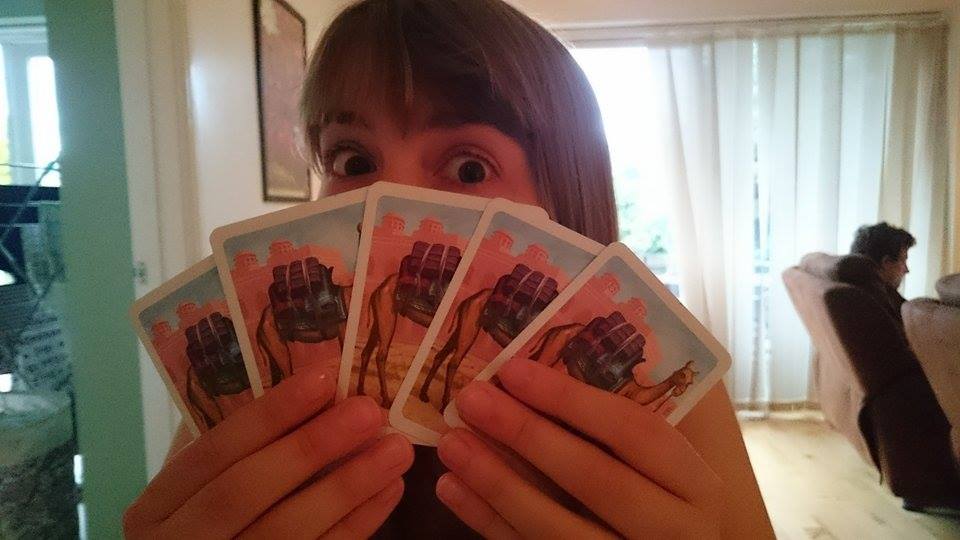
7 Wonders: For when 6 wonders aren’t quite enough but 8 seems excessive.

Brutus rating: 4/10 knives in the back
Pairs well with: A suitable drink to match your wonder (we recommend buying some of that classic terrible cheap liquor that all tourists buy as souvenirs while wandering around in a hot country. ‘But honey, it’s made with guava – that’s so traditional!’)

DSC_0331

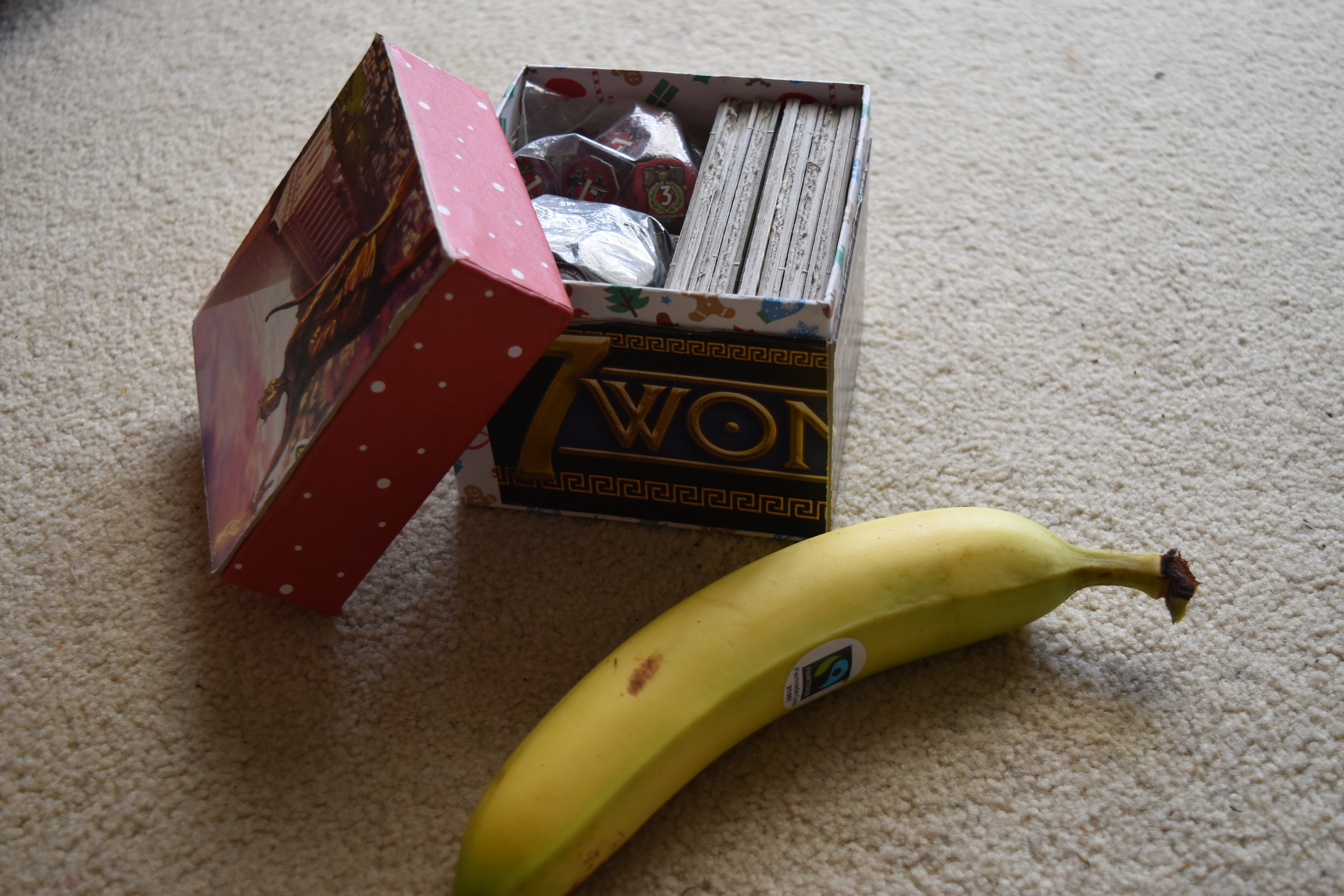
In Briony’s house, the copy of 7 Wonders was deemed too big to carry around with ease. To address this her angry spiky-haired boyfriend Pat spent a week engineering the perfect compact version, presented in a lovely Christmas gift box. The juxtaposition of the Colossus of Rhodes and the Christmas tree works beautifully. To give you some indication of exactly how much more compact it is, here is a fair trade banana for scale.

DSC_0348DSC_0347

Onto the actual game?

Have you ever wanted to control your own Civilization? Order your serfs well paid labourers to build cool stuff that will ensure your name is never forgotten for as long as humanity walks the earth? Cry war when someone upsets you? Wait for your turn patiently while your fellow assholes can’t pick a single card in a three-hour time frame? Good. Although this may sound mightily like Civilization (of which a couple of board games actually do exist) it’s actually 7 Wonders. At least, this week it’s 7 wonders. Can’t speak for future weeks, it’s not like we have a schedule for these things.

DSC_03397 Wonders was actually Briony’s ‘gateway drug’ to the board gaming world. She rocked up to a friend’s house one night expecting pizza, but instead got a lot of cards. At the time her friends explained the rules slowly, as if to a small confused child who couldn’t possibly understand the word ‘wonder’. They concluded ‘We’re all really good at the game because we play it a lot, so don’t worry about getting a low score. You’ll get better next time!’

Unfortunately for them Briony has accrued some 400 hours playing Civilization. She promptly wiped the floor with all of them, and has only been beaten once since. 7 Wonders has remained one of her favourite games to this day.
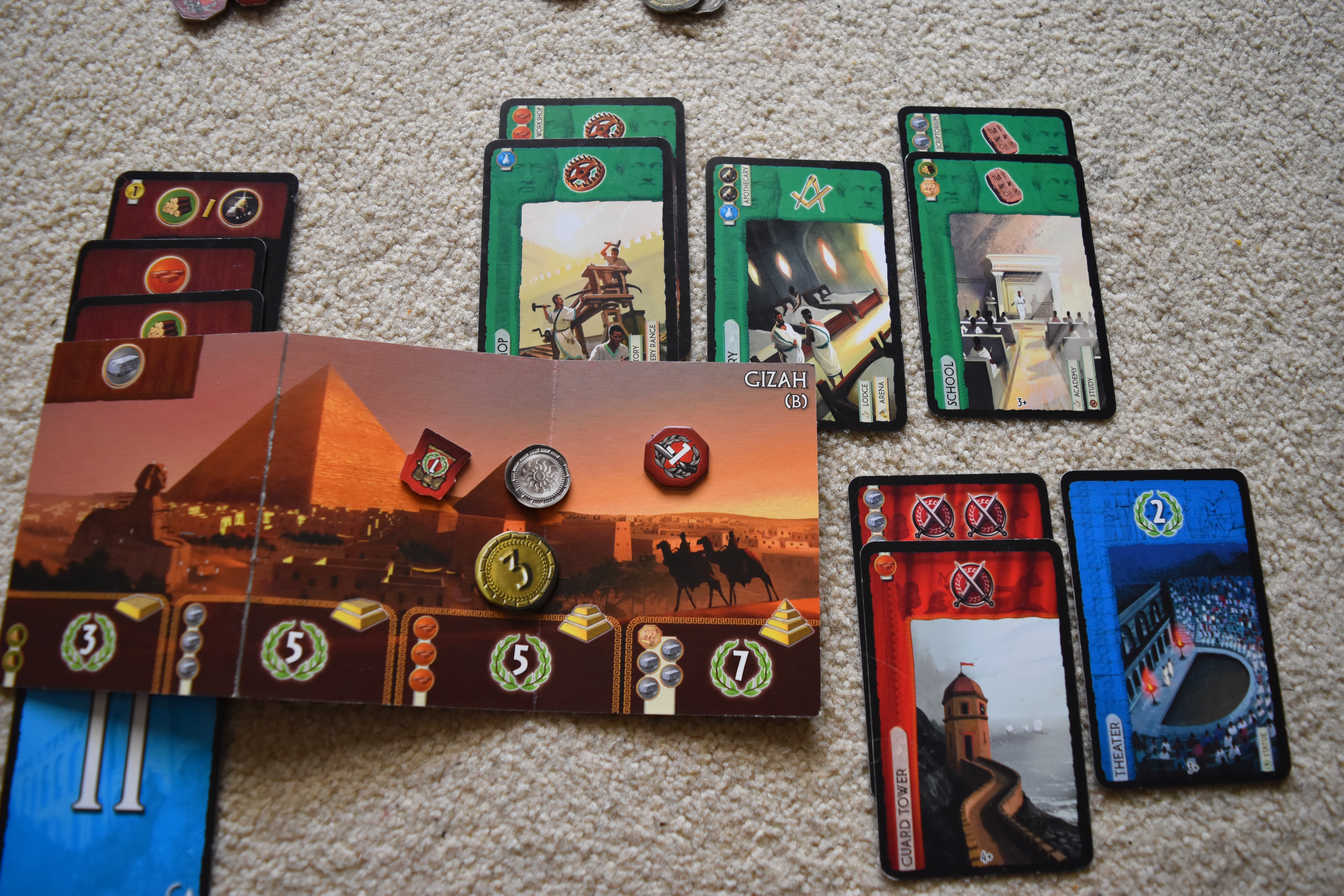
DSC_0337To begin, each player is assigned a great world wonder. One of seven, hence the name, but you probably figured that bit out (It’s not doing the “Five Tribes” trick where there aren’t actually five players and you don’t actually get to play the five tribes, confusingly.) Again, if you’ve played Civilization (the non-board-game version) you’ll already recognise the wonders; maybe you might even recognise them anyway. They differ both in starting resources and the benefits they offer. During the game you can, but are by no means obligated to, build parts of your wonder (they usually have 3 stages), and thus reap some tasty ancient treats.

The game works in three eras. Each player begins with a hand of cards. You look at the cards. You eye them up, rate them out of ten, or ask for their number – whichever is the most effective way of determining a good card for you. Once everybody has selected which card they would like to build, you pass your remaining hand of cards to the player clockwise. Everyone then simultaneously places their chosen card face up and everyone has a lovely time.

DSC_0342Simple. Now, do it again. In fact, keep doing this until you only have two cards left in your hand, then discard one and build the other. Now it the ending of the era, but it’s not particularly like the great works of writing and art suggest. It’s mainly about war, really. Each player has a mandatory fight with the player either side of them. Losing a war means losing points, winning war means winning points. Huzzah!

Well done everyone, we survived an era. Best keep going.

With the start of the second era a new deck of cards is brought out. These cards build on the resources you gathered in the previous era, and will either start racking up victory points or generating larger amounts of resources. The same mechanism as before happens (start with hand, play a card, pass it on, repeat), only this time you pass the cards anti-clockwise. Bet you didn’t see that one coming! Era ends, have some war, next era begins.
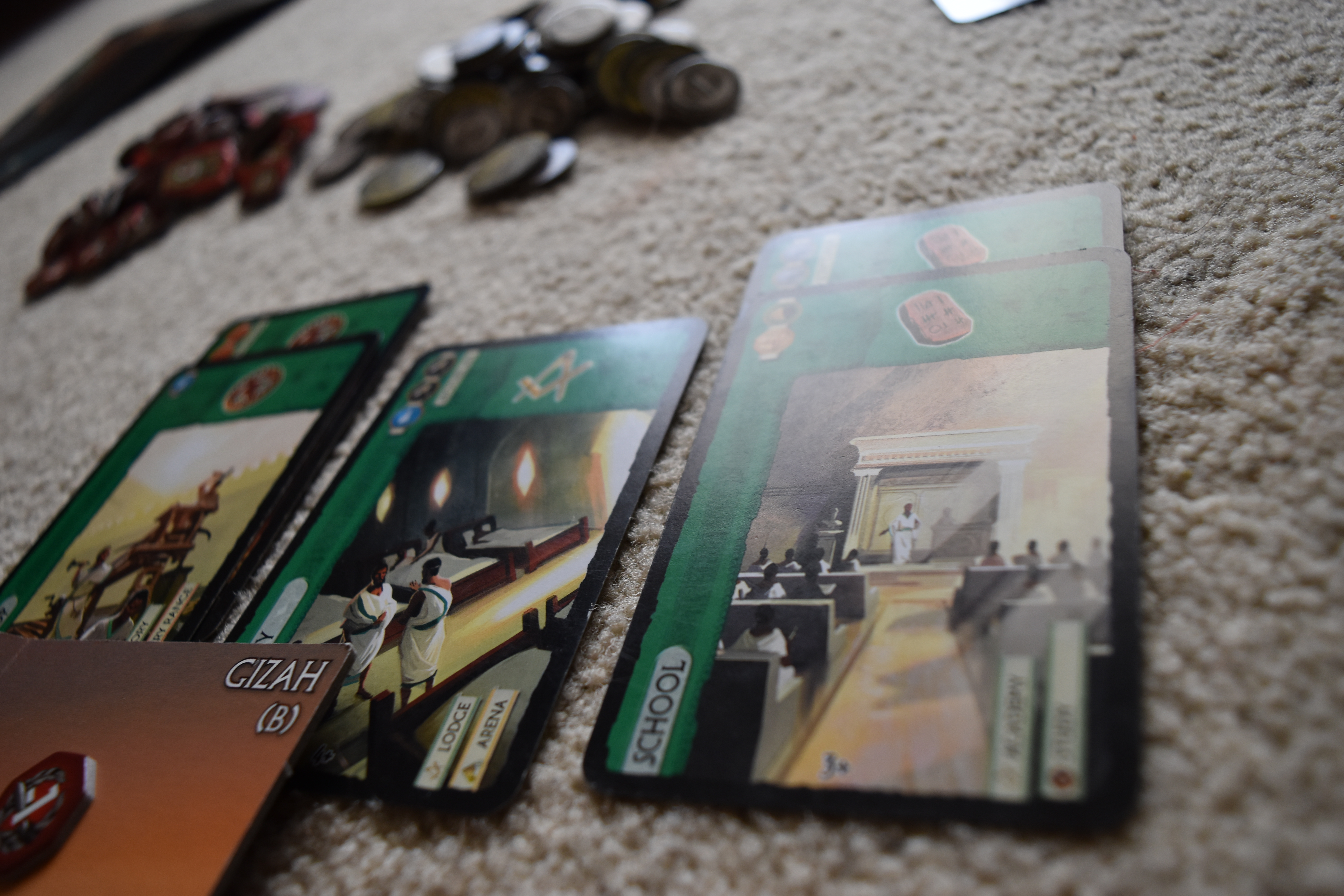
DSC_0338This mechanic where everyone picks cards at the same time means that the game is fairly simple, fast, and can sit up to seven players without significantly racking up the play time to the point where you want to claw your eyes out, or go to bed, or have a life, but you can’t because you started playing a nine-hour game. None of that in 7 Wonders. Even better, it manages to do this while still keeping a lot of delicious strategy and giving everyone some good time to think about what to do.

The third and final era is where it gets particularly interesting as all the big cards come out. This is the only era where purple, or ‘victory’, cards emerge, and they have the power to significantly enhance your score if used wisely. During this era it also becomes fairly apparent which major strategy a player has gone for. And by apparent we mean ‘huh, Pete the twinkly-eyed hippie has 739 blue cards. I guess he’s collecting blue’. This is partly where this week’s Brutus rating comes in- there game does still give you a bit of wriggle room for player interaction, mostly in choosing which card you want (and therefore which card you don’t want the player to the side of you to have). If Pete is collecting blue cards then this gives you at least some reason to nab all the ones he needs before he can lay his grubby little paws on them (disclaimer: Pete actually has hands and they aren’t that grubby. Sorry Pete).
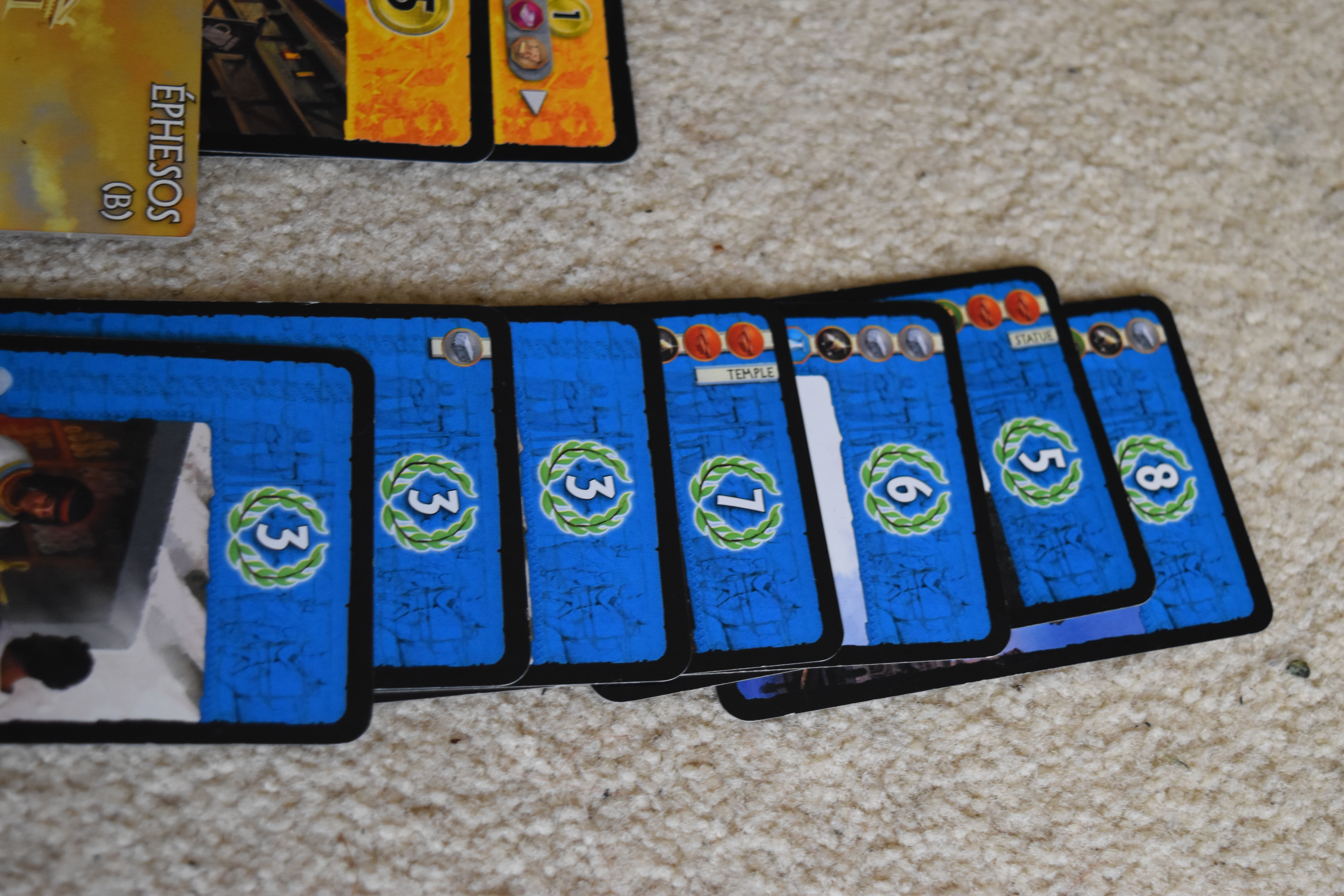
DSC_0344It also earns an extra dagger because after each era you have to have a war with the players to your left and right either side, the poor buggers, and if you want those extra victory points you’re going to have to softly jab someone at least a little.

Unless you’re Rhodes, and then you fully jab everyone. Unapologetically.

Of course the problem with this, and with the fighting mechanic, is that you get a bit dicked over depending on where you decided to sit at the table. Lizzy may be a charming barrel of wit and great to sit next to sometimes (we said “may”) but this kind of game could result in everyone scrabbling to get away from her so they don’t have to put up with her meddling in their affairs for most of the game.

DSC_0343Like all things over the great expanse of the centuries, the game will eventually come to an end. Victory is tallied up and your Civilization scores points for various card-related and wonder-related things.

One thing we should mention is the trickiness with how to score science: no-one really knows. It is literally the only complex thing about the entire game. Usually there is some 7 Wonders veteran in the corner who is called upon to interpret and talk with the science cards, and then relays that information back to the rest of the group like some sort of lesser prophet. Fortunately for the rest of us mortals some genius made a thing that does it for you  http://neilsutcliffe.com/7wonders/   If you can figure out how to make it work, the ‘science!’ strategy is a reliably high scorer, though easily ruined if your neighbours are paying attention to what you’re building.

Had enough photos of cards yet?

The game is fast in general, which makes it perfect to play several times in one evening or to get new people into gaming. As was the case with Briony, it can make a pretty good gateway board game, as long as you take the time to explain each component and keep the card-choosing phase pretty quick. Bob actually hated (or thought she hated) this game for years, not having Briony’s Civ experience and finding game frustrating and exhausting as a board game noob. Turns out, she just had really dawdly friends who didn’t make the trading rules clear. In addition, make sure to stop and take in the art work on the cards, if that’s your cup of tea. They’re often beautifully painted scenes or buildings and they add a lot to the game design.

The real winner is history. But also Briony. She’s just really good at Seven Wonders, man.

This week the credit for the photos also goes to her. Good work, Bri!

Just assume that it says
Just assume that it says “Briony Wins”. Convenient blurring, Briony.

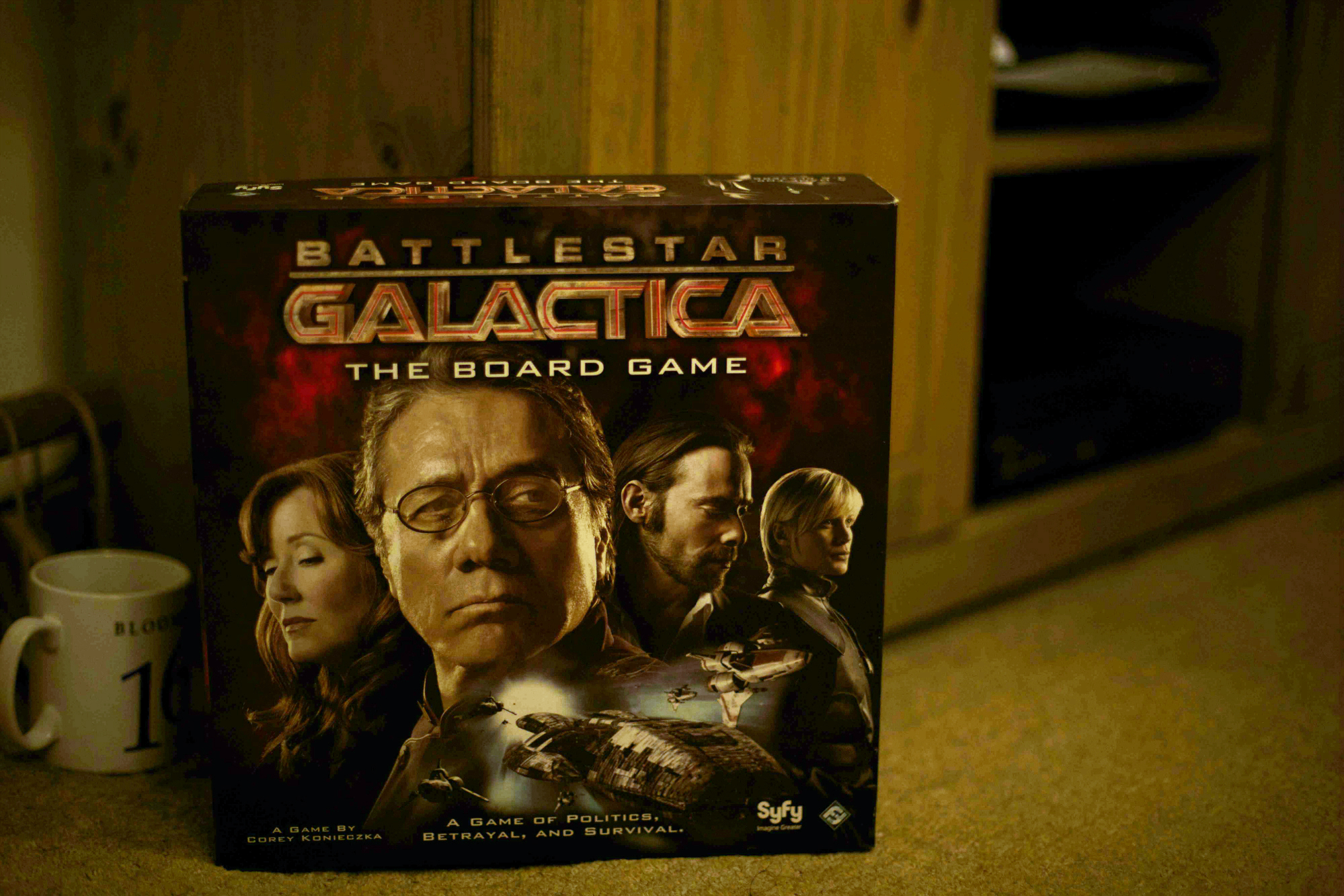
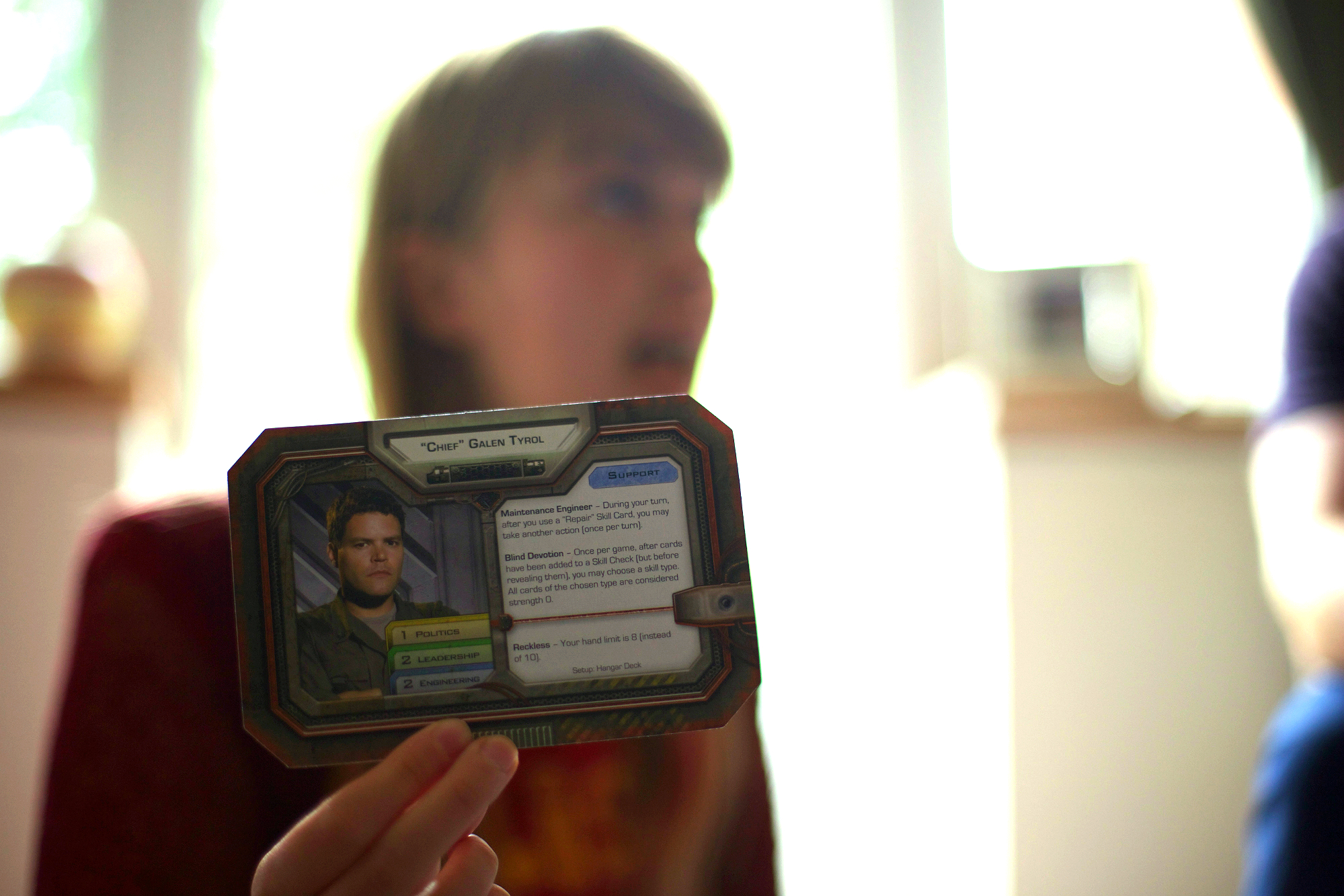
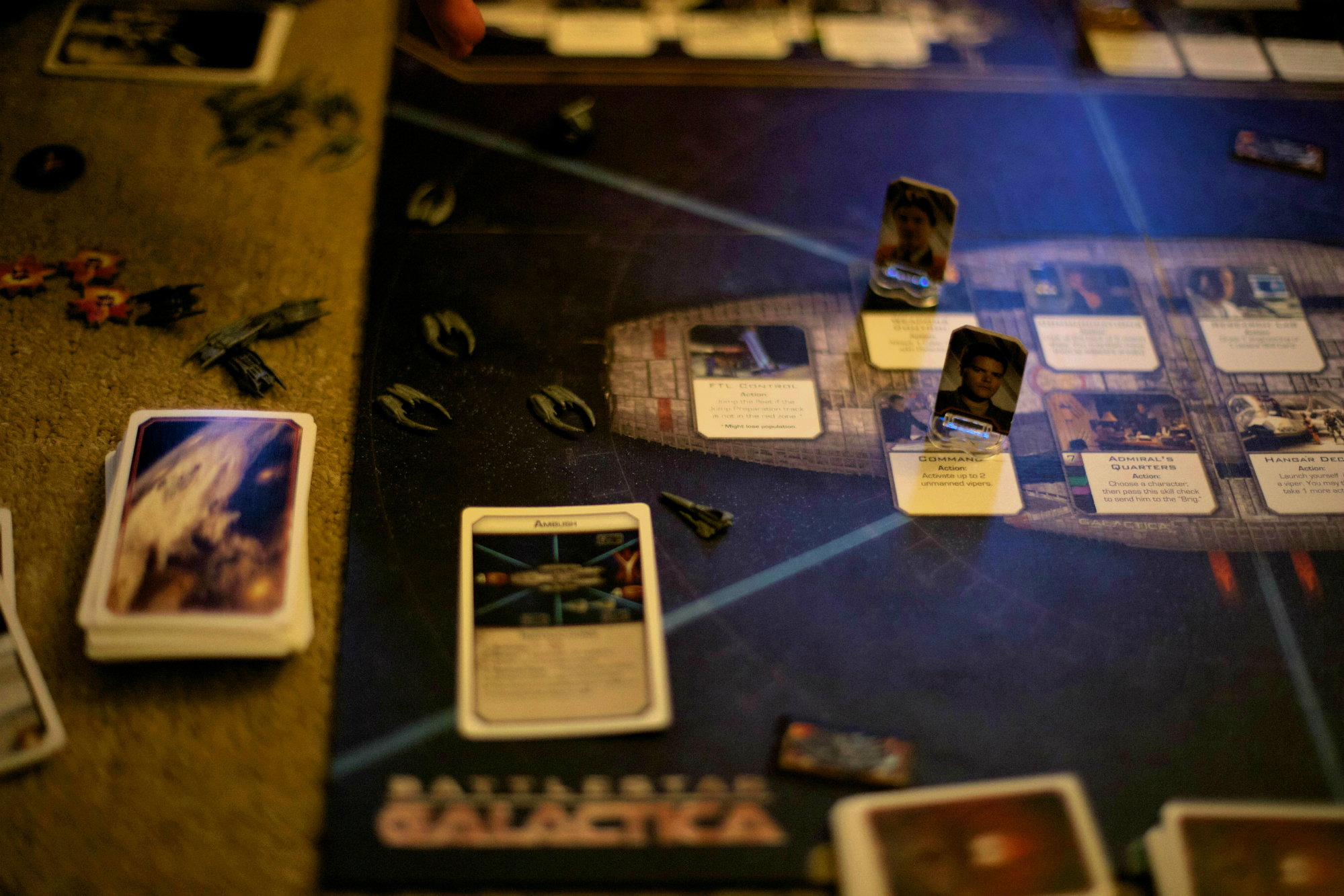
Battlestar Galactica: or ‘how to legitimately take out all of those secret grudges you had on your friends with bullying and wild accusations’

Pairs well with: Space whiskey for the humans, some kind of oil-based fuel for the toasters

1

In a fit of hostility we’ve decided that it would be a great idea to take on a traitor game two weeks in a row. Who can say why? Perhaps because once you’ve started stirring the resentment-pot then you might as well keep going until you have a delicious broken-friendship-soup. Or perhaps it’s because games with a traitor mechanic are bloody brilliant.

2As far as traitor games go, Battlestar Galactica is one of the greats. A familiarity with the television series isn’t necessary, but is a good idea regardless of your position on board games since it’s pretty damn good. (What’s that? Strong female characters? More than one?! Don’t mind if we do!) As such, we’ve always found it a good game to whip out with a group of friends no matter their gaming experience or level of nerdiness. We have all kinds of gateway drugs board games here.
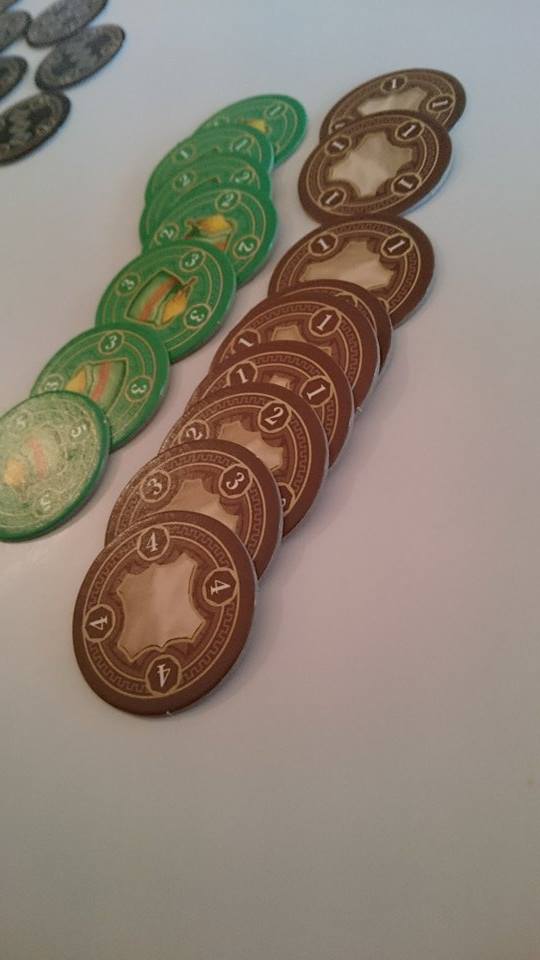
3A willingness to play along when it comes to shouting at each other always helps, though. Like with a lot of traitor games, a lot of the real fun comes from player interaction, rather than clever mechanics and strategies. But that’s good, and there’ll always be space for those sorts of games too in our board game collections. Be wary about playing it with a room full of very quiet people though: we’ve all had mishaps where we have been the only person in the room accusing, thinking ‘maybe if I get this going, everyone will join in…’, when ultimately the room silently and awkwardly judges you. We have instead worked out through trial and error that you will require at minimum of two louder people (three if possible), who are poised and ready to create a shouting, energy-fuelled, accusatory positive feedback loop between themselves. As they get louder, and the claims get wilder, the other players in the room are drawn in like the event horizon of a black hole.

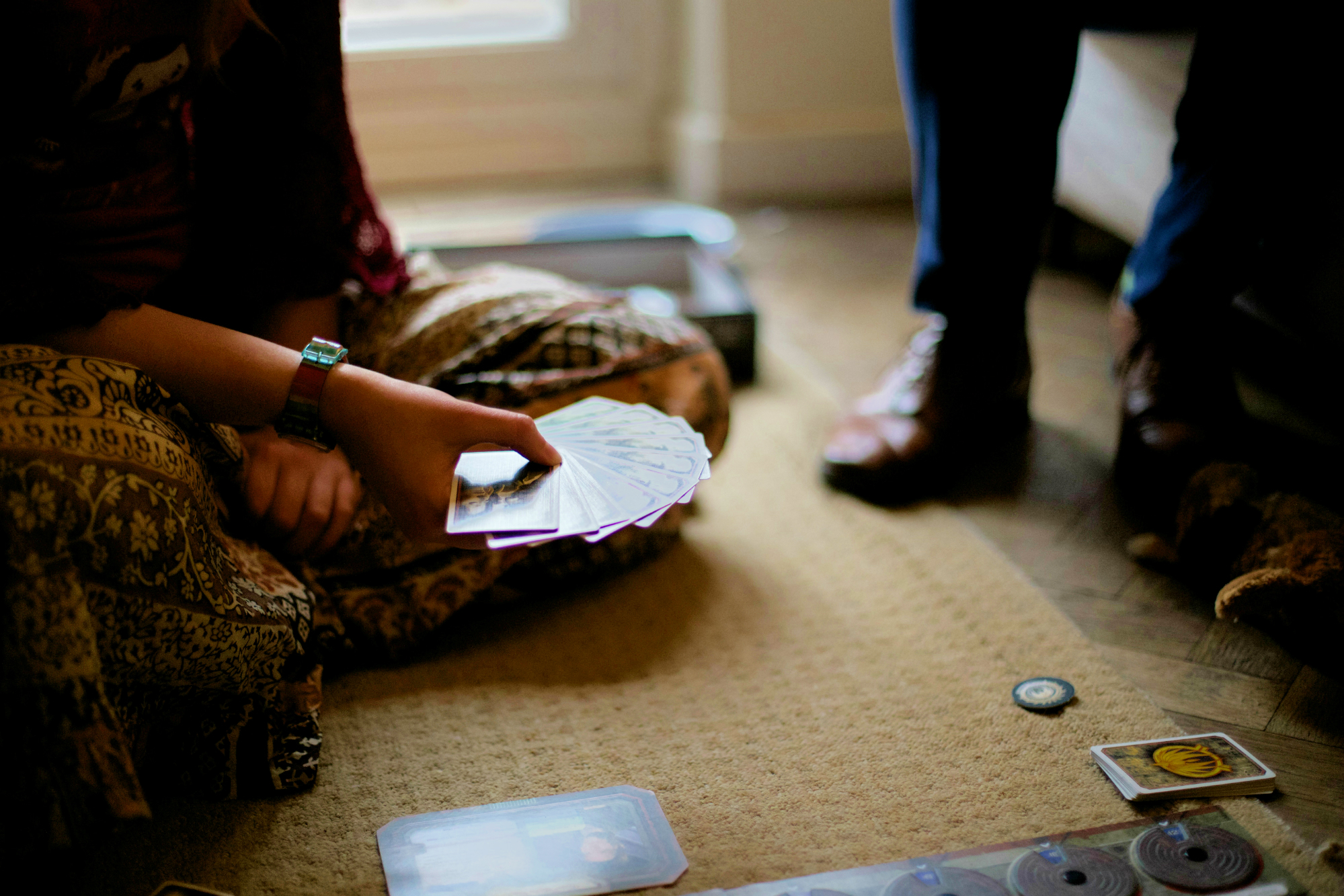
Pick a loyalty card, any loyalty card!

It doesn’t even matter if their accusations are true – say literally anything to gain the room’s unyielding attention. ‘I put it to you could have stolen that cargo before you baked the innocent unicorn into the birthday cake!’

Continuing, the theme is a really well-done sample of the well-trodden trope of “human-makes-artificial-intelligence. Artificial-intelligence-thinks “fuck-this-I’m-a-mother-fucking-bad-ass-robot-I’m-having-you-all-for-breakfast-except-I-don’t-even-eat-meat-because-I’m-a-robot-so-I’ll-just-kill-humanity-and-mount-your-squishy-heads-on-my-wall-as-a-trophy””. Humans are the “good guys” (say The Humans) and Cylons (or “robots” or “toasters”) are the baddies. There tends to be one or two toasty traitors per game, depending on numbers, and traitors will discover their role secretly with hidden cards that are given out at the beginning and in the middle of the game.*

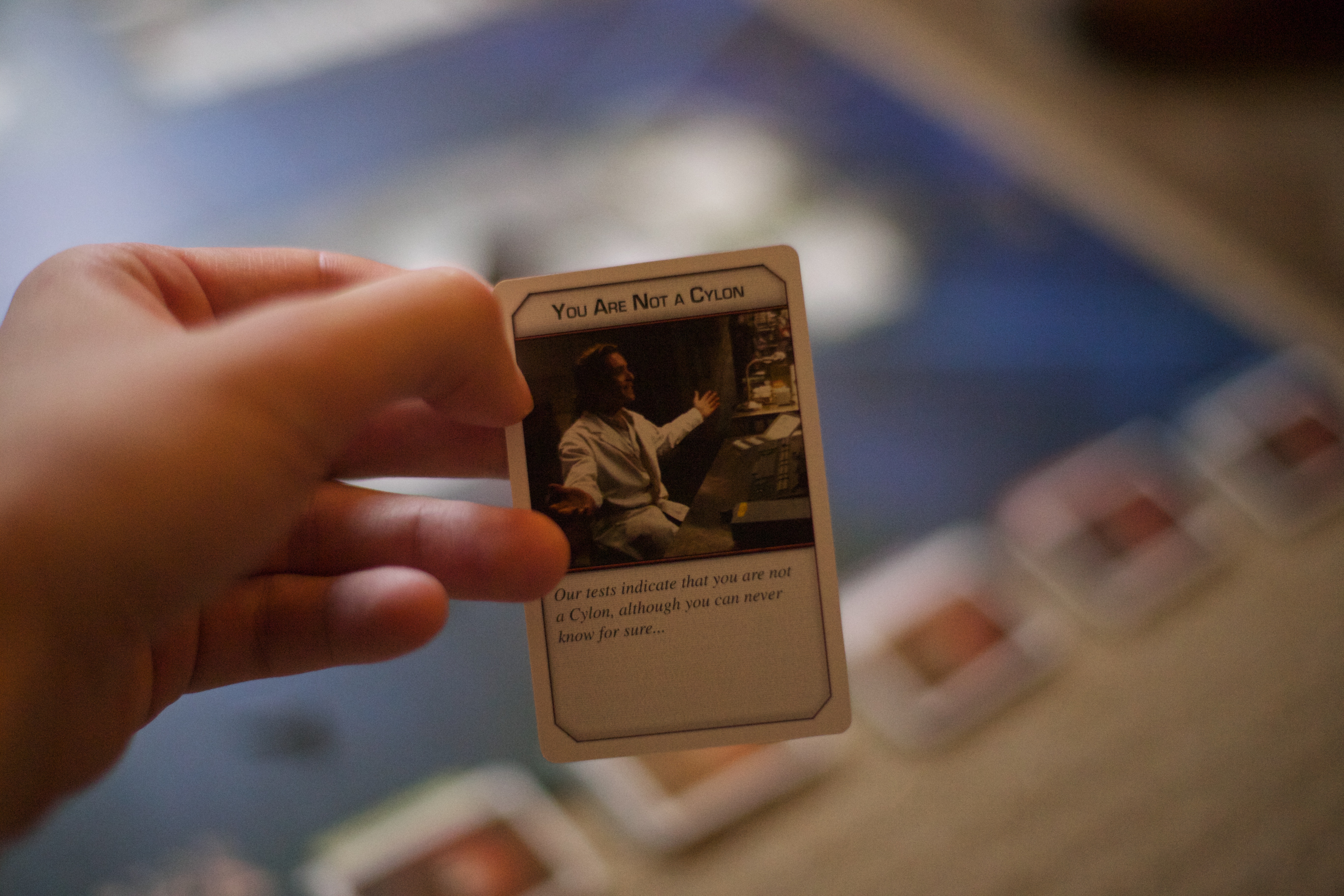
Dr Photographer is a good guy. This time!
Dr Photographer is a good guy. Not in real life, maybe, but in this game.

No matter how much you sit your friends down and tell them to please, carefully read the page in the instructions about what to do if you’re a Cylon, and please all make sure that you understand it all and ask any questions before the loyalty cards are handed out and the game begins, there’ll always be one person who picks their loyalty card, looks at it, looks uncomfortable for five minutes and then has to meekly ask to see the rulebook and shiftily hide which bit they’re reading. This is not a subtle Cylon strategy and we recommend avoiding it if possible.

The sympathiser
The sympathiser

One downside that this game has, (at least, nobody we’ve ever played with has seen it as an upside, that’s for sure) is the way that it deals with certain numbers of players. Camelot, for example, makes the brave move of always having only zero or one traitor per game, no matter the number of players. (It also leaves you with this nifty ability to introduce and lose players mid-game if people suddenly want to join in- genius!) Battlestar has this determination to balance things out, which maybe goes a little bit too far. The Resistance does this to a lesser degree, but still it’s super fucking difficult when everyone is shouting ‘BAD GUY’, and half of the room actually is…

More players (5+) means more Cylons. Fair enough! That can be kind of fun. There are still more good guys than bad guys and there’s an extra level of fun you can have with two Cylons working together to defeat the pesky noble humans.

Playing Battlestar with 5 players is excellent! Two Cylon traitor cards and a lot of fun. Playing Battlestar with 3 players is pretty good too, one Cylon traitor and still enough people for a bit of the ol’ shouting and accusing. With four or six players the game starts worrying that maybe it needs to add more bad guys but also there aren’t enough players for more bad guys, so it says “Shit! We’ll introduce this sympathiser to add instead!”

Let me out of the brig!

Nobody wants to be the sympathiser. The sympathiser is a poor player who gets dicked over at the ‘halfway’ point of the game. If the human team are close to death then the sympathiser is a Cylon who sympathises with them, and gets put in the brig but is still on the human team. If the human team aren’t quite teetering on destruction yet then the sympathiser is a dastardly human who sides with the Cylons but can’t do the full range of Cylon moves. So in attempting to balance out the human vs Cylon ratio the game just selects a player and shits on them a little. Boo, sir.

A team that’s getting along fairly well might find themselves trying, on purpose, to lower a resource to a required level so that the sympathiser that’s about to be chosen will side with them. How does that translate into plot? It doesn’t, it definitely doesn’t.

“Why are you chucking all of that food out of the airlock, Sir?”
“Oh, I was hoping that if we get a food shortage then the Cylons will start to take pity on us.”

I don't mean to worry you all, but this card says
I don’t mean to worry you all, but this card says “Ambush”…

Is there also something a little shitty about being a regular Cylon who only gets their traitor card halfway through the game? After you’ve been trying so hard to stay alive this whole time? Maybe, but that does kind of work as a mechanic. You realise your programming, you realise you’ve just been trying to blend in with the fleshbags and earn their trust, and now it’s up to you to make them pay.

Shit's going down
Shit’s going down

The plight of the humans is pretty damn difficult anyway, as it should be in any co-op game. You don’t want victory to come easy, you want all of your games to be a painful and horrible slog, clawing hopelessly at all your resource dials and trying to stay just about afloat in time to reach the end of the game. Our photographer bought this game over one evening when we’d requested a “small-to-medium sized game”, and he insisted against Lizzy’s protests that it would totally be fine. Several hours later he confessed that, actually, it was just so rare that he’d survived long enough during a game that he barely knew the full length of it.

The card appropriately titled
The card appropriately titled “Loss of a Friend”

Perhaps Lily the dog had the correct tactic when she just waltzed in and knocked everything over. Good girl, Lily.

The gameplay itself has two important rules that aren’t mentioned explicitly in the actual official rules set. Firstly, whenever someone does anything it’s important to determine why, assume that makes them suspicious, and to yell at them for probably being the traitor. This is particularly the case when it’s something that you know they had no choice over.

“OH! You just happened to draw THAT random card, huh? Just what the Cylon would do.”
“OH!! You’re going to the bathroom NOW, huh? Seems like you’re all too keen to convince us of your human functions, huh? cough cough CYLON”
“I saw you touch the toaster this morning, to get toast huh? Lies. You don’t like toast. More like communicating via instantaneous up-link the invasion plans back to the general!”

THEY'RE EVERYWHERE
THEY’RE EVERYWHERE

Secondly, it’s important that you make the appropriate noises when you’re trying to blow things up. Every time one of us forgot to make the appropriate “pew pew” noises as we rolled a die to destroy a raider, we failed. COINCIDENCE?**

Appropriately for a team of misery farmers and their friends we ended up losing from too much misery. Losing any one of your four main ‘resources’ will end the game. It’s pretty clear how this works in terms of running out of population (“Guys? Where is everyone?”), food (humans need that to survive, apparently) and fuel (“Ok, ok, we’ll just float around in space… let’s see…”) but it’s not as clear what’s happening when you run out of morale. Mass apathy? Everyone just goes to their room and has a little sulk? Riots, perhaps?

Too much misery
Too much misery

Whatever it was, it got us good. It was an apt representation of our real life selves, as Sophie was just starting to fall asleep in the corner.

It’s a great game for several players and several hours, as long as you have a good team of people keen to accuse each other. Good luck, brave humans. Get your accusatory pointed finger at the ready.

*of course saying that traitor cards are handed out in ‘the middle’ of the game is a generous but loosely-used description. It’s the middle of the game in theory, if the mighty humans are heading for a full game and a victory. It is, unfortunately, also possible for the game to not even reach the point of handing out the second round of cards before humanity gets blasted into oblivion. It maybe wouldn’t be too shocking if this happened when there aren’t even any traitors on board yet.

** Yes.

Credit to Adam “Not the cylon for once” Photographer-friend for the photos. (Usually about 50% game and 50% hamster these days)

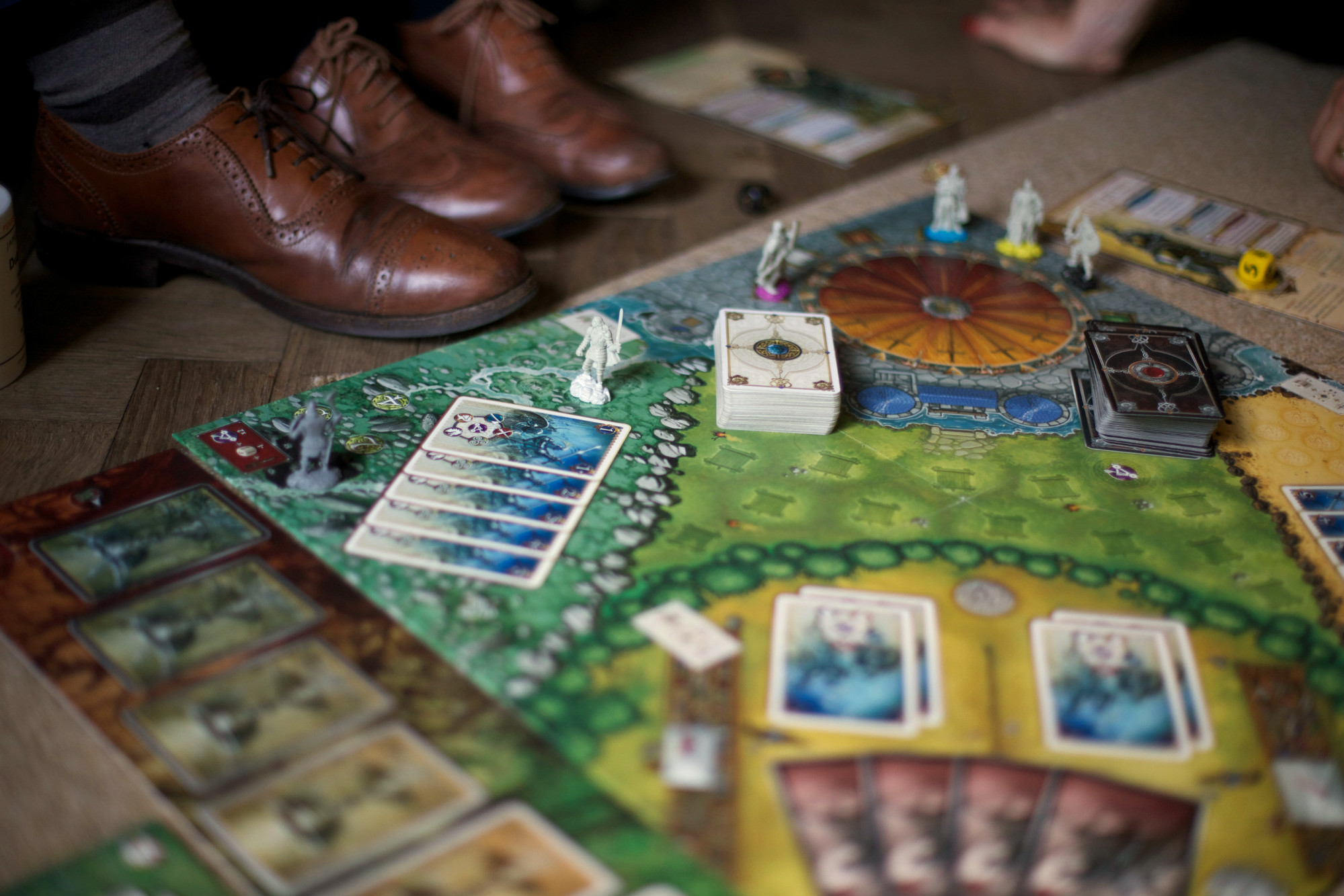
Shadows Over Camelot: Knights of the Round Board Game Table*


Pairs well with: Mead (straight from the Holy Grail)

You know the hamster's in the way, right? Sigh. Of course you do.
You know the hamster’s in the way, right? Sigh. Of course you do.

There’s a lot to be said for a game with a traitor mechanic. And that’s not just because we’re a group of ruthless, soulless, naturally traitorous types who like nothing better than to yell accusations at each other across a table, floor or other flat surface. I mean sure, we are that, and such qualities do lend themselves to particularly enjoying traitor based board games, but still. There are also objective reasons to love a traitor game!

For example, co-operative board games, which the team love (see Letters From Whitechapel), can sometimes suffer from a bit of the ol’ problem where one person knows the game slightly better, or perhaps has a slightly better mind for tactics, and so effectively ends up controlling everything all of the other players do.

2 “Hmm, what should I do for this move…”
“Probably go throw a sword in that lake.”
“Well, I could, but also-”
“Yeah but seriously, the lake.”
“K.”

And nobody wants that.

There are several solutions to this kind of problem in co-operative games, but one trusty solution is the traitor mechanic. If there’s a chance that the person offering you advice is secretly a duplicitous scum bag trying to con you then you’re maybe not going to be so ready to take that advice after all.

One of the players has three feet, but that's probably not too much of an advantage in this game.
One of the players has three feet, but that’s probably not too much of an advantage in this game.

This review was written during a particular game of Camelot with Dr Photographer, three other friends not yet quite fully immersed into the board gaming world and a hamster. And Lizzy ‘usually the traitor’ Blogger, there for journalism and science. The Misery Farmers: Having Fun So You Don’t Have To since… earlier in 2015.

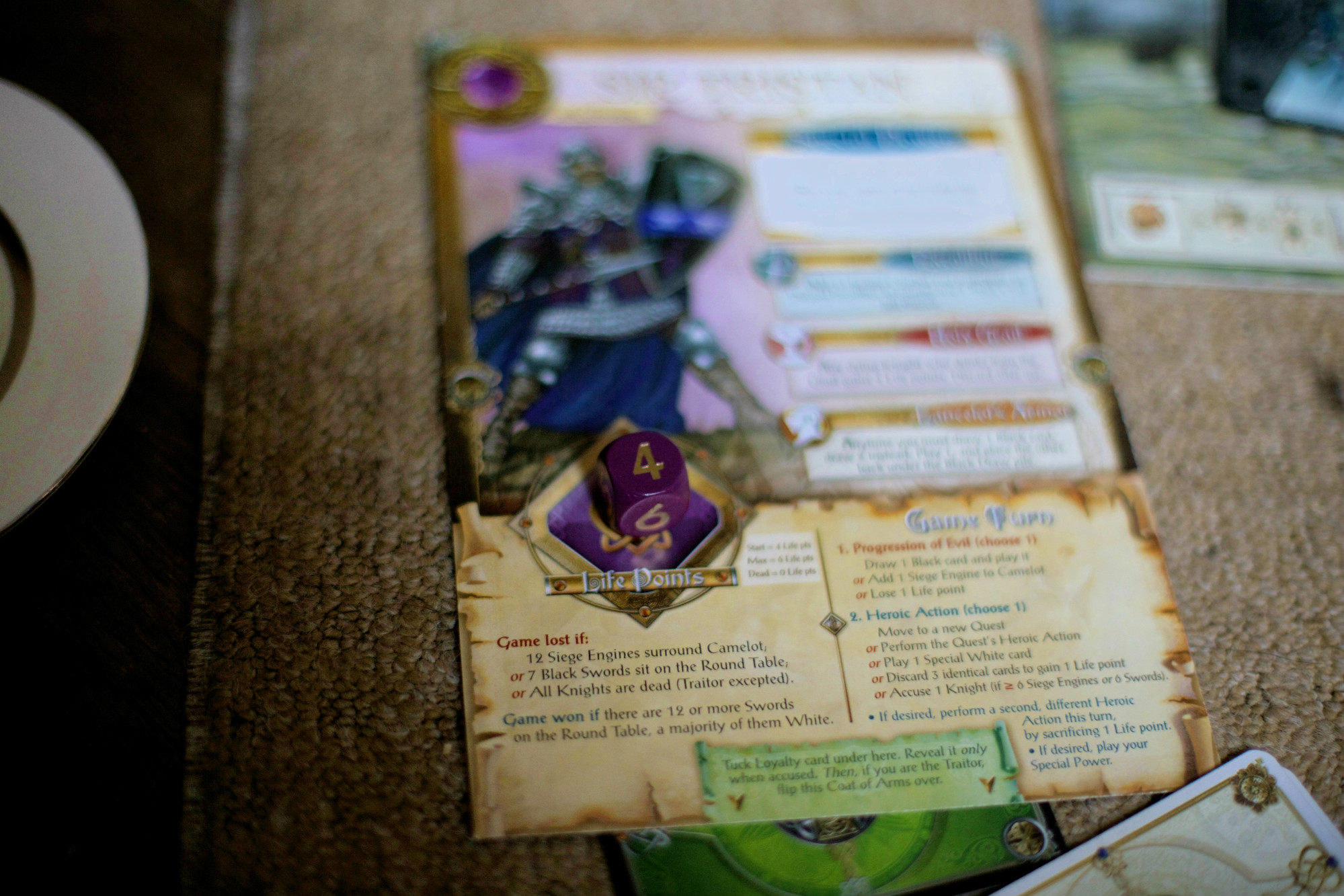
In Shadows Over Camelot the team all play a group of plucky Knights of Round-Table fame. There are several to choose from: these range from the old favourites like King Arthur and Sir Galahad to various lesser-known characters to the farmers such as Sir Tristan ‘the purple one’ or Sir Bedevere ‘the blue one’. (‘Bluedevere?)

TRAITOR GAME?
TRAITOR GAME?

With your character you get a die, a little knight to move around, and a character card with some sorts of special abilities and spiel. Our particular band of plucky adventurers for the evening contained a couple of friends who were still, as mentioned above, fairly new to and slightly wary of all of these board gaming shenanigans, but we had thankfully managed to rile them up get them into the spirit of things with a few rounds of The Resistance first. As such, everyone was ready and willing to start yelling at each other straight from the get-go. Characters were still being dished out when our dear friend Sophie started screaming:

“I’ve seen his card! IT SAYS TRAITOR ON THE BACK!”

Of course, each of the character cards have a ‘traitor’ side on the back with an alternative set of tips and instructions, for if the traitor ends up being revealed. A quick cup of tea and some reassurances later, we persuaded her to stop screaming accusations until the traitor cards had actually been dished out.

“You can be the traitor even if you’re King Arthur?
“Nobody ever suspects King Arthur.”
*Lizzy looks guilty from a previous game*

5

Shadows Over Camelot is an excellent example of a traitor-based game. It has all of the best elements: mystery being one. The traitor card is shuffled into a deck with a bunch of ‘regular old good-guy’ cards and there are always more cards than there are people who receive them. That means that you have no idea whether there’s actually a traitor in the game after all! All of these wild accusations you’re throwing round might all be for nothing. Maybe everything’s fine! Right guys?

It also has the important traitor-game element of hidden cards. The actions available to any brave knight at any given time will be difficult to predict because, quite rightly, players are forbidden to say exactly what cards they have available to them, in terms of specific values and such. For example, one common card is a sword card, which can have a number from 1-5 on it, and the different numbered swords can each be used for very slightly different things. Players aren’t allowed to say specifically which kind of sword they have. (Although they will keep trying to forget this rule and someone (Lizzy) has to play the spoilsport and keep reminding them to shut the hell up)

Tremble before my medium-sized-swords, Saxons!

This does, of course, lead to questionable gesturing and hinting at points which definitely seems to border on maybe not quite following the rules properly.

“Right, I’m making an effort to get rid of these bloody Scots again. I’ve got some… little swords, kind of more like a variety of knives, really. Can someone come and help me out next turn with … uh… some medium sized swords? You know, swords that aren’t that big and aren’t that small… nudge… nudge nudge…”

The beauty of having the full range of options for any one knight hidden from the rest of the table means that it’s always a little bit unclear whether any given person is having a run of bad luck, a traitorous scumbag or are just being plain incompetent.

Almost certainly the traitor

On her first couple of turns, Sir Sophie of new-to-board-gaming fame had trotted off to an area where she could only be of use if she had a 1-Sword card, and promptly in the next turn complained of having no such card and being unable to help. Instead, after only the mildest of chastising, her fellow brave-knaves directed her to the opposite side of the board where some “medium-sized-swords” could be useful instead.

Another round of loyal knightery, holy-grail finding and throwing things into a weird lake later (and other Camelot-themed activities that make the game up) and Sir Sophie’s turn came again. This time, she protested, she was very sad to say that she was unable to help with the current quest at all, the only swords she had on her were 1-Swords!

The keenest of detectives among you will notice that there seemed to be something suspicious afoot.

“Nope, definitely can’t help out over here.”

“Oh, golly gosh, did I say that I didn’t have any of those last round? Oh! Oh my, my bad. I’m just not very used to this game yet. I think the card must have been hidden behind my other cards, sorry chaps!”

It’s a real testament to the team’s faith in Sophie that they all still carried on for several turns believing that she might actually just be playing the game incompetently rather than be the traitor.

Sir Dr Photographer-friend even went so far as to formally accuse Sir Lizzy of being the traitor for what seemed to be ‘the-hell-of-it’ rather than to doubt Sir Sophie. EVEN THOUGH Sir Lizzy had been the only knight to have actually won the good guys any points that far in the game. (definitely not bitter!)

All of the elements of mystery in Camelot not only make for great yelling at your friends but also for great gameplay. The game can be won or lost depending on how many black or white swords fill up the round table at the end of the game, and good swords can be converted into bad ones if you falsely accuse someone of traitorhood or if a traitor remains hidden and undetected right until the end.

This week the brave knights suffered a crushing defeat at the hands of Sir Sophie of Traitorville. Like any good co-op game there’s plenty of suffering and plenty of horrible ways for the good guys to die. We lost by drowning in enemy siege engines, and we lost shamefully early with no hope in sight.

The crushing defeat.

Luckily, this isn’t necessarily reflective of the game as a whole. We’ve had a fair few victories and a fair few terrifyingly close losses as well.

The real winner is the traitorous scum.

*Sorry to mislead you all so early in the review. We actually played this on the floor.

Credit for the photos, of course, goes to Sir Photographer-friend.

Kingdom Builder: (Queendom Builder?)

Brutus Rating: 2/10 daggers in the back
Pairs well with: A different type of beer for each terrain you build on

6D-37-257

Do you remember that thrill you first had, when you were young(er) and excitable and new to the world of board gaming, and you first discovered that the maps of some games are randomised at the start? Like ‘Woah, this randomised Catan map has all of the brick next to each other, how exciting! Oh and in this one all of the fields are lined up next to mountains, how sweet!’ And then there was Small World, where the lands are the same but the history is different and the races that try to populate it all have different randomized attributes. “Today we’re going to fight with FLYING skeletons? What madness is this?”

No? Just us? It takes us back to childhood memories of those ancient strategy computer games with randomised set-ups. Can we pretend that this fixation makes us endearing rather than sad and odd? Excellent.

6D-37-189

Well, if by chance you ARE excited by that kind of thing, then Kingdom Builder is a game for you! There are several different boards to choose from and you select four at random at the start, each constituting a quarter of your future Kingdom. Even more excitingly, each different potential Kingdom-quarter comes with a different bonus action token, meaning the moves you’ll be able to make in the game will be different. EVEN MORE EXCITINGLY THAN THAT (is it even possible to be more excited?) the way to earn points and win the game is ALSO randomised at the start, through a decently-sized collection of cards.

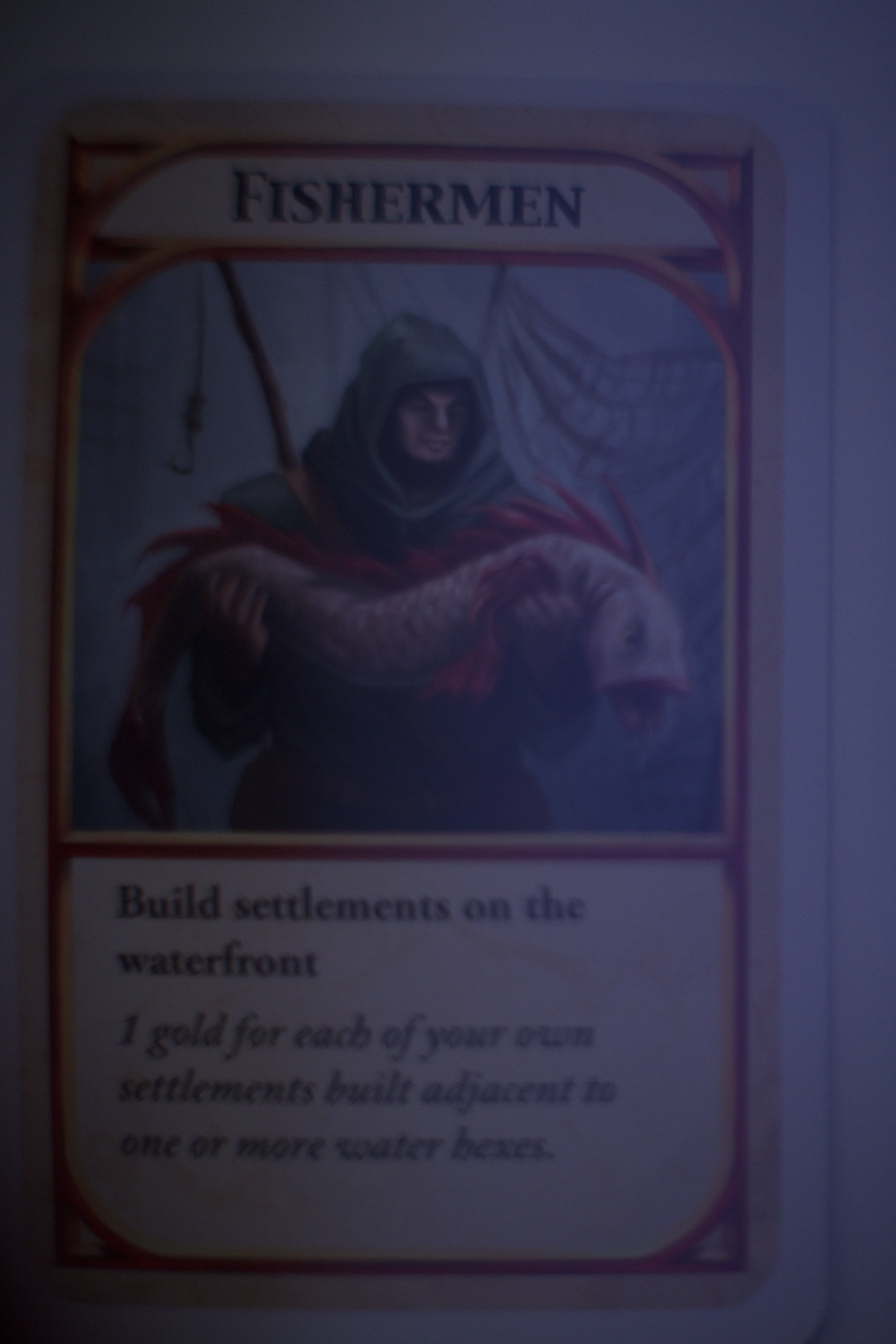
The dark and blurry fishermen
The fishermen in our kingdom were particularly dark and blurry*

In Kingdom Builder you play a mighty kingdom-builder (OK, so it’s not the most roleplaying-heavy game in the world). The aforementioned randomised selection of cards (of which you get three!) determines what kind of people you’re building a kingdom for, thus also telling you what kind of things they’re looking for in a kingdom, thus also telling you how to get points (‘gold’) and some delicious, delicious victory.

If you’re building a town for miners then you’ll probably want some settlements near the mountains, which is where they tend to get their mining did. So a ‘miners’ card will (quite logically) get you one point per settlement next to a mountain.

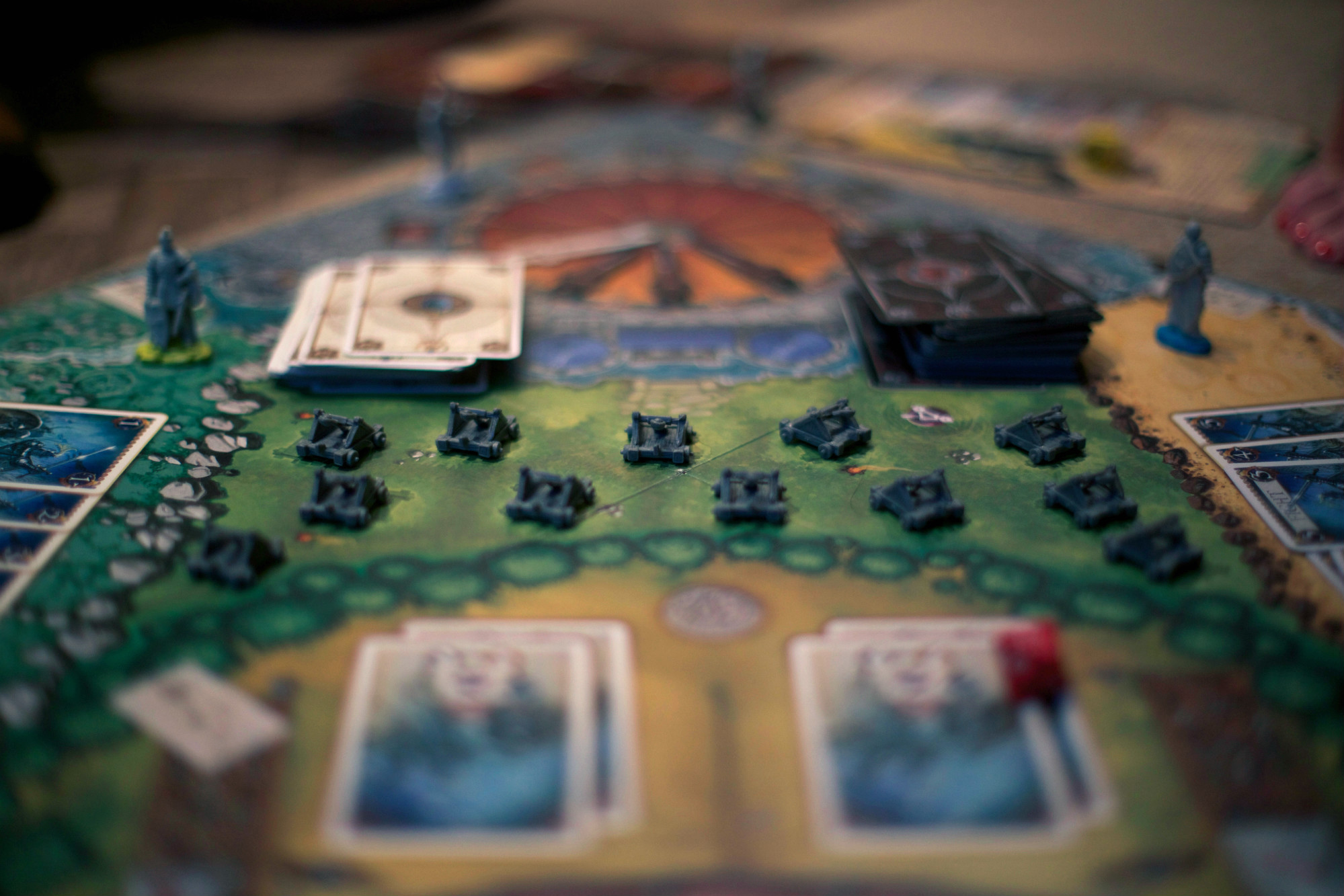
At the time of writing and photographing we closed our eyes and picked fishermen, knights and merchants. A pretty pleasing group to live with, we all have high hopes for our future realms; got ourselves some food, some income and a solid line of defence. There have been worse fundaments for civilisations.

6D-37-223

So the aim of our game will be to build our tiny little houses near water for our fishermen, connecting different settlements for our merchants and … all in a horizontal line, for the knights.

6D-37-233No, we don’t know why they asked for that. It doesn’t seem like it’d be easily defensible. Do they… do they want to do some jousting, and they want the longest possible run up, spanning the entire kingdom? That can’t be it, because they don’t mind if there are canyons in the way, or how broken up the horizontal line is. Do they just have weirder fixations than even the misery farmers? Who knows! Ideas and answers on a postcard, please.

"Neigh!"
“Neigh!”

Play for this game is fairly quick and fairly simple. There are some snazzy terrain rules which will determine where you can lay your houses, of which you’ll lay a base of three per turn, as well as a few kinds of bonus tokens which will let you take extra actions. These, again, are randomised thanks to the boards that you chose at the start. Many of them are kind of samey (Build more on grass! Yay! Build more on desert! Yay…) but there are one or two which can be pretty game-altering. The horses of this kingdom, for example, are so strong that an entire tiny wooden house can hitch a ride across a couple of hexagons and settle down elsewhere. Literally game-changing.

Speaking of those little wooden houses, we should spare a little spot of criticism for the production of some of them. A few of the roofs seem to have collapsed in. Knew we shouldn’t have trusted those bloody fishermen with building the kingdom for us!

Bad work, builder.
Bad work, builder.

The snazzy terrain rules are that you draw a card with a picture of a terrain on it, and that’s where you are destined to build this turn, for three of your settlements at least. It’s unclear why your kingdom is being restricted in this way. Are the people demanding it? It’s difficult to see why a kingdom of fishermen would demand that you build only on the desert for three bloody turns in a row. Besides, what power should they have over you? You’re building a kingdom for them! Go to hell, fishermen! Perhaps instead you only have the materials to build on a certain type of terrain? But then what extra materials would you possibly need to build on the grass that you wouldn’t need to build on the flowers? Ok, let’s just call it some weird superstitious reason and leave it at that. You’re a superstitious kingdom-builder. Done. Let’s not question it any further.

6D-37-252The game is all about making the best you can out of the randomised selection of things that the game throws at you. Mostly in the form of some very annoying terrain restrictions. It’s all randomised in a way that doesn’t seem to leave you too reliant on luck, at least not if you play it right. Sure, having to build your settlements in the sodding canyons for three turns in a row can dick you over a bit but there are measures you can take to avoid it ruining your kingdom too much. Oh you didn’t take those measures and now you’re stuck building in the corner? Well that’s just your own fault.

Very mild earthquake in the kingdom

If you’re not careful you can really feel yourself just getting carried away. A turn itself seems so insignificant, “oh I’ll just waste this one turn building on this bit of desert but I’ll be fine next time”, but then after several turns you can look back and find yourself having just squeezed out a sad turd of a civilization and you’re out of control and maybe you’re not up for this kingdom ruling business after all! Aah! Woe!

This happened in the game we were just playing. Those of you already familiar with Kingdom Builder might look at the photos of the board and think “That can’t be the same game they were describing in the post! There are hardly any horizontal lines at all! If they had Knights they’d be doing terribly!” You’d be right. We were just doing really terribly. We’re rightly ashamed.

Scoring time, score!

Aside from all that, Kingdom Builder is a pretty good game. It’s fairly simple and all of that randomisation we’ve been banging on about for most of this review equates to some pretty damn good replayability. Possibly our favourite game to come out of Essen 2013. Huzzah!

The photographer won again, but whatever. The real winners are the fishermen.

*Lizzy: Can we get some nice photos of some of the bits that make up the game this time? Please? For journalism?
Dr Photographer-Friend: No! Screw you! I’m going to spend most of this time taking photos of this apple and this weird dog toy you’ve been using as a door stop instead. Stop trying to strangle my artistic vision!

Still, credit goes to him again for our photos.

6D-37-27

Jaipur: One of the best camel trading games you’ll play this week!

Brutus Rating: 7/10 knives in back
Pairs well with: Fine wines sipped from golden chalices that you don’t quite have enough of to trade yet.

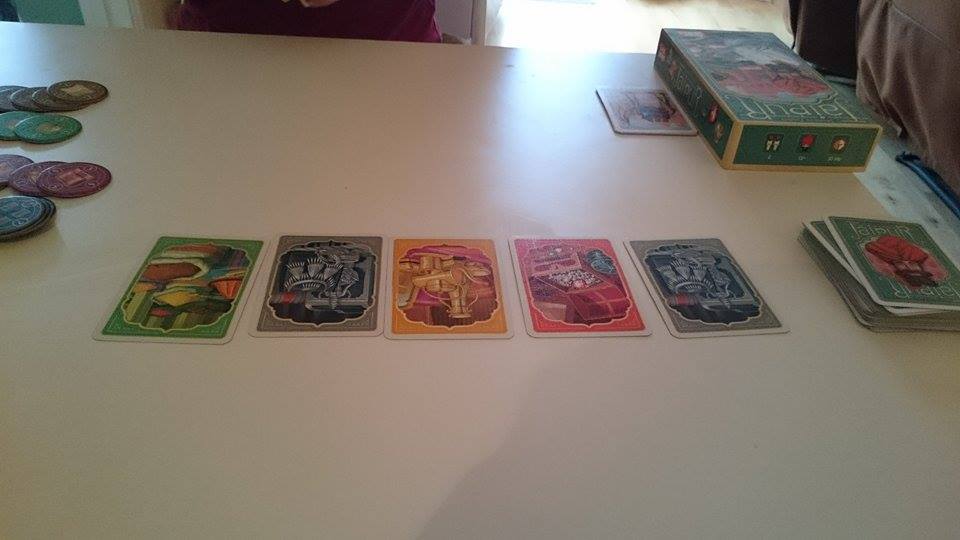
11716029_10155865989225085_5783316_n

(Poorly lit photos can be blamed on the photographer friend not being around this week. Or maybe on Bob for moving house. Basically, anyone other than Lizzy, who is coincidentally in charge of posting this week.)

11720023_10155865987270085_260705191_n2014 was quite the year for camel games, so it also proved to be an excellent time for Lizzy to receive Jaipur as a Christmas gift. It most certainly ranks in the top three for camel-based-games that she acquired that year, and Briony is inclined to agree that is sure is fun. This review marks the beginning of a new, and duly called for, list created by ‘The Misery Farm’ – Two Player Games Ranked In Order Of How Likely They Might Make You To Split Up With Your Other Half While Spending Time Together.

Huzzah! Never has a more practical and important list been created! We constantly see threads on various sites and blogs that call for good two player games with a lot of specific categories: these range from ‘must be easy to learn because my wife has a short attention span’, to ‘has to be small and portable enough for me to carry this to another country to see my long-distance bae’.

"Show me the goods!" "Here they are!" "Good."
“Show me the goods!”
“Here they are!”
“Good.”

Jaipur is a pretty good two-player card game to kick the list off with. You buy goods, trade goods, trade goods for camels, trade camels for goods, trade goods for other goods, sell goods. Good? Good!

The game is fairly fast-paced and over two or three rounds: best of three is the winner. To win the round – that is, being the best at trading and most impressive to the Maharajah – you get a little token with the Maharajah’s face on, and the first person to please the Maharajah twice is crowned the victor and will forever be employed as his best personal trader. Conveniently, the Maharajah tends to be most impressed by whoever has the most points at the end of the round, so determining who wins is pretty simple.

His Grace's faces
His Grace’s faces

Your goods come in the form of captivating colour-coordinated cards, and you and your other half (and/or nemesis) have a hand of your own and a communal pile of five to compete over.

11715998_10155865989180085_1975058349_nThe best bit about this game (other than the inclusion of camels) is its excellent ratio of rules to strategy complexity, and the fact that it might occasionally remind you of playing card games with your Gran in your earlier years. The rules are fairly quick and easy to learn, just like the game is to play, but the more you play it the more you start developing a complex strategy for how to trade. There are several things that the game gives you to look out for, and winning means balancing strategies and trying to open up as few opportunities as possible for your opponent.

11739755_10155865988975085_779132515_nMost goods depreciate in value pretty darn quickly. You can sell some of that brown leathery stuff, the most common good, but only the first few bits that get sold will be worth a decent amount of points, so if you’re going to sell it then you want to be the first person to do so. But wait! The more you sell at one time, the more bonus points you’ll get, so you want to save up as much as you can before you sell it. This shit gets competitive, yo. You don’t want to be saving up a bunch of that lowish-value [green resource] for ages and then have some arsehole your loving partner sell a single [green resource] first just to take the best price. Knob.

The game gets a fairly high ‘brutus rating’ because most things you’ll do will tend to affect the other player. And if you’re anything like us (or anyone we know. We need some new friends) then you’ll be purposely trying to knobble them over instead of just getting ahead yourself. But that’s ok, because it’s a two-player game! That’s how two-player games should work, and the dicking-up goes both ways and isn’t too extreme.

11741830_10155865987485085_1100015158_nThere are also various other factors which turn the game into more of a rampant strategy-fest. The hand limit is devilishly small, which will leave you regularly cursing. And there are special rules for trading different numbers of goods, and special rules for trading camels. Some goods – the most valuable – can only be traded when you have at least two of them to hand. All of this is pretty simple to learn but, again, makes the game surprisingly tactical.

Another great thing about this game is that despite all of the above it’s really fun to play, and the resentment and hatred for your partner doesn’t build up so much that it’s not manageable. Sure, they’ve traded away the last goddamn silver but at least they haven’t ruined your entire bloody life. This time. The fast-paced nature of the game and the fact that you need to win 2/3 rounds for victory really helps with this. Before long the round will be over, and one of you will be taking your victory-Maharajah token, holding it up to your ear and saying,

“What’s that, Maharajah? You were really impressed with my trading prowess today? Oh, thank you, that’s very kind. No, it really is my pleasure. What’s that? You regret choosing Martin last round? Yes, well, we all make mistakes. Not to worry.”

"Oh Maharajah! You flatter me."
“Oh Maharajah! You flatter me.”

So yeah, you’ll give them a smack on the face once or twice, but there’ll be no permanent damage by either hands or words.

Definitely not missing a token. Don't know what you're on about. Your face is missing a token!
Definitely not missing a token. Don’t know what you’re on about. Your face is missing a token!

Lizzy took this on holiday with her boyfriend and they both came back in one piece. Which is an impressive thing to say any time Lizzy plays board games with anyone, to be honest. Briony has also had a good time playing it with a whole range of people, boyfriend included. So Jaipur gets a good rating not just as a good card game, but as a particularly good game to take away on holiday with you if you don’t want to have any more arguments or breakups than necessary. Good work, Jaipur.

The real winner is the camels.

11721295_10155865988395085_1519231680_n

(and Lizzy)

Sushi Dice: What is the Sound of One Hand Dinging?

Brutus Rating: 2 little fish hooks in the back.
Pairs well with: Sake or Ahasi beer.

6D-33-106

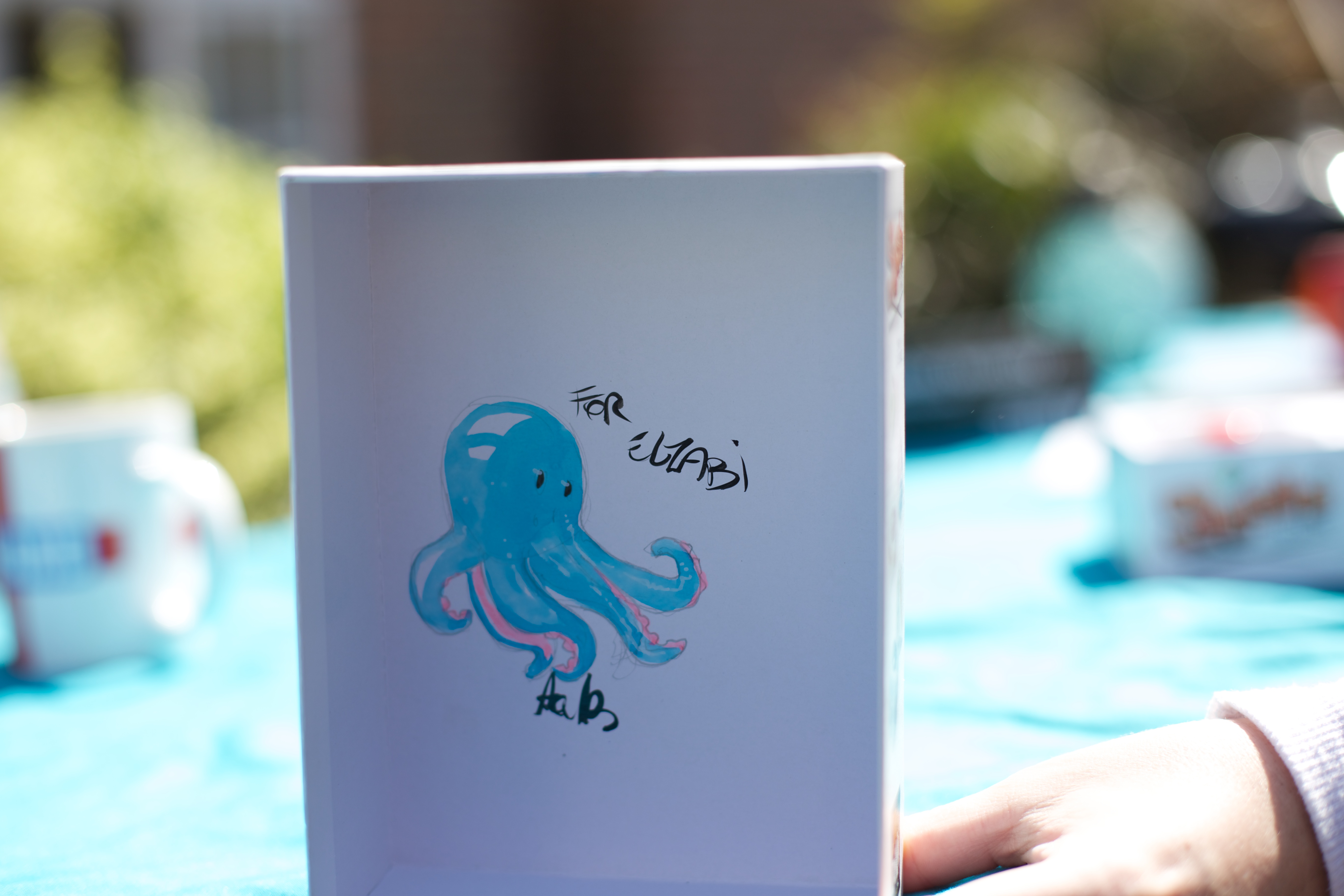
There are two ways to play Sushi Dice. The adult way, and the kids’ way. The adult way goes like this: You go to Essen Spiel with your friends and partner of choice and have a wonderful time (very important stage, this one). While there your friendly robot boyfriend should find the stand6D-33-104 where a new game called Sushi Dice is being exhibit and played (note, sushi is for some reason the current theme of choice for casual games – don’t confuse Sushi Dice for Sushi Go! or Sushi Express or some other nori-based nonsense). The game artist will hopefully be sitting at the stand, churning out little watercolour octopus drawings on the inner lids of games bought then and there. Friendly robot boyfriends know that this makes an excellent gift, and will buy it for their neurotic board game girlfriends (ie Bob).

Later on, when you and your wily gang of nerds are relaxing at a German Brauerei with beer 6D-33-117and bratwursts the length of your arm, you figure out the (very very simple) rules and have a go at playing. The game can be played by any number (>2) of people, but there are only ever two active players at a time. Each active player gets six dice, with are printed with sushi ingredient symbols. Three of the six dice have a star symbol, and three have a black skull.

To play, a deck of cards depicting sushi and other fish dishes (e.g. paella, fish and chips) is placed face down. Three cards are drawn from the top and laid face-up in the middle of the table.

6D-33-149

Players roll their dice until they match the ingredients of a fishy dish and if they get there first they get the dish card. Whoever has the most cards after an arbitrary length of game time wins. Then the round ends and the dice pass to the next pair of players.

6D-33-122Stars are wild. If you see another player get a skull dice you can yell ‘YUCK!’ and they will have to re-roll all their dice. If a non-active player sees both active players roll a skull they can yell ‘CHOP’ and the round ends.

To signify that you, the plucky sushi chef, have completed an order of whichever fishy dish you’ve chosen, you ring the handily-included bell. Of course, when you play the grown-up version you’re in a tap-house, so it’s unlikely that a group of people ringing a service bell would be very popular. So instead of hitting the bell you instead say ‘Ding!’ This swiftly escalates to shouting ‘DING!’ while hitting the table but that’s still way better than being the dickheads with the bell, right?

6D-33-138

Of course, when you play the kids’ version you have to include the bell. Them’s the rules. You also have to become suddenly and tragically blind to cheating. As part of Bob’s plot to indoctrinate the youth of today with geeky values* she has become adept at rooting out decent games which are still child-appropriate.**Sushi Dice is pretty and brightly-coloured, easy to learn, and loud.

6D-33-141

DING!

Kids like loud***.

DING DING DING!

In fact the children Bob played this game with liked it so much they refused to stop playing it even after all the adults had lost interest.

(DINGING intensifies)

The two of them played it between themselves for a good while until the accusations of cheating got out of hand (they were both cheating, and they weren’t even playing to win). Then one of them continued to play it by herself, mainly just to be able to hit the bell every time she finished a combination.

6D-33-154

(DINGing continues, forever, until all meaning and time is lost to the sound of one hand dinging. And every time the bell rings, Bob’s dog barks. She has created a monster.)

That’s what we can consider a success story.


*Parents! Are you worried about your teenage children growing up to be hoodlums and drug fiends!? Well try this remedy on for size: Magic the Gathering! With this collectable card game your son or daughter will never have the money for drugs, and all their friends will commit no greater crime than failing to shower regularly! Hurray!

** Unfortunately she still hasn’t been able to stop saying ‘fuck’ in front of the kids. You can’t fight nature, man.

*** See the Twilight Imperium review for the moment when loud became unbearably loud.


Picture thanks to Dr Photographer