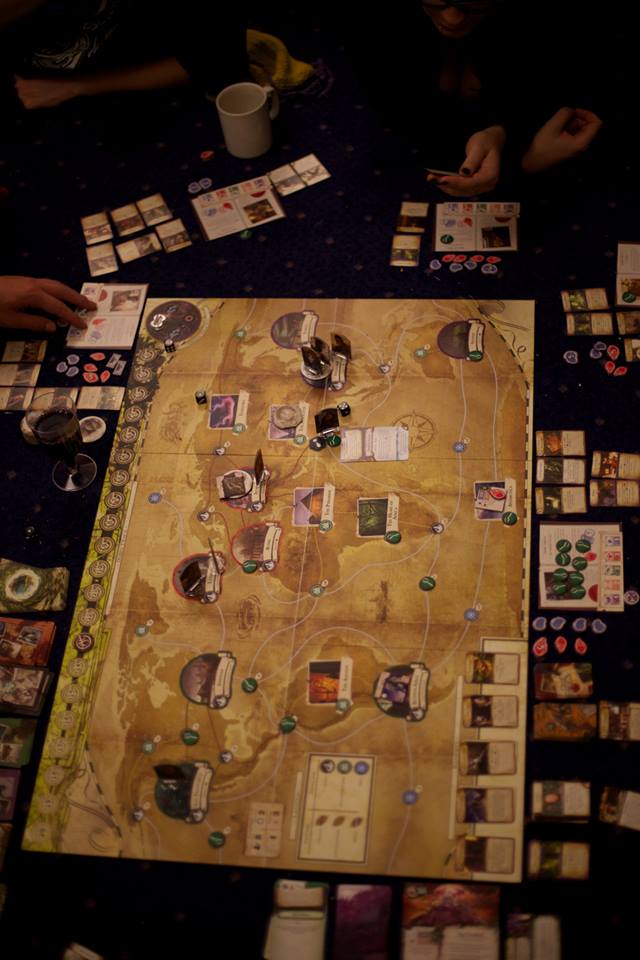
Shadows Over Camelot: Knights of the Round Board Game Table*


Pairs well with: Mead (straight from the Holy Grail)

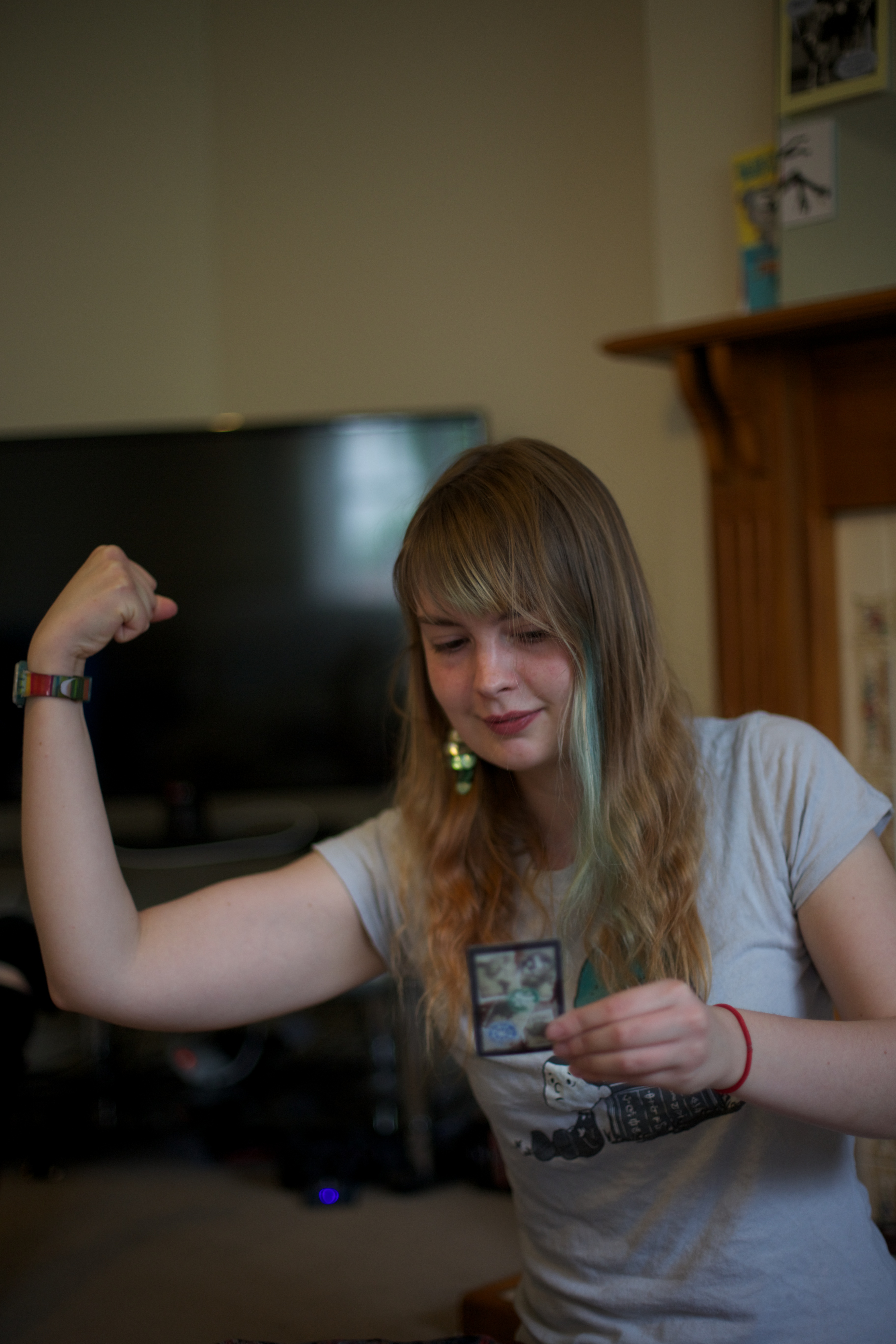
You know the hamster's in the way, right? Sigh. Of course you do.
You know the hamster’s in the way, right? Sigh. Of course you do.

There’s a lot to be said for a game with a traitor mechanic. And that’s not just because we’re a group of ruthless, soulless, naturally traitorous types who like nothing better than to yell accusations at each other across a table, floor or other flat surface. I mean sure, we are that, and such qualities do lend themselves to particularly enjoying traitor based board games, but still. There are also objective reasons to love a traitor game!

For example, co-operative board games, which the team love (see Letters From Whitechapel), can sometimes suffer from a bit of the ol’ problem where one person knows the game slightly better, or perhaps has a slightly better mind for tactics, and so effectively ends up controlling everything all of the other players do.

2 “Hmm, what should I do for this move…”
“Probably go throw a sword in that lake.”
“Well, I could, but also-”
“Yeah but seriously, the lake.”
“K.”

And nobody wants that.

There are several solutions to this kind of problem in co-operative games, but one trusty solution is the traitor mechanic. If there’s a chance that the person offering you advice is secretly a duplicitous scum bag trying to con you then you’re maybe not going to be so ready to take that advice after all.
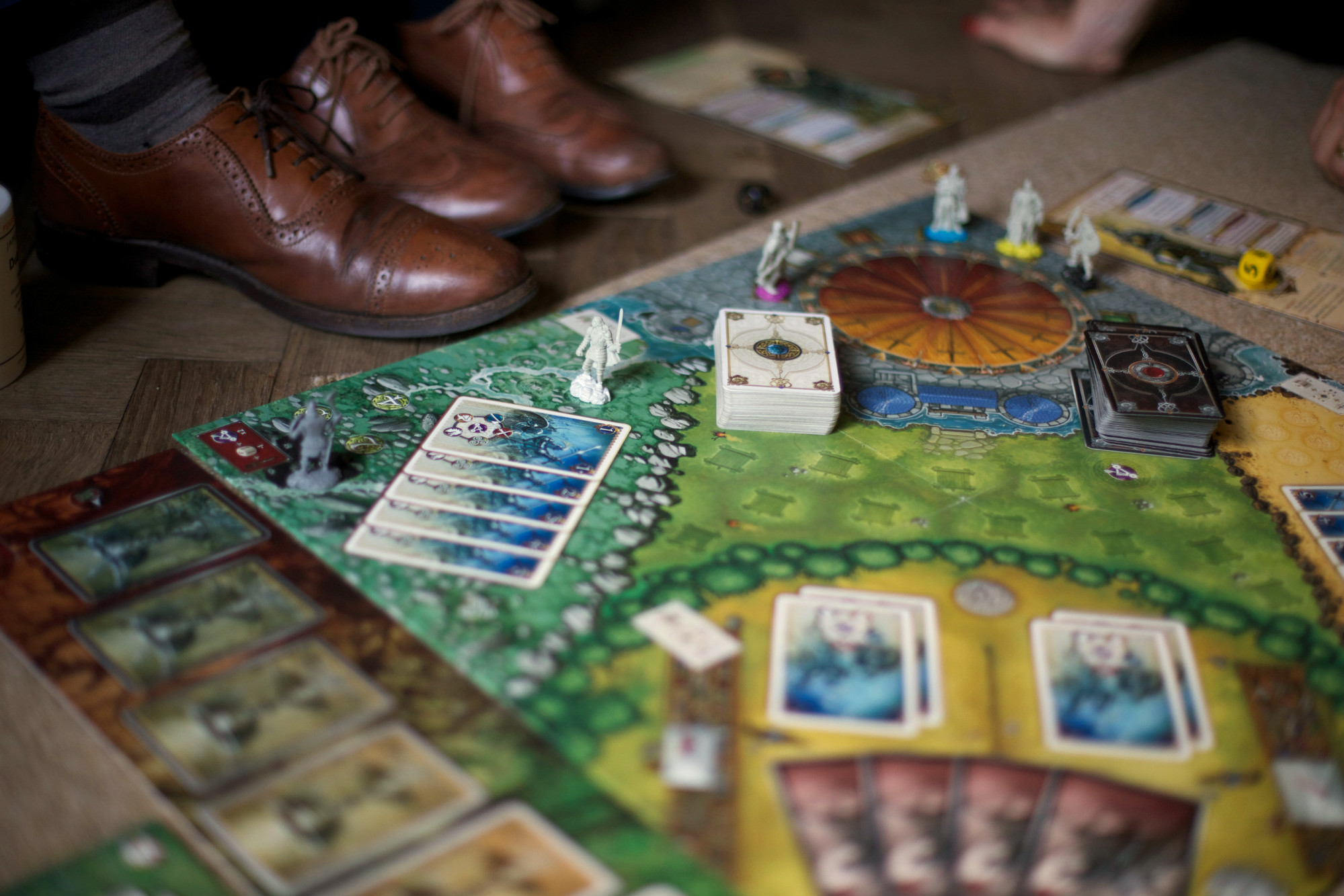
One of the players has three feet, but that's probably not too much of an advantage in this game.
One of the players has three feet, but that’s probably not too much of an advantage in this game.

This review was written during a particular game of Camelot with Dr Photographer, three other friends not yet quite fully immersed into the board gaming world and a hamster. And Lizzy ‘usually the traitor’ Blogger, there for journalism and science. The Misery Farmers: Having Fun So You Don’t Have To since… earlier in 2015.

In Shadows Over Camelot the team all play a group of plucky Knights of Round-Table fame. There are several to choose from: these range from the old favourites like King Arthur and Sir Galahad to various lesser-known characters to the farmers such as Sir Tristan ‘the purple one’ or Sir Bedevere ‘the blue one’. (‘Bluedevere?)

TRAITOR GAME?
TRAITOR GAME?

With your character you get a die, a little knight to move around, and a character card with some sorts of special abilities and spiel. Our particular band of plucky adventurers for the evening contained a couple of friends who were still, as mentioned above, fairly new to and slightly wary of all of these board gaming shenanigans, but we had thankfully managed to rile them up get them into the spirit of things with a few rounds of The Resistance first. As such, everyone was ready and willing to start yelling at each other straight from the get-go. Characters were still being dished out when our dear friend Sophie started screaming:

“I’ve seen his card! IT SAYS TRAITOR ON THE BACK!”

Of course, each of the character cards have a ‘traitor’ side on the back with an alternative set of tips and instructions, for if the traitor ends up being revealed. A quick cup of tea and some reassurances later, we persuaded her to stop screaming accusations until the traitor cards had actually been dished out.

“You can be the traitor even if you’re King Arthur?
“Nobody ever suspects King Arthur.”
*Lizzy looks guilty from a previous game*
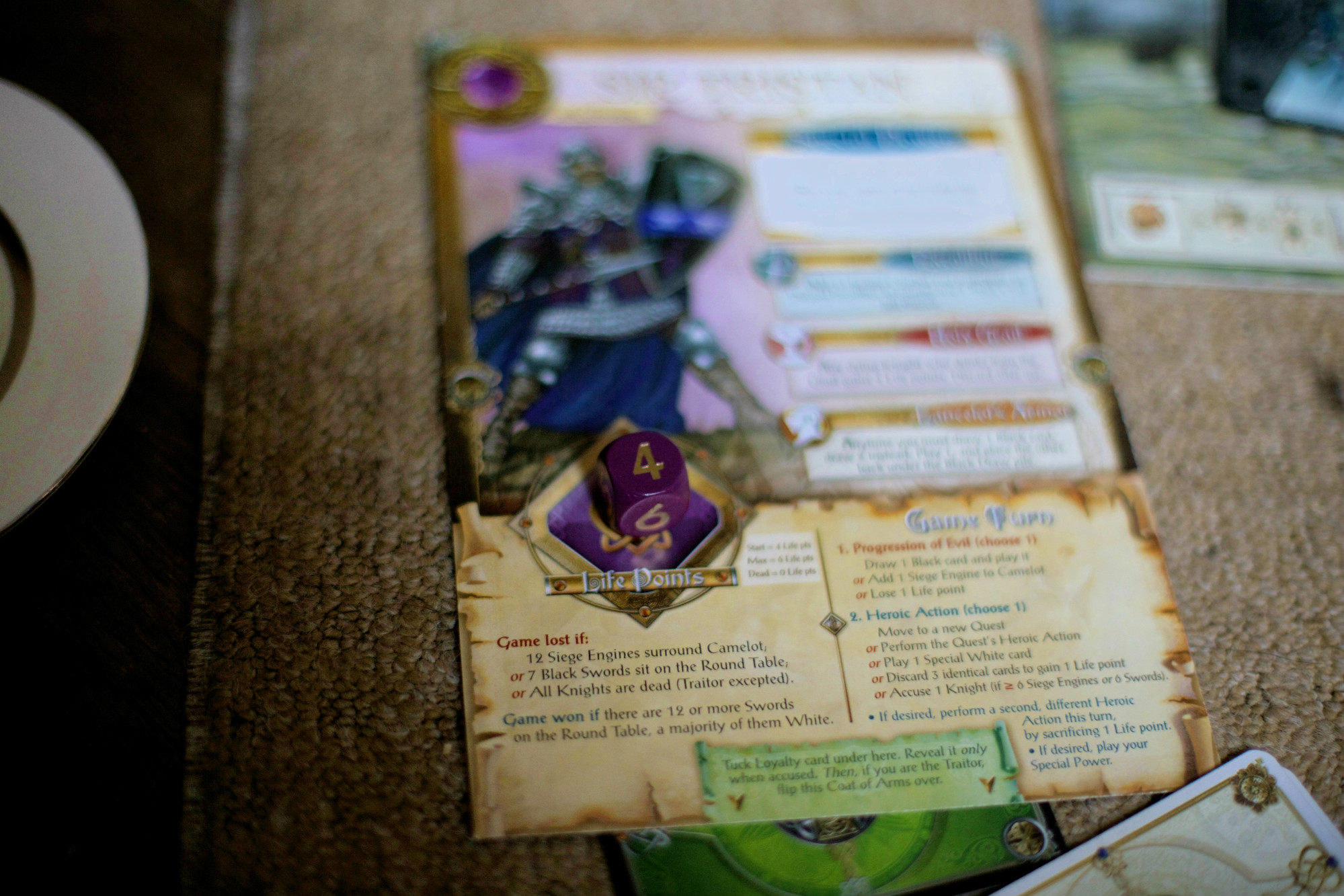
5

Shadows Over Camelot is an excellent example of a traitor-based game. It has all of the best elements: mystery being one. The traitor card is shuffled into a deck with a bunch of ‘regular old good-guy’ cards and there are always more cards than there are people who receive them. That means that you have no idea whether there’s actually a traitor in the game after all! All of these wild accusations you’re throwing round might all be for nothing. Maybe everything’s fine! Right guys?

It also has the important traitor-game element of hidden cards. The actions available to any brave knight at any given time will be difficult to predict because, quite rightly, players are forbidden to say exactly what cards they have available to them, in terms of specific values and such. For example, one common card is a sword card, which can have a number from 1-5 on it, and the different numbered swords can each be used for very slightly different things. Players aren’t allowed to say specifically which kind of sword they have. (Although they will keep trying to forget this rule and someone (Lizzy) has to play the spoilsport and keep reminding them to shut the hell up)

Tremble before my medium-sized-swords, Saxons!

This does, of course, lead to questionable gesturing and hinting at points which definitely seems to border on maybe not quite following the rules properly.

“Right, I’m making an effort to get rid of these bloody Scots again. I’ve got some… little swords, kind of more like a variety of knives, really. Can someone come and help me out next turn with … uh… some medium sized swords? You know, swords that aren’t that big and aren’t that small… nudge… nudge nudge…”

The beauty of having the full range of options for any one knight hidden from the rest of the table means that it’s always a little bit unclear whether any given person is having a run of bad luck, a traitorous scumbag or are just being plain incompetent.

Almost certainly the traitor

On her first couple of turns, Sir Sophie of new-to-board-gaming fame had trotted off to an area where she could only be of use if she had a 1-Sword card, and promptly in the next turn complained of having no such card and being unable to help. Instead, after only the mildest of chastising, her fellow brave-knaves directed her to the opposite side of the board where some “medium-sized-swords” could be useful instead.

Another round of loyal knightery, holy-grail finding and throwing things into a weird lake later (and other Camelot-themed activities that make the game up) and Sir Sophie’s turn came again. This time, she protested, she was very sad to say that she was unable to help with the current quest at all, the only swords she had on her were 1-Swords!

The keenest of detectives among you will notice that there seemed to be something suspicious afoot.

“Nope, definitely can’t help out over here.”

“Oh, golly gosh, did I say that I didn’t have any of those last round? Oh! Oh my, my bad. I’m just not very used to this game yet. I think the card must have been hidden behind my other cards, sorry chaps!”

It’s a real testament to the team’s faith in Sophie that they all still carried on for several turns believing that she might actually just be playing the game incompetently rather than be the traitor.

Sir Dr Photographer-friend even went so far as to formally accuse Sir Lizzy of being the traitor for what seemed to be ‘the-hell-of-it’ rather than to doubt Sir Sophie. EVEN THOUGH Sir Lizzy had been the only knight to have actually won the good guys any points that far in the game. (definitely not bitter!)

All of the elements of mystery in Camelot not only make for great yelling at your friends but also for great gameplay. The game can be won or lost depending on how many black or white swords fill up the round table at the end of the game, and good swords can be converted into bad ones if you falsely accuse someone of traitorhood or if a traitor remains hidden and undetected right until the end.

This week the brave knights suffered a crushing defeat at the hands of Sir Sophie of Traitorville. Like any good co-op game there’s plenty of suffering and plenty of horrible ways for the good guys to die. We lost by drowning in enemy siege engines, and we lost shamefully early with no hope in sight.
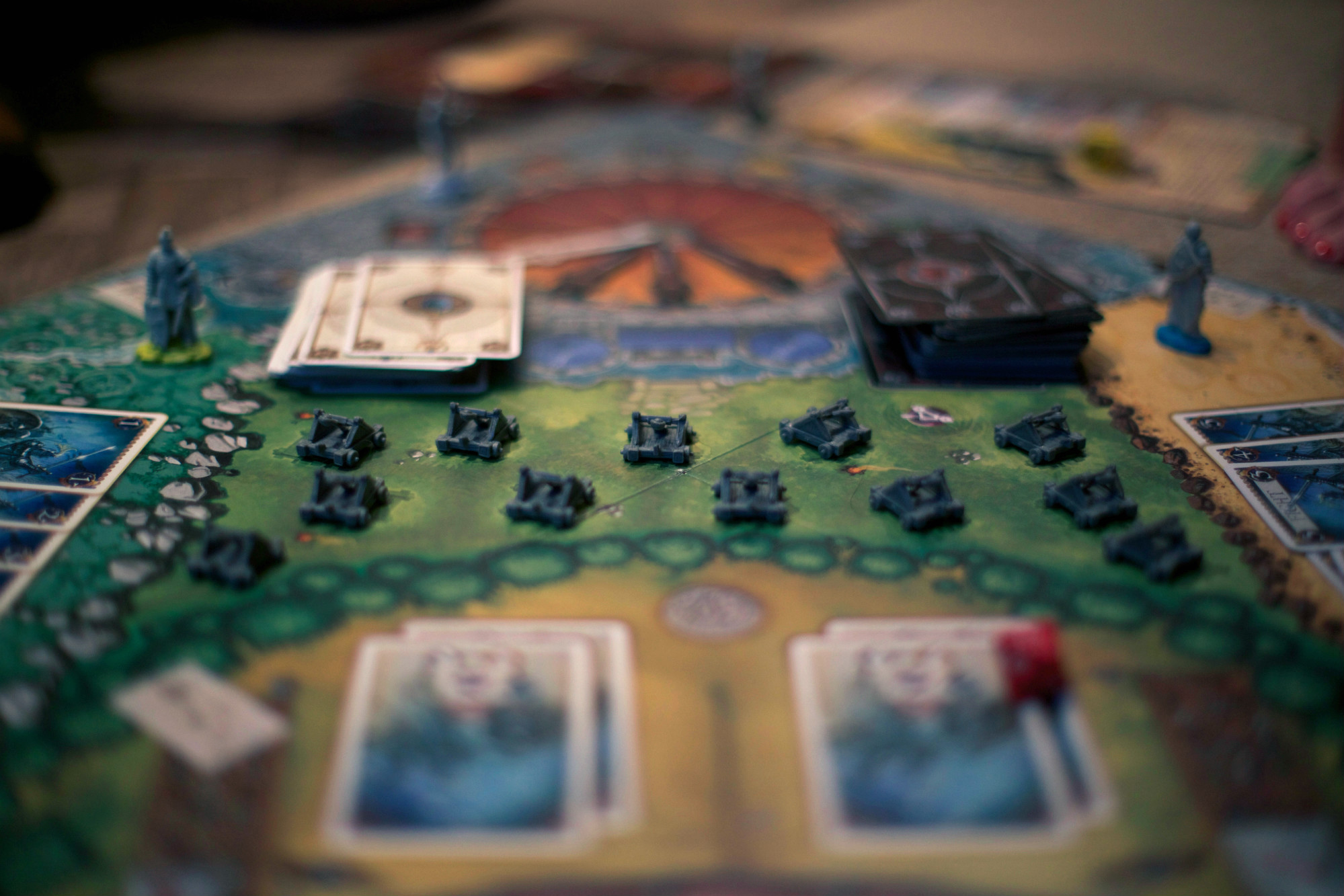
The crushing defeat.

Luckily, this isn’t necessarily reflective of the game as a whole. We’ve had a fair few victories and a fair few terrifyingly close losses as well.

The real winner is the traitorous scum.

*Sorry to mislead you all so early in the review. We actually played this on the floor.

Credit for the photos, of course, goes to Sir Photographer-friend.

Kingdom Builder: (Queendom Builder?)

Brutus Rating: 2/10 daggers in the back
Pairs well with: A different type of beer for each terrain you build on

6D-37-257

Do you remember that thrill you first had, when you were young(er) and excitable and new to the world of board gaming, and you first discovered that the maps of some games are randomised at the start? Like ‘Woah, this randomised Catan map has all of the brick next to each other, how exciting! Oh and in this one all of the fields are lined up next to mountains, how sweet!’ And then there was Small World, where the lands are the same but the history is different and the races that try to populate it all have different randomized attributes. “Today we’re going to fight with FLYING skeletons? What madness is this?”

No? Just us? It takes us back to childhood memories of those ancient strategy computer games with randomised set-ups. Can we pretend that this fixation makes us endearing rather than sad and odd? Excellent.

6D-37-189

Well, if by chance you ARE excited by that kind of thing, then Kingdom Builder is a game for you! There are several different boards to choose from and you select four at random at the start, each constituting a quarter of your future Kingdom. Even more excitingly, each different potential Kingdom-quarter comes with a different bonus action token, meaning the moves you’ll be able to make in the game will be different. EVEN MORE EXCITINGLY THAN THAT (is it even possible to be more excited?) the way to earn points and win the game is ALSO randomised at the start, through a decently-sized collection of cards.

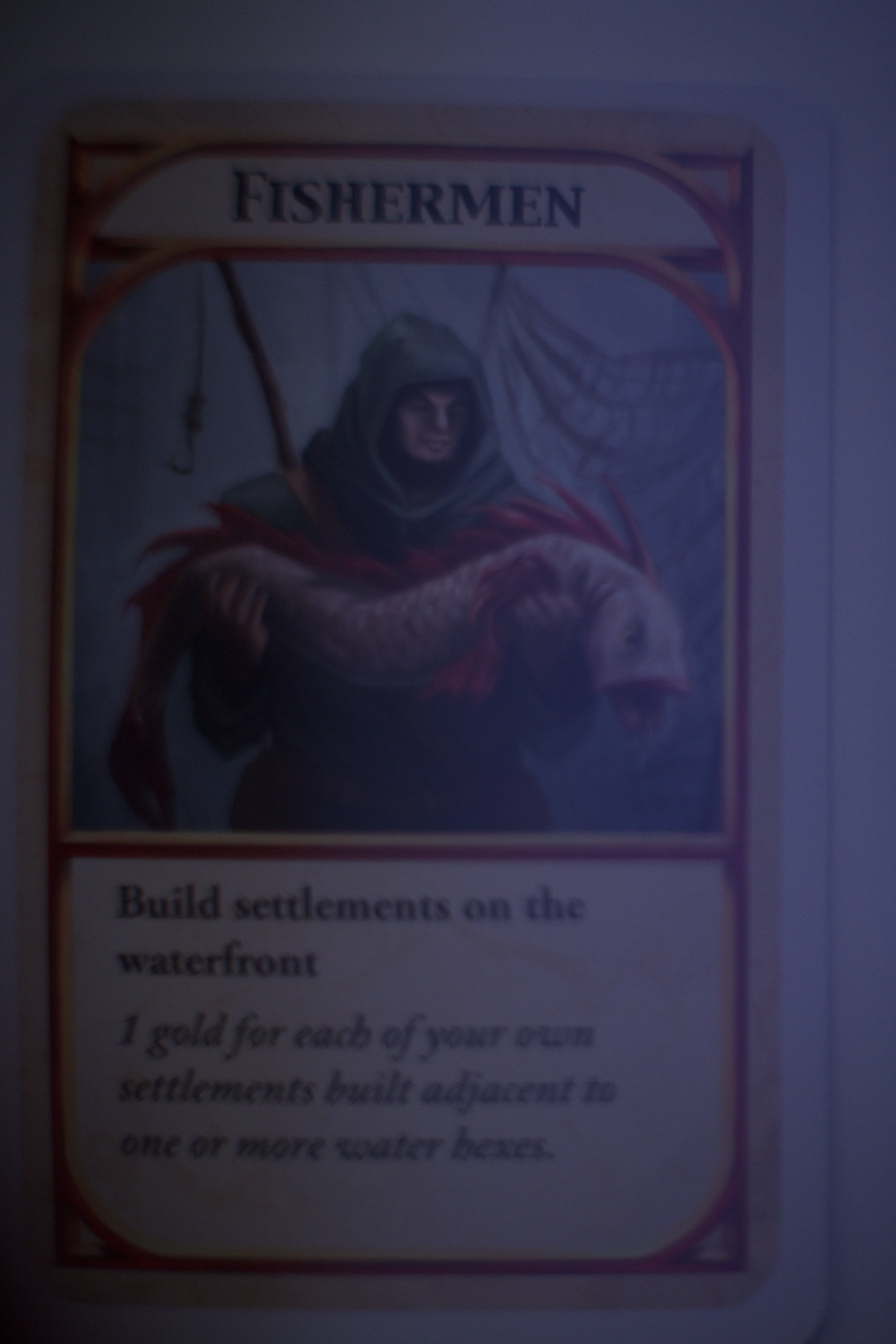
The dark and blurry fishermen
The fishermen in our kingdom were particularly dark and blurry*

In Kingdom Builder you play a mighty kingdom-builder (OK, so it’s not the most roleplaying-heavy game in the world). The aforementioned randomised selection of cards (of which you get three!) determines what kind of people you’re building a kingdom for, thus also telling you what kind of things they’re looking for in a kingdom, thus also telling you how to get points (‘gold’) and some delicious, delicious victory.

If you’re building a town for miners then you’ll probably want some settlements near the mountains, which is where they tend to get their mining did. So a ‘miners’ card will (quite logically) get you one point per settlement next to a mountain.

At the time of writing and photographing we closed our eyes and picked fishermen, knights and merchants. A pretty pleasing group to live with, we all have high hopes for our future realms; got ourselves some food, some income and a solid line of defence. There have been worse fundaments for civilisations.

6D-37-223

So the aim of our game will be to build our tiny little houses near water for our fishermen, connecting different settlements for our merchants and … all in a horizontal line, for the knights.

6D-37-233No, we don’t know why they asked for that. It doesn’t seem like it’d be easily defensible. Do they… do they want to do some jousting, and they want the longest possible run up, spanning the entire kingdom? That can’t be it, because they don’t mind if there are canyons in the way, or how broken up the horizontal line is. Do they just have weirder fixations than even the misery farmers? Who knows! Ideas and answers on a postcard, please.

"Neigh!"
“Neigh!”

Play for this game is fairly quick and fairly simple. There are some snazzy terrain rules which will determine where you can lay your houses, of which you’ll lay a base of three per turn, as well as a few kinds of bonus tokens which will let you take extra actions. These, again, are randomised thanks to the boards that you chose at the start. Many of them are kind of samey (Build more on grass! Yay! Build more on desert! Yay…) but there are one or two which can be pretty game-altering. The horses of this kingdom, for example, are so strong that an entire tiny wooden house can hitch a ride across a couple of hexagons and settle down elsewhere. Literally game-changing.

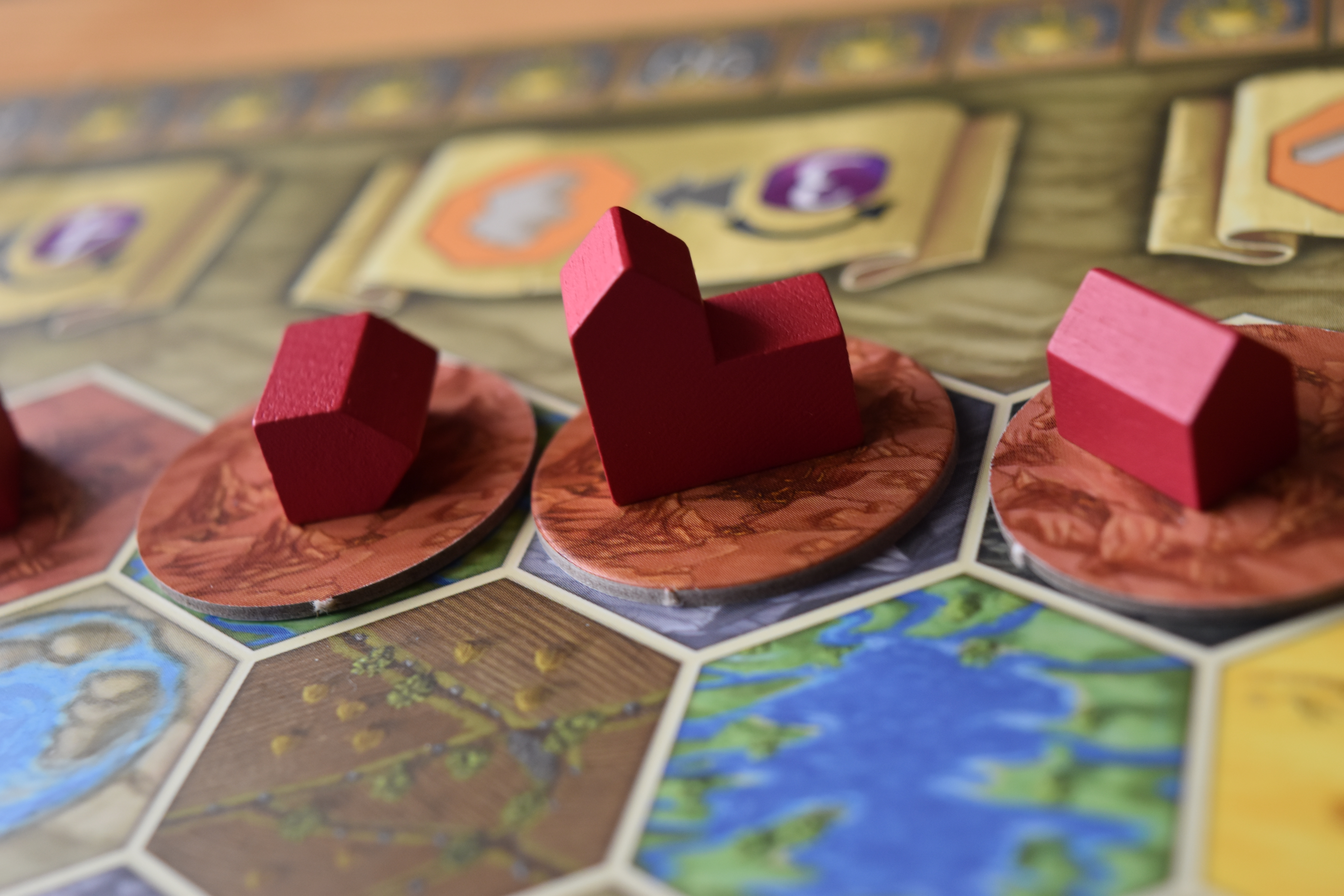
Speaking of those little wooden houses, we should spare a little spot of criticism for the production of some of them. A few of the roofs seem to have collapsed in. Knew we shouldn’t have trusted those bloody fishermen with building the kingdom for us!

Bad work, builder.
Bad work, builder.

The snazzy terrain rules are that you draw a card with a picture of a terrain on it, and that’s where you are destined to build this turn, for three of your settlements at least. It’s unclear why your kingdom is being restricted in this way. Are the people demanding it? It’s difficult to see why a kingdom of fishermen would demand that you build only on the desert for three bloody turns in a row. Besides, what power should they have over you? You’re building a kingdom for them! Go to hell, fishermen! Perhaps instead you only have the materials to build on a certain type of terrain? But then what extra materials would you possibly need to build on the grass that you wouldn’t need to build on the flowers? Ok, let’s just call it some weird superstitious reason and leave it at that. You’re a superstitious kingdom-builder. Done. Let’s not question it any further.

6D-37-252The game is all about making the best you can out of the randomised selection of things that the game throws at you. Mostly in the form of some very annoying terrain restrictions. It’s all randomised in a way that doesn’t seem to leave you too reliant on luck, at least not if you play it right. Sure, having to build your settlements in the sodding canyons for three turns in a row can dick you over a bit but there are measures you can take to avoid it ruining your kingdom too much. Oh you didn’t take those measures and now you’re stuck building in the corner? Well that’s just your own fault.

Very mild earthquake in the kingdom

If you’re not careful you can really feel yourself just getting carried away. A turn itself seems so insignificant, “oh I’ll just waste this one turn building on this bit of desert but I’ll be fine next time”, but then after several turns you can look back and find yourself having just squeezed out a sad turd of a civilization and you’re out of control and maybe you’re not up for this kingdom ruling business after all! Aah! Woe!

This happened in the game we were just playing. Those of you already familiar with Kingdom Builder might look at the photos of the board and think “That can’t be the same game they were describing in the post! There are hardly any horizontal lines at all! If they had Knights they’d be doing terribly!” You’d be right. We were just doing really terribly. We’re rightly ashamed.

Scoring time, score!

Aside from all that, Kingdom Builder is a pretty good game. It’s fairly simple and all of that randomisation we’ve been banging on about for most of this review equates to some pretty damn good replayability. Possibly our favourite game to come out of Essen 2013. Huzzah!

The photographer won again, but whatever. The real winners are the fishermen.

*Lizzy: Can we get some nice photos of some of the bits that make up the game this time? Please? For journalism?
Dr Photographer-Friend: No! Screw you! I’m going to spend most of this time taking photos of this apple and this weird dog toy you’ve been using as a door stop instead. Stop trying to strangle my artistic vision!

Still, credit goes to him again for our photos.

6D-37-27

Euphoria: War is peace, Freedom is slavery, Worker oppression is victory

Brutus Rating: 3/10 daggers in the back
Pairs well with: A high dose of soma and a full complement of your water rations, you lucky worker, you! 

6D-37-178

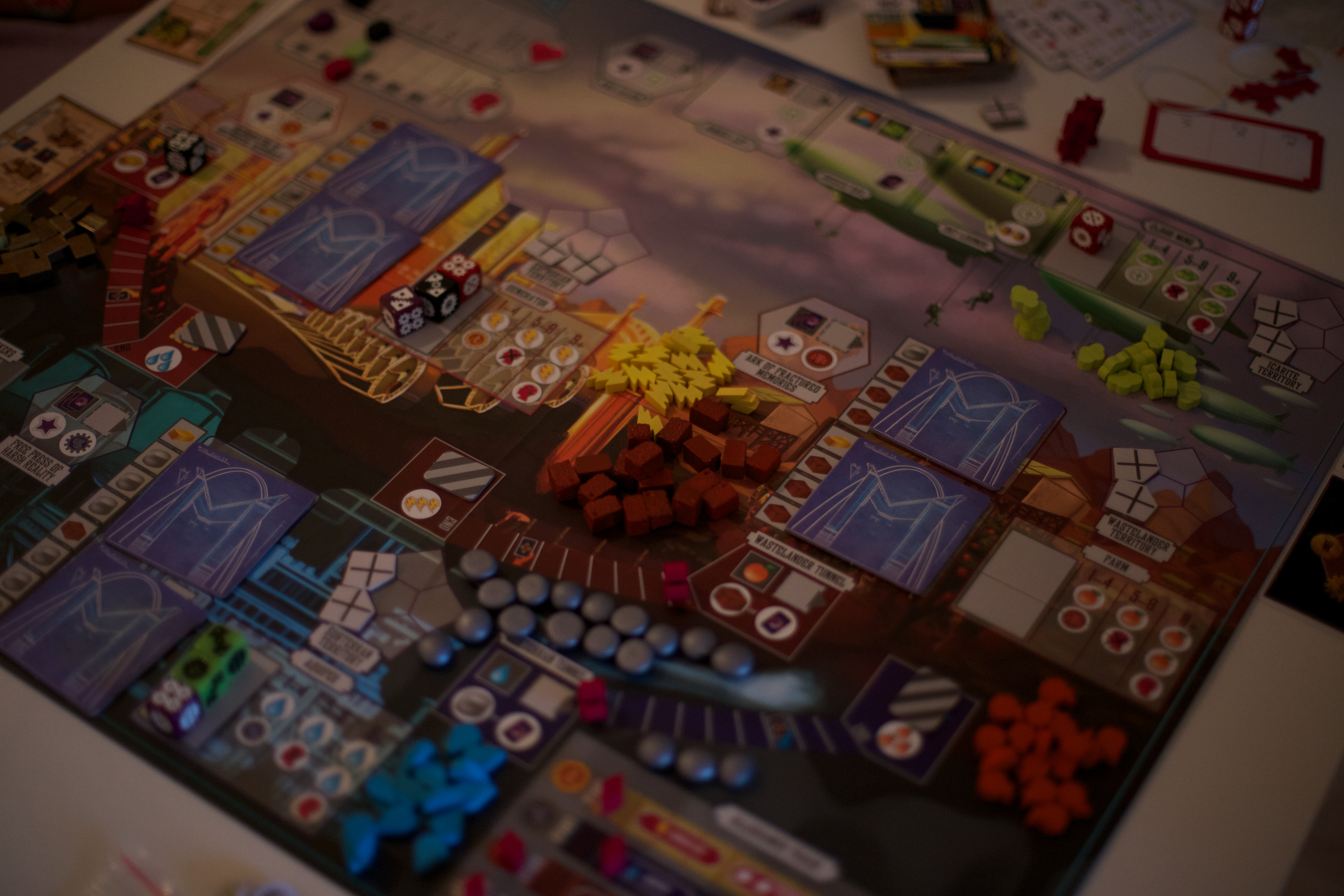
Euphoria represents the misery farmers’ first expedition into the exciting world of Kickstarting board games, and it’s pretty clear why this board game was so successful at getting funded. Dystopian theme? Say no more, we’re sold. Fetch the people-zapper and the keys to The Courthouse of Hasty Judgment, it’s time to oppress some workers. Or ‘liberate’ them or something (we need to work on our spin, guys).

Before we dive in head-first to a review, allow us five minutes of just drooling over these gold bricks:

Oh yeah. Check out this fancy business.

Having the beautiful Kickstarter edition of the game has definitely proved to be a good idea. It gets us these super-neat, extra-nice resources, amongst other things. The gold bricks are really shiny, and satisfyingly weighty! For a while when our friends came over we would literally just drag them over to the board game cupboard to show them how nice the pieces were. Our fellow board-gaming friends, that is, obviously not our normal friends. Board games? What? Us? Nah! Let’s all uh, grab a beer and watch a sport, woo!

In a move which makes you think “why didn’t I think of this first and make my millions this way?”, the game designers also sell these and a bunch of other neat-looking resources separately to spruce up some of your board game collection. They know their audience, and it’s people who are fascinated by weighty gold bricks. (Us!)

Hubba hubba
Hubba hubba

Right! Enough showing-off about the really nice game pieces. Wait …

(That's not actually where they go, we just kind of stacked them there while we were fiddling)
(That’s not actually where they go, we just kind of stacked them there while we were fiddling)

…ok, now that’s enough guys.

Lizzy:  Hey guys, do I look more dystopian with a mask?
Lizzy: Hey guys, do I look more dystopian with a mask?

Whatever level of the game you buy, Euphoria has some really alluring qualities. Mostly, of course, there’s the theme, which is both inspired and well-executed. Also let’s face it, when you’re trying to convince your novice game buddies that board games really are super-cool and that they should totally play with you then you’re more likely to have some luck with “this really cool dystopian-themed worker placement game, in which you oppress your workers and can’t let them get too smart or they’ll realise what you’re doing them and escape” than “this worker placement game in which you … run a farm! Yeah no really guys, farming board games are great fun, I have like six… hey, where are you going? Guys?”

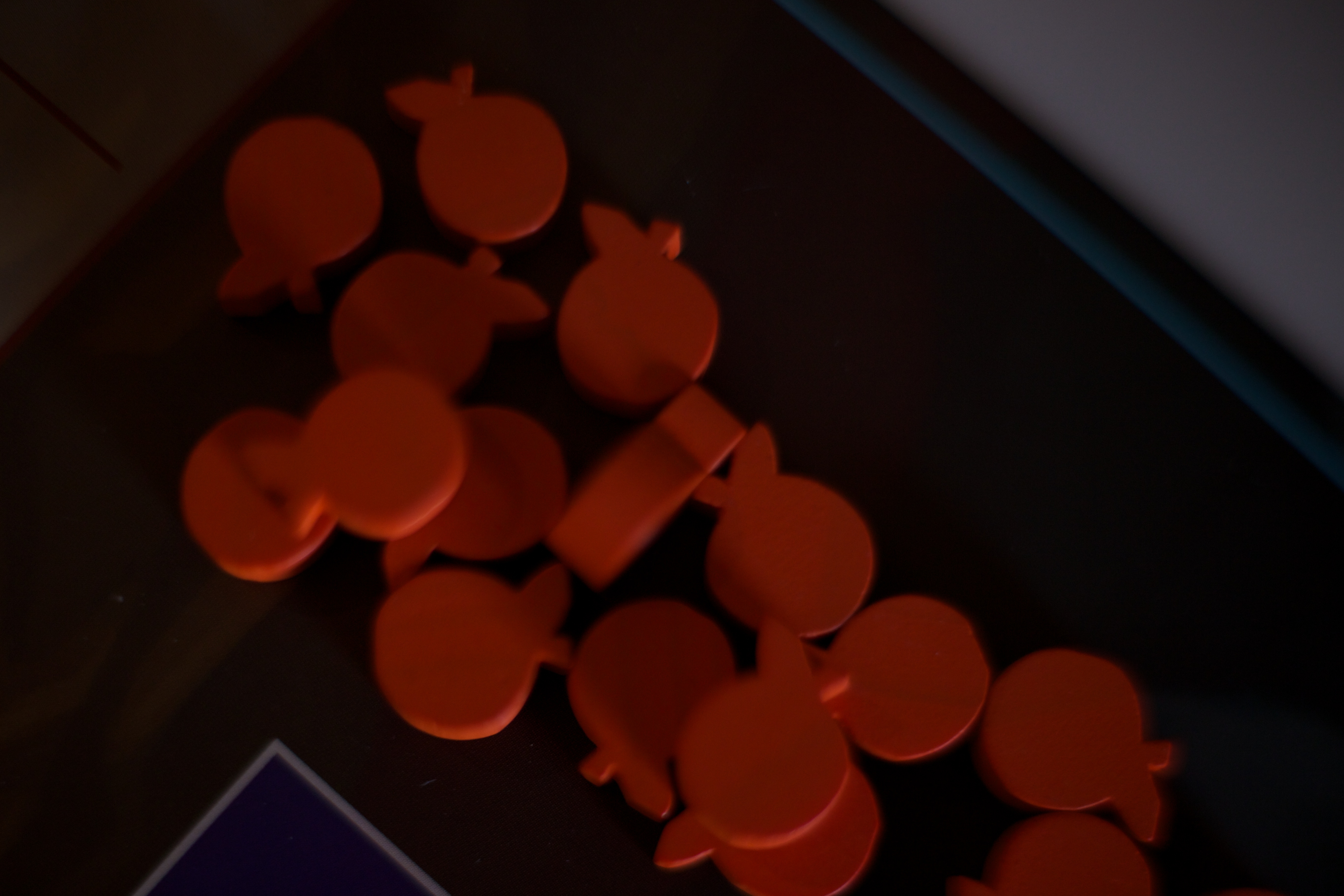
Apples or goldfish?
Apples or goldfish?

I mean, it’s not that a lot of people aren’t going to love that kind of thing, it’s just that those aren’t really the people who you need to put effort in to lure into the board gaming world. Those are the kinds of friends who are already excited to queue for the latest Uwe Rosenberg game with you or the ones who keep trying to trick you into playing 1853 again. (EIGHT HOURS! EIGHT. SODDING. HOURS. We love an eight hour game in principle but waiting twenty minutes between turns is… aaaaah!)

Workers are a-workin'
Workers are a-workin’

So yeah, Euphoria’s theme will make it stand out from some of your other games.  The afore-mentioned feature of worker intelligence being bad for you is a particularly good expression of it. Your workers are dice, and the number on the dice will have some limited effect on how you can use that worker. The general idea is that a six is pretty canny but a one is quite a few apples short of a wasteland farm. Your overall worker intelligence is tracked elsewhere on the board by numbers 1-6, and if you’re retrieving all your workers and roll their total (plus that number) to be higher than 16? Uh oh! Your workers have been colluding! THAT SMART ONE IS ESCAPING! THEY’VE LEARNED TO THINK FOR THEMSELVES! GET THE ZAPPER!

6D-37-137In real (game) terms this means you get one less worker and one unhappy Lizzy, who has only just saved up enough lightning bolts to zap that worker into activation in the first place! Who let all these workers at the books? Don’t they know that freedom lies in slavery?

Another way in which the game beautifully manifests its theme is the randomized set of buildings that you’ll be able to construct. It’s amazing how much more fun you can have building ‘The Center for Reduced Literacy’ or ‘The Free Press of Harsh Reality’ rather than just ‘another flipping corn farm’. The same goes for your recruits (different from your workers), with names such as Curtis the Propagandist, Julia the Thought Inspector and Jefferson the Shock Artist.

6D-37-172

The two PhD students studying ethics at the table question the 'ethical dilemma' description of the ethical dilemma cards.
The two PhD students studying ethics at the table question the ‘ethical dilemma’ description of the ethical dilemma cards.

Victory in the game is earned by getting rid of all ten of your star tokens and spreading your delicious influence all across the metaphorical dystopian toast. (Dys…toastpia? Or is that spreading it a bit thin?) This can be done a number of ways including building these exciting buildings, playing your ‘ethical dilemma’ cards a certain way (“ ‘Help a friend escape or turn in a friend?’ I don’t think this game understands what an ethical dilemma is”) and just generally spurting your workers and resources at the sections of the board which have a nice handy star on them.

The different range of options for your workers can be a little overwhelming at first, particularly for newer players, and it can take a while to get the hang of what it is you’re supposed to be doing. There are four areas of the dystopia and most of them are fairly symmetrical but with different resources (except the bloody Icarites, they do whatever the shit they like. LET’S MINE A CLOUD FOR HAPPINESS!)

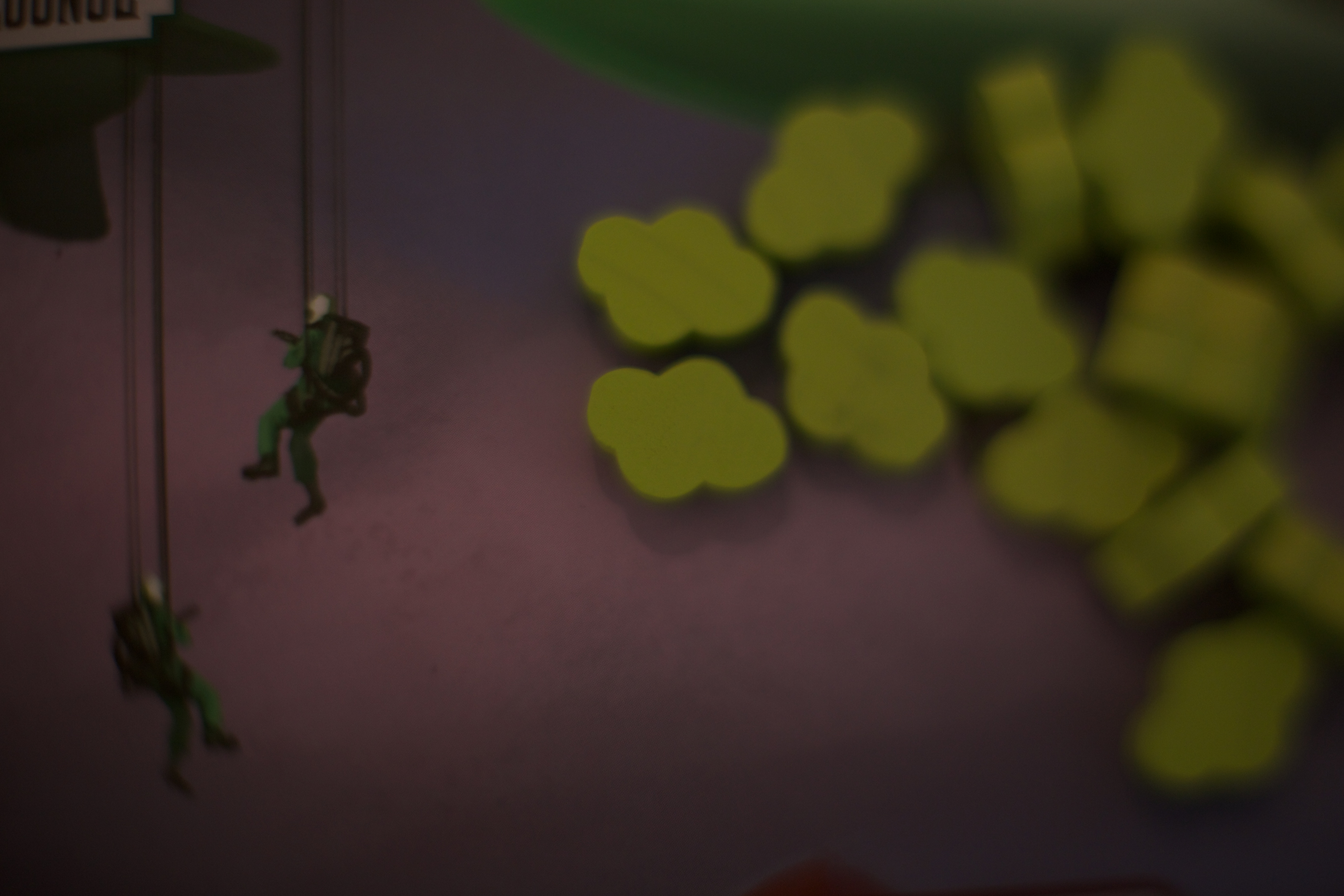
Cloud-mining
Cloud-mining

Basically you want to vacuum up some regular resources and then pump them up into being relics or bigger, shinier resources, both of which you can then end up splashing on some delicious victory star-spurting. It’s not a game with a lot of different paths to victory, so it doesn’t have that same rush of different possibilities opening up in front of you like other games can, but it’s still good.

It’s also mildly difficult at times to keep track of all of the things you’re supposed to be keeping track of:

“Oh, balls! Wasn’t I supposed to be paying some penalty every time I roll a one now because I didn’t contribute to building that diss-assemble a teddy bear factory?”
“Err, how long have I had four cards in my hand? My workers’ morale is far too low for this… you saw nothing, guys.”
“DAMMIT GUYS WHEN WAS THE LAST TIME WE REMEMBERED TO LOSE MORALE FOR RETRIEVING WORKERS?”

Although we’re not necessarily saying that this is a criticism of the game rather than just a criticism of our own competence.

“Why do my workers hate me?”

One more neat and unusual point of the game is the aforementioned worker retrieval method, which differs from most other worker-placements. There’s no set ‘end of a round’ where everyone scoops back their dice at the same time. Instead, you can choose to lower your worker’s morale (morale, unlike intelligence, is something you actually want your workers to have) or pay a penalty to increase it, and then retrieve as many of your dice as you like on your turn. It makes the turns more fluid than a trip to the Subterran Aquifer.

6D-37-147The game earns a ‘brutus rating’ of 3/10, because there’s not too much in the way of screwing over of the other players, which can be refreshing, particularly if you’re playing with us. Having said that, there’s still a little space to gang up on someone *cough Lizzy cough* by all building a shiny building without her, meaning she has to suffer some penalties for a while until she fixes it.

In today’s adventure Dr Photographer won the game. About time too, probably. Lizzy was stunted pretty early on by some damn smart workers, and the other participants just couldn’t wrangle enough shiny things.

The real winner is oppression. DOWN WITH THE PEOPLE! Ahem.

Dr Photographer getting a bit carried away with the dystopian theme there

Credit to our fellow oppressor Dr Photographer for the photos!

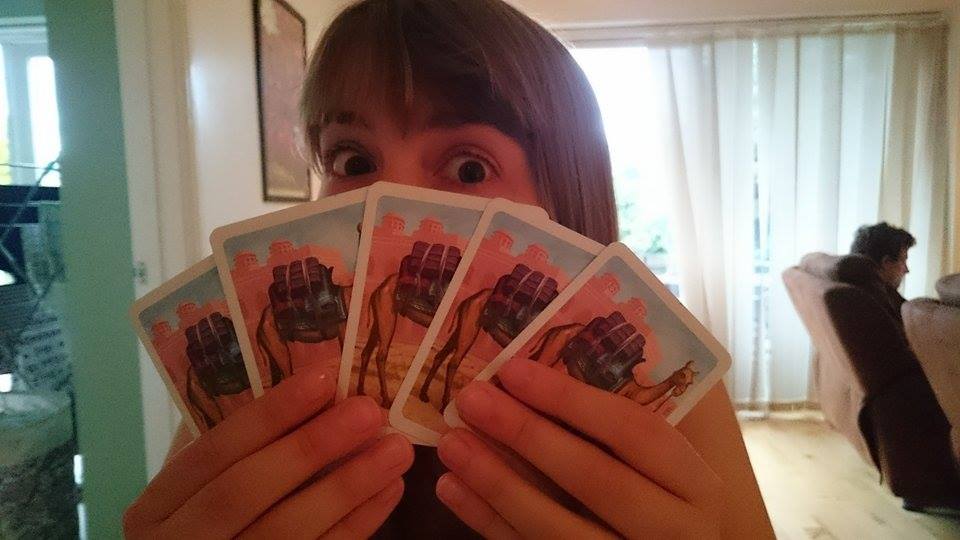
Jaipur: One of the best camel trading games you’ll play this week!

Brutus Rating: 7/10 knives in back
Pairs well with: Fine wines sipped from golden chalices that you don’t quite have enough of to trade yet.

11716029_10155865989225085_5783316_n

(Poorly lit photos can be blamed on the photographer friend not being around this week. Or maybe on Bob for moving house. Basically, anyone other than Lizzy, who is coincidentally in charge of posting this week.)

11720023_10155865987270085_260705191_n2014 was quite the year for camel games, so it also proved to be an excellent time for Lizzy to receive Jaipur as a Christmas gift. It most certainly ranks in the top three for camel-based-games that she acquired that year, and Briony is inclined to agree that is sure is fun. This review marks the beginning of a new, and duly called for, list created by ‘The Misery Farm’ – Two Player Games Ranked In Order Of How Likely They Might Make You To Split Up With Your Other Half While Spending Time Together.

Huzzah! Never has a more practical and important list been created! We constantly see threads on various sites and blogs that call for good two player games with a lot of specific categories: these range from ‘must be easy to learn because my wife has a short attention span’, to ‘has to be small and portable enough for me to carry this to another country to see my long-distance bae’.

"Show me the goods!" "Here they are!" "Good."
“Show me the goods!”
“Here they are!”
“Good.”

Jaipur is a pretty good two-player card game to kick the list off with. You buy goods, trade goods, trade goods for camels, trade camels for goods, trade goods for other goods, sell goods. Good? Good!

The game is fairly fast-paced and over two or three rounds: best of three is the winner. To win the round – that is, being the best at trading and most impressive to the Maharajah – you get a little token with the Maharajah’s face on, and the first person to please the Maharajah twice is crowned the victor and will forever be employed as his best personal trader. Conveniently, the Maharajah tends to be most impressed by whoever has the most points at the end of the round, so determining who wins is pretty simple.

His Grace's faces
His Grace’s faces

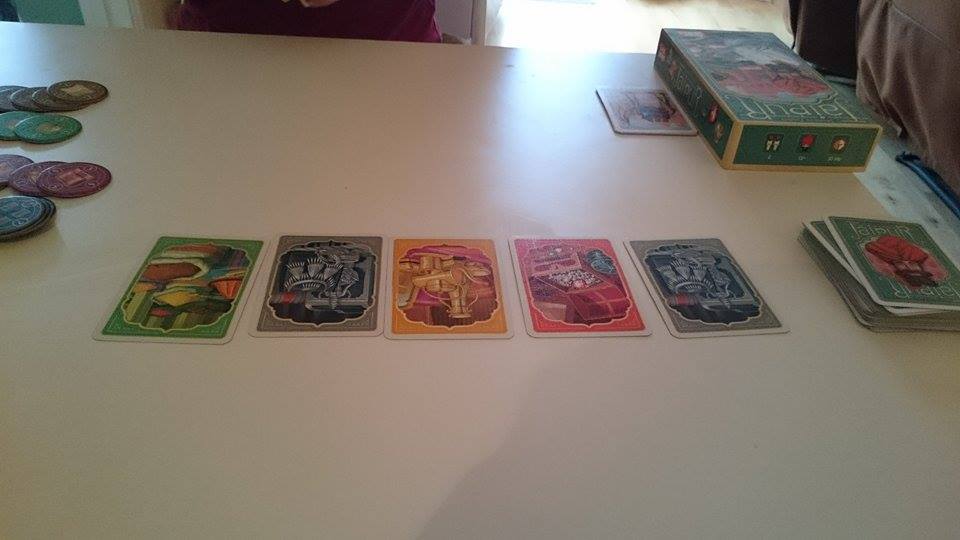
Your goods come in the form of captivating colour-coordinated cards, and you and your other half (and/or nemesis) have a hand of your own and a communal pile of five to compete over.

11715998_10155865989180085_1975058349_nThe best bit about this game (other than the inclusion of camels) is its excellent ratio of rules to strategy complexity, and the fact that it might occasionally remind you of playing card games with your Gran in your earlier years. The rules are fairly quick and easy to learn, just like the game is to play, but the more you play it the more you start developing a complex strategy for how to trade. There are several things that the game gives you to look out for, and winning means balancing strategies and trying to open up as few opportunities as possible for your opponent.

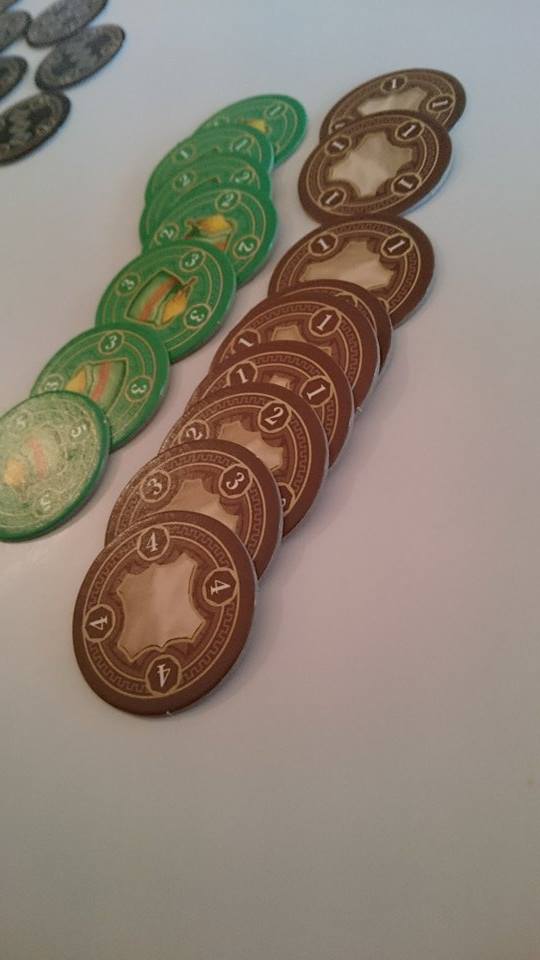
11739755_10155865988975085_779132515_nMost goods depreciate in value pretty darn quickly. You can sell some of that brown leathery stuff, the most common good, but only the first few bits that get sold will be worth a decent amount of points, so if you’re going to sell it then you want to be the first person to do so. But wait! The more you sell at one time, the more bonus points you’ll get, so you want to save up as much as you can before you sell it. This shit gets competitive, yo. You don’t want to be saving up a bunch of that lowish-value [green resource] for ages and then have some arsehole your loving partner sell a single [green resource] first just to take the best price. Knob.

The game gets a fairly high ‘brutus rating’ because most things you’ll do will tend to affect the other player. And if you’re anything like us (or anyone we know. We need some new friends) then you’ll be purposely trying to knobble them over instead of just getting ahead yourself. But that’s ok, because it’s a two-player game! That’s how two-player games should work, and the dicking-up goes both ways and isn’t too extreme.

11741830_10155865987485085_1100015158_nThere are also various other factors which turn the game into more of a rampant strategy-fest. The hand limit is devilishly small, which will leave you regularly cursing. And there are special rules for trading different numbers of goods, and special rules for trading camels. Some goods – the most valuable – can only be traded when you have at least two of them to hand. All of this is pretty simple to learn but, again, makes the game surprisingly tactical.
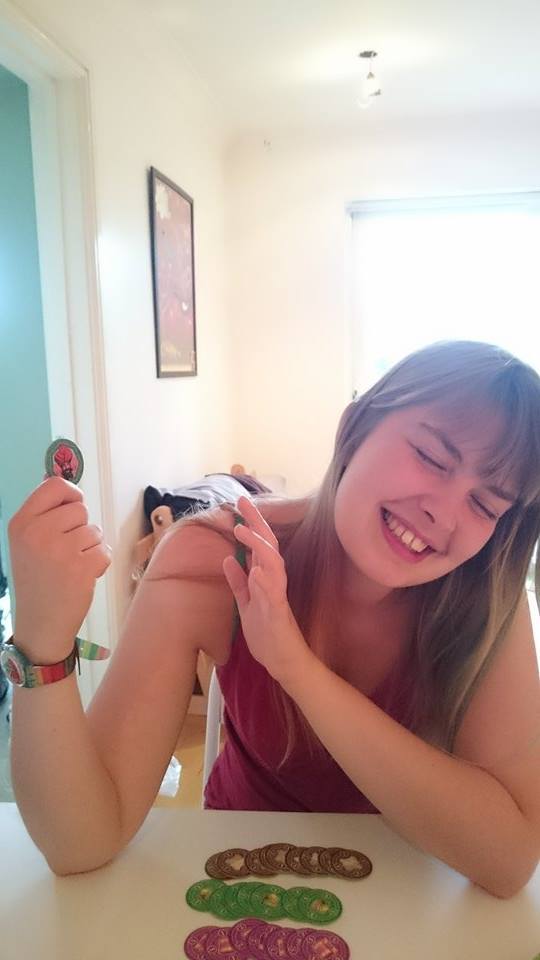
Another great thing about this game is that despite all of the above it’s really fun to play, and the resentment and hatred for your partner doesn’t build up so much that it’s not manageable. Sure, they’ve traded away the last goddamn silver but at least they haven’t ruined your entire bloody life. This time. The fast-paced nature of the game and the fact that you need to win 2/3 rounds for victory really helps with this. Before long the round will be over, and one of you will be taking your victory-Maharajah token, holding it up to your ear and saying,

“What’s that, Maharajah? You were really impressed with my trading prowess today? Oh, thank you, that’s very kind. No, it really is my pleasure. What’s that? You regret choosing Martin last round? Yes, well, we all make mistakes. Not to worry.”
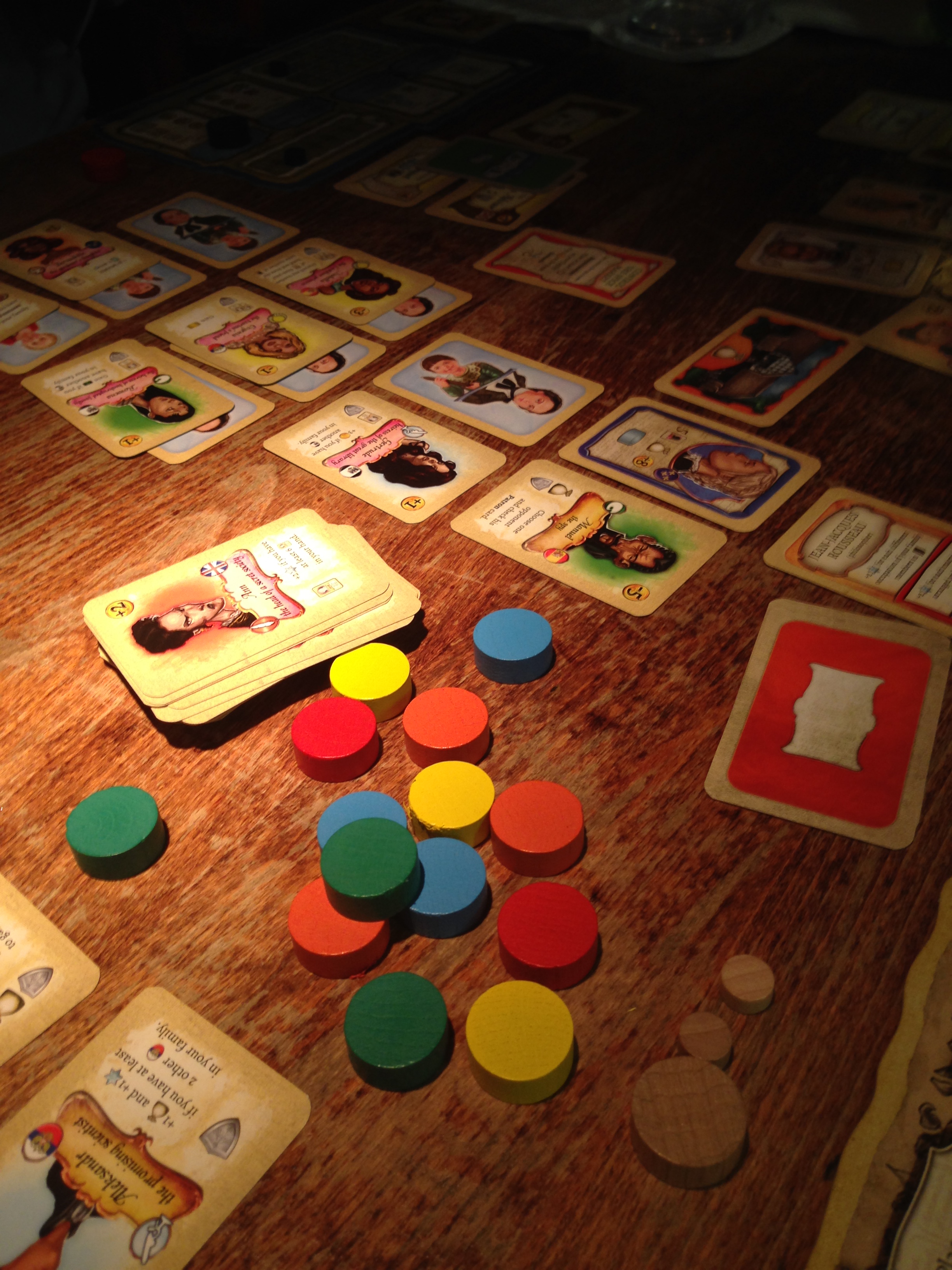
"Oh Maharajah! You flatter me."
“Oh Maharajah! You flatter me.”

So yeah, you’ll give them a smack on the face once or twice, but there’ll be no permanent damage by either hands or words.

Definitely not missing a token. Don't know what you're on about. Your face is missing a token!
Definitely not missing a token. Don’t know what you’re on about. Your face is missing a token!

Lizzy took this on holiday with her boyfriend and they both came back in one piece. Which is an impressive thing to say any time Lizzy plays board games with anyone, to be honest. Briony has also had a good time playing it with a whole range of people, boyfriend included. So Jaipur gets a good rating not just as a good card game, but as a particularly good game to take away on holiday with you if you don’t want to have any more arguments or breakups than necessary. Good work, Jaipur.

The real winner is the camels.

11721295_10155865988395085_1519231680_n

(and Lizzy)

Misery Farming on the Road goes to Reading to play Legacy: Let Them Eat Cake!

Pairs well with: Tiny fancy glasses of sherry or enormous ones of brandy
Brutus rating: 2 tiny daggers in the back out of 10

6D-35-177 6D-35-176

Our international readers may not be aware, but it is currently an even 3,000 degrees Celsius in England (that’s 98269.6 degrees Fahrenheit for the Yanks). We Brits are utterly unprepared for this. We have no air conditioning, no clothes made of white linen, no enormous straw hats. Your friendly misery farmers are particularly miserable – Briony once got sunburnt in Scotland, while it was raining, and Bob is not much better off.

IMG_0906
Pictured: Stuff

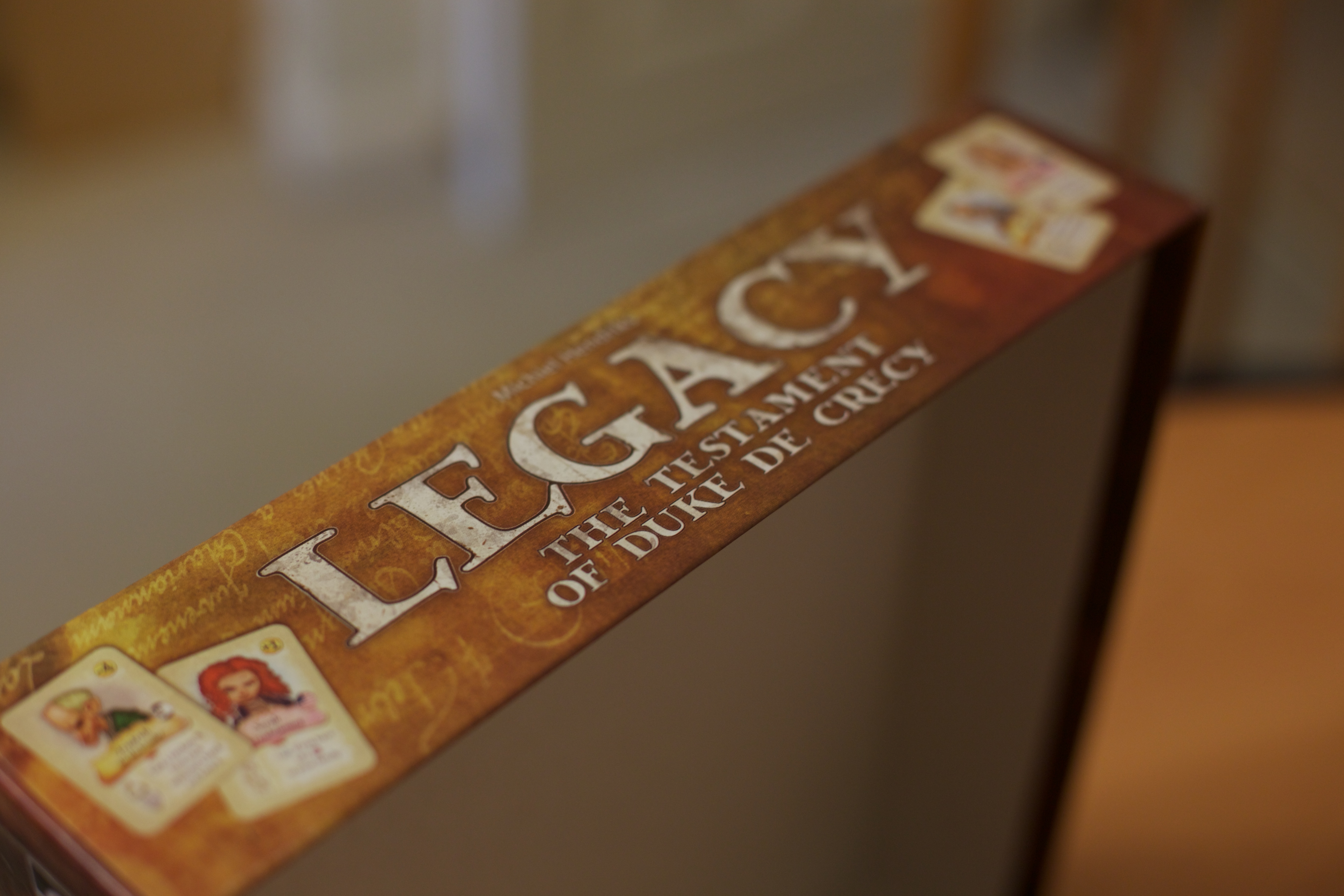
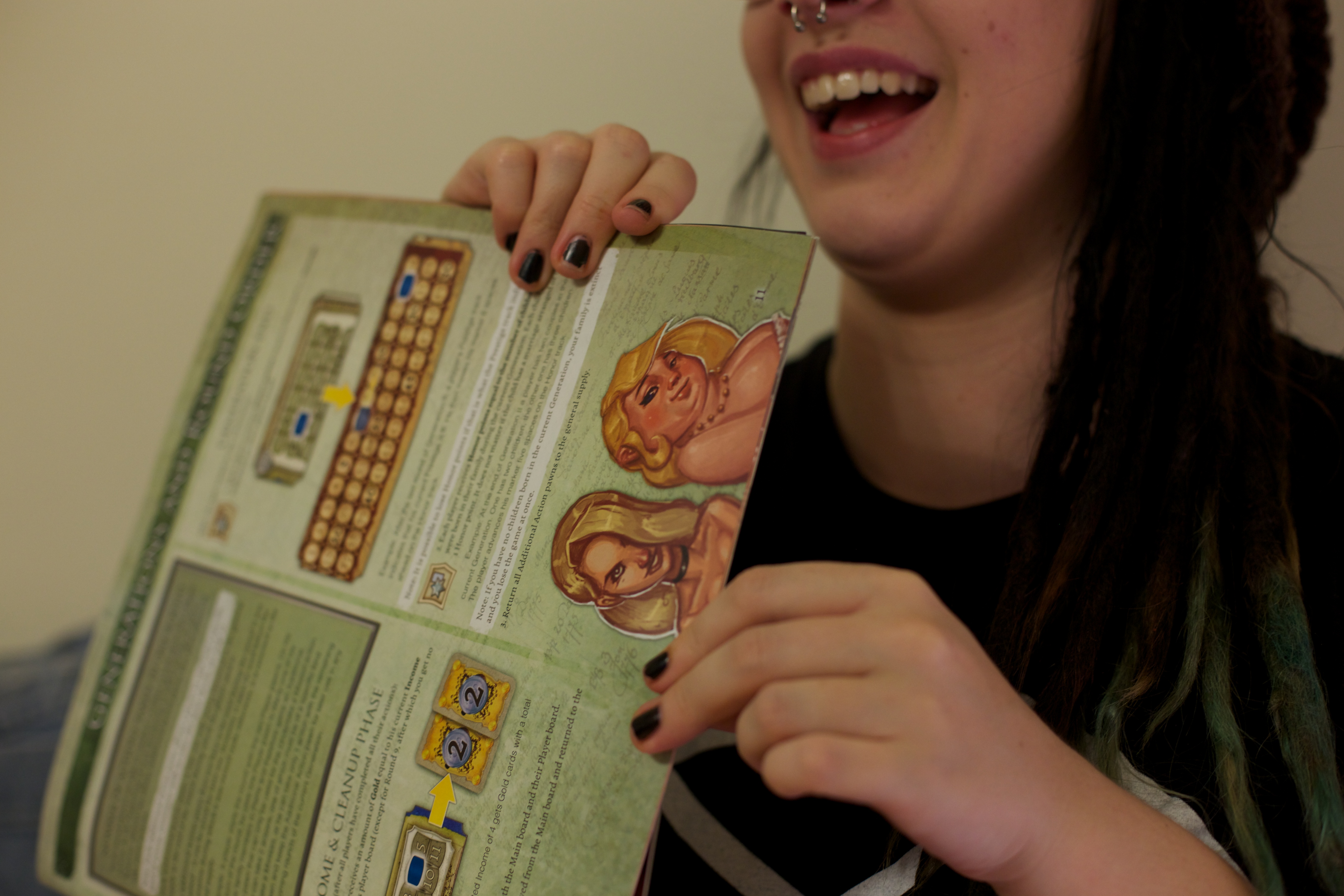
We’ve wanted to review Legacy: The Testament of Duke de Crecy for ages, but had only played it once and with very mixed results. There are few experiences in the world more draining than learning to play a game as you’re playing it by simultaneously reading and explaining the rules, as Bob rapidly discovered. This approach is particularly ill-advised for Legacy, as it’s one of those games which, while reasonably straightforward to play, has an awful lot of stuff on the table. Each player has a board and counters, as well as approximately 568 cards all of which need to be placed face-up and visible for various reasons. And then of course there’s a central board with even more stuff all around it. You need a big table to play this, is what we’re telling you. But you do get to make some nice little family trees out of cards so it balances out.6D-35-181

Apart from anything else, everybody keeps getting distracted by the charmingly-rendered but deeply politically-incorrect artwork. There are 83 unique miniature portraits in Legacy, and presumably in order to stave off death by boredom in addition to severe carpal tunnel the artist (Mateusz Bielski) went for a heavily caricaturised style.

‘Cor, look at the tits on her!’

6D-35-212‘Nevermind the boobs, have you noticed what the moneylender looks like!?’

‘I’m sure his nose is just a coincidence.’

‘Um, alright then, what’s your excuse for the Moroccan then?’

‘Uh… well he has a nice moustache at least!’

IMG_0902
Babbies in arranged marriages

Additionally, the game introduces itself with a beautifully-calligraphied but long letter. Bob should not have tried to read it out loud. Generic gaming buddy Andy questioned whether Anna Karenina (the novel, not the person) had accidentally been snuck in. Briony came close to giving up entirely but stuck around with a superhuman effort of patience for the sake of the farm, sustained by some wine. Part of our reticence was probably due to a mismatch in interests. Your misery farming friends are in their twenties and have expensive cardboard hobbies, intense relationships with gin, and demanding careers. The aim of Legacy is to marry and have lots and lots of babies. This is something that we just don’t quite understand. In fact it was down-right amusing watching ourselves as young adults failing to be young adults set in a different time period: in the end we were grateful to be living in the 21st century.

Essentially it works like this: You play as the head of an aristocratic family desperate to achieve wealth, fame, and honour. You have a secret patron who will reward you with all of these things if you fulfil certain objectives such as contributing to the arts or having tons and tons of babies. There are two kinds of resources in the game; gold and friends. It’s all very French. You can increase the amount of money you have by doing things like begging for cash from your friends or investing in business ventures, and you gain friends by doing things like going to balls and socialising. You can also do things like buy titles, contribute the community (obviously by wasting money on a giant feast, because French aristocrat), or buy a mansion. The main way that you increase your income, gain friends, and earn prestige (which translates to honour – the ultimate victory point of the nobility) is, however, to get married and have babies. Lots and lots o’ babies, as these are actually a resource that earns you victory points per round.

6D-35-243 6D-35-242

The game is played in three phases (‘generations’). In each generation you can marry your characters to friends, and then sprog. Sprogging happens immediately upon marriage and it’s IMG_077650/50 whether it’ll be a boy or a girl. There is also a risk of morbid ‘complications’ arising, during which you must choose who survives – mother or child. You may also visit a fertility doctor to have multiple babies (but you will lose friends in high society to do so) or pay money to choose the gender of the baby. You see, gender is important. It can cost a lot to marry off your daughters, while strapping sons can land themselves a wealthy wife and bring status to the family. Finding the ‘right’ sort of friends to wed can be a challenge as well though – it’s no good marrying off your most beautiful daughter to Paul the pig farmer, despite his impressive fertility.

6D-35-319 6D-35-303

Additionally, friends and relatives interact in different ways. Some of this is due to the secret objective of your patron, who may want your family to be full of artisans or scientists. Some of it is due to the unique characteristics of the friends and family members. Great-uncle Tufty the King’s fifth cousin may bring a lot of cash with him, but he can’t have any children and he’s Prussian, which means that no self-respecting Moroccan or Spaniard will join the family. Your sixth daughter may have wide hips and a charming smile but oh dick-balls there are no good male (yes, it’s a heteronormative game) friends for her to marry so we’re all fucked now.

IMG_0775At the end of each generation the children grow up, arranged marriages finally come to pass, and more babies are born. The table rapidly becomes full of family trees represented by cards, which is satisfying to see and a cool mechanic but definitely takes up too much space. For a three-person game you need a good-size table and any extra chairs you can lay hands on.
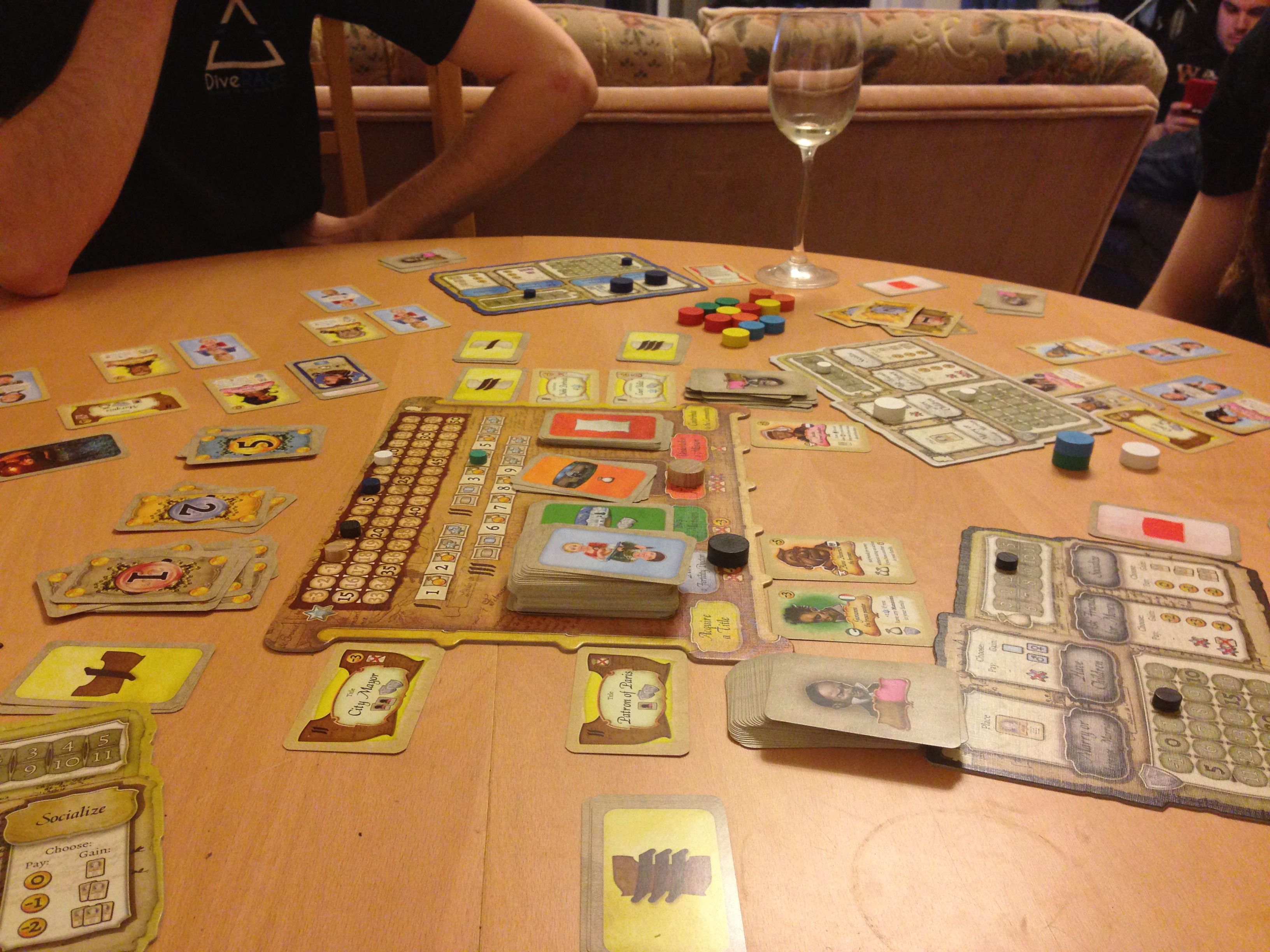
Of course it transpired that the first time we played this game we played it wrong (of course) so this week Bob was dispatched to the Reading Board Games Social under strict instructions to play it and play it right. She did manage to play it again, but playing it right…? Eh, close enough. It was, as discussed, very very hot. The RBGS is held in a nice but heavily under-air-conditioned pub called the Abbott Cooke, which serves gastro-pub food, expensive beer, and nice things like free iced cucumber water. And there was cake! Distracting cake!

11261980_10154062192773289_1617188442044898868_n

Every year for their anniversary the RBGS has a cake baked in the fashion of the game they believe will win the Essen Spiel Des Jahres award. As you can see, their vote this year goes to Colt Express, the shooty Western-themed train heist game.

IMG_0774Anyway, between the heat and the cake several mistakes were made. Perhaps this is to be expected the first few times you play this game as while it is not difficult to play, there is an awful lot going on. Lots of symbols and tasks, as well as the long-term strategy you’re trying to keep in your head. We give it two daggers because while dickish interaction with other players is minimal, as with many worker-placement games you can place your workers on a space that another player would rather like and if you could please fuck off and let them hire the fucking fertility doctor they’d be very fucking grateful indeed. Which, naturally, can be quite frustrating.

Sigh
Sigh

Overall, recommended for medium-weight, engaging, vaguely-offensive fun, but try the single-player version before trying to introduce it to your friends, and get a big table.

6D-35-296 6D-35-247

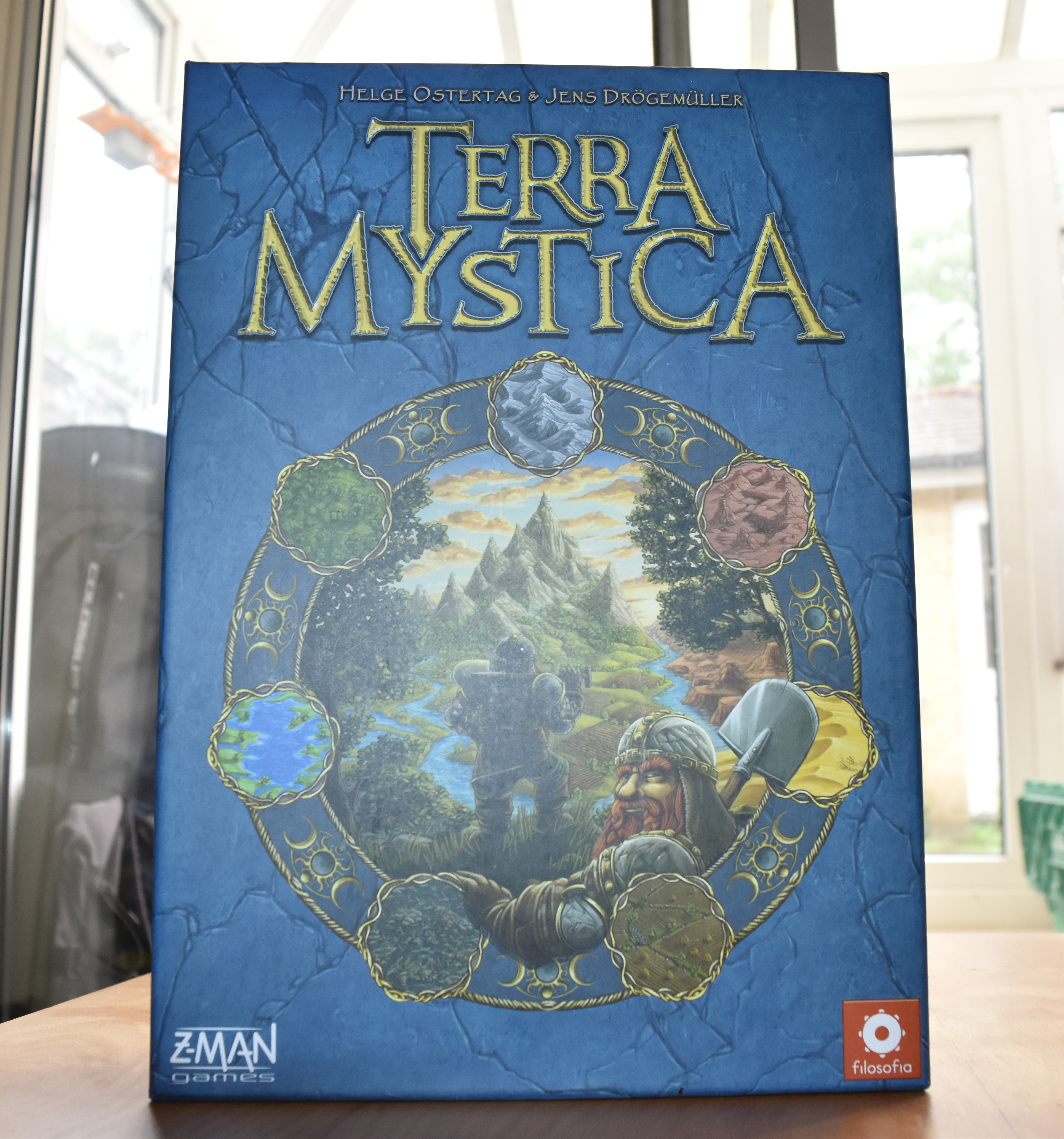
Terra Mystica: Terrain Stereotypica

Brutus scale: 3/10
Pairs well with: A selection of ales representing terrain types. E.g. dark stout for Swamp, pale ale for Grasslands, red IPA for desert, etc.

Contents: Mystery, Dirt and Sulky Opponents.

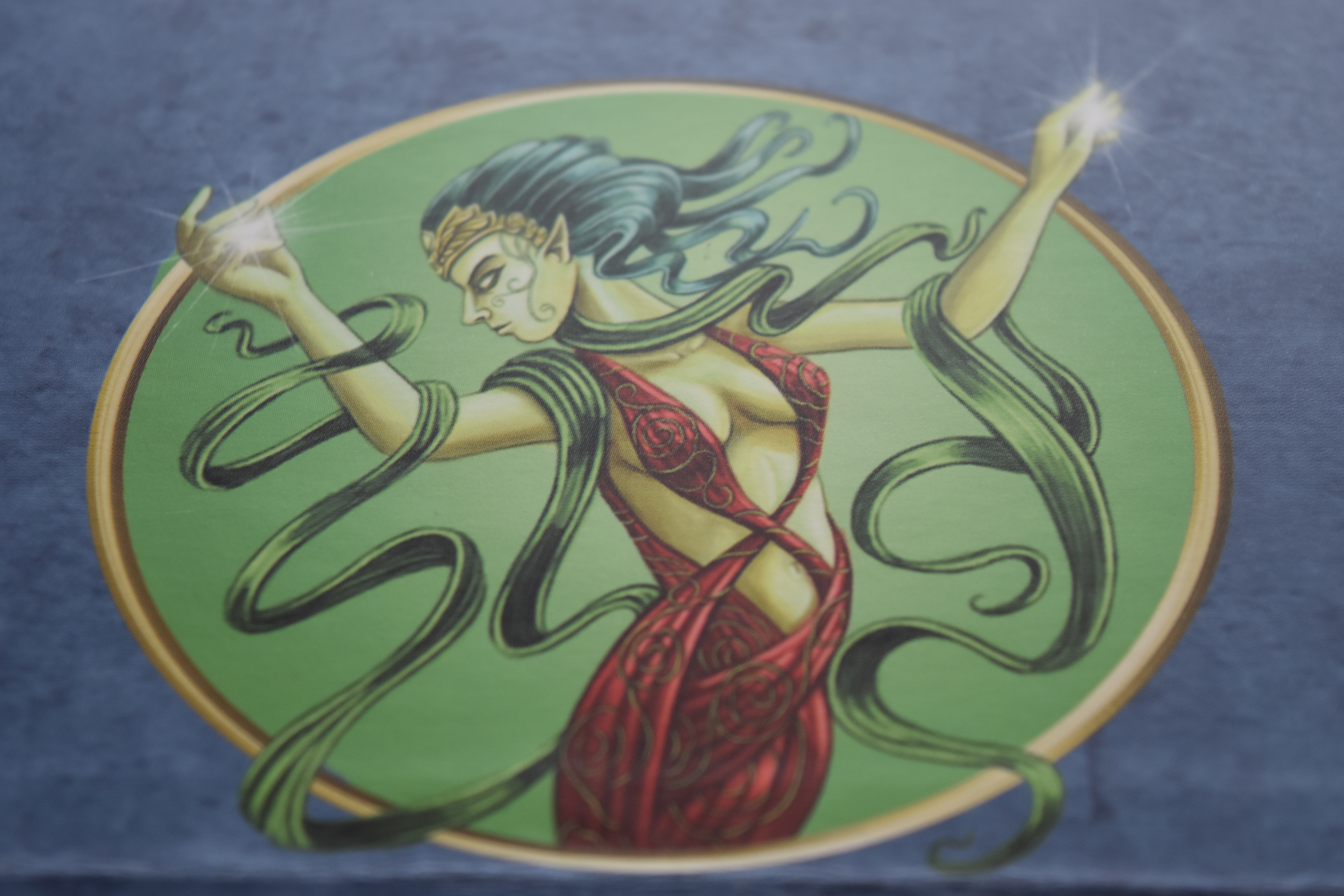
Terra Mystica roughly translates to English as ‘mystical earth’. What’s so mystical about it you ask? Well, for one, the fact that the laws of geography and biology don’t exist is pretty thrilling. And by thrilling we mean no-one cares. It’s another terrain-based board game with different ecologies represented by different tile designs in the style of Small World or Kingdom Builder. Also similar to Small World is that you play as a race/civilisation. Your choices are scantily-clad female races (such as witches), brutish large men races (such as giants), and sneaky stereotyped races (like the dark and plotting alchemists). Many of the available races fall in between these categories, but one thing’s for sure: it will feel like your flippant choice of race has way too much impact on the game.

I am Man, hear me roar.
DSC_0112
I am Woman, my breasts are barely covered.

Each race will have some varying starting resources, and will have a selection of different abilities that come into play throughout the game. This makes playing through as a particular race for the first time really fucking difficult, as three hours into a game you’ll spontaneously realise you should have built something in turn one, but didn’t. There is no way to save it. You’ll just have to suck it up and keep building single houses every turn until the game ends. You are a terrible leader of your people and they know it, and they resent you for it.

‘Sire, what shall we do to make our empire grander? More trade perhaps? Build a mighty cathedral maybe?’

‘No my poor peon, we shall build a small wooden house on a single tile. Forever.’

‘But sire, all of our people have houses, surely we should build something better –‘

‘- Houses! Forever!’

DSC_0123The mechanics of the game are mainly centred on job selection. This will provide you with some sort of resource, and/or an ability that you can tailor your turn to. Each race receives a board with around 5,097 wooden pieces on it, of which you play the wrongly-shaped piece often. In reality there are about 20 pieces, but still, that’s a lot of shapes under your control. Each of these pieces represents a different type of building, or worker, each with build costs that ramp up the better the building you want to construct. Once you’ve selected a job an action phase occurs. This is where the real meaning of the game title is revealed: your race can only settle on a particular type of terrain tile. In order for your city to expand you need to terraform different terrains into your own in order to build on top them. It’s like Civilization or Tigris and Euphrates only worse and a more frustrating drain on your resources.
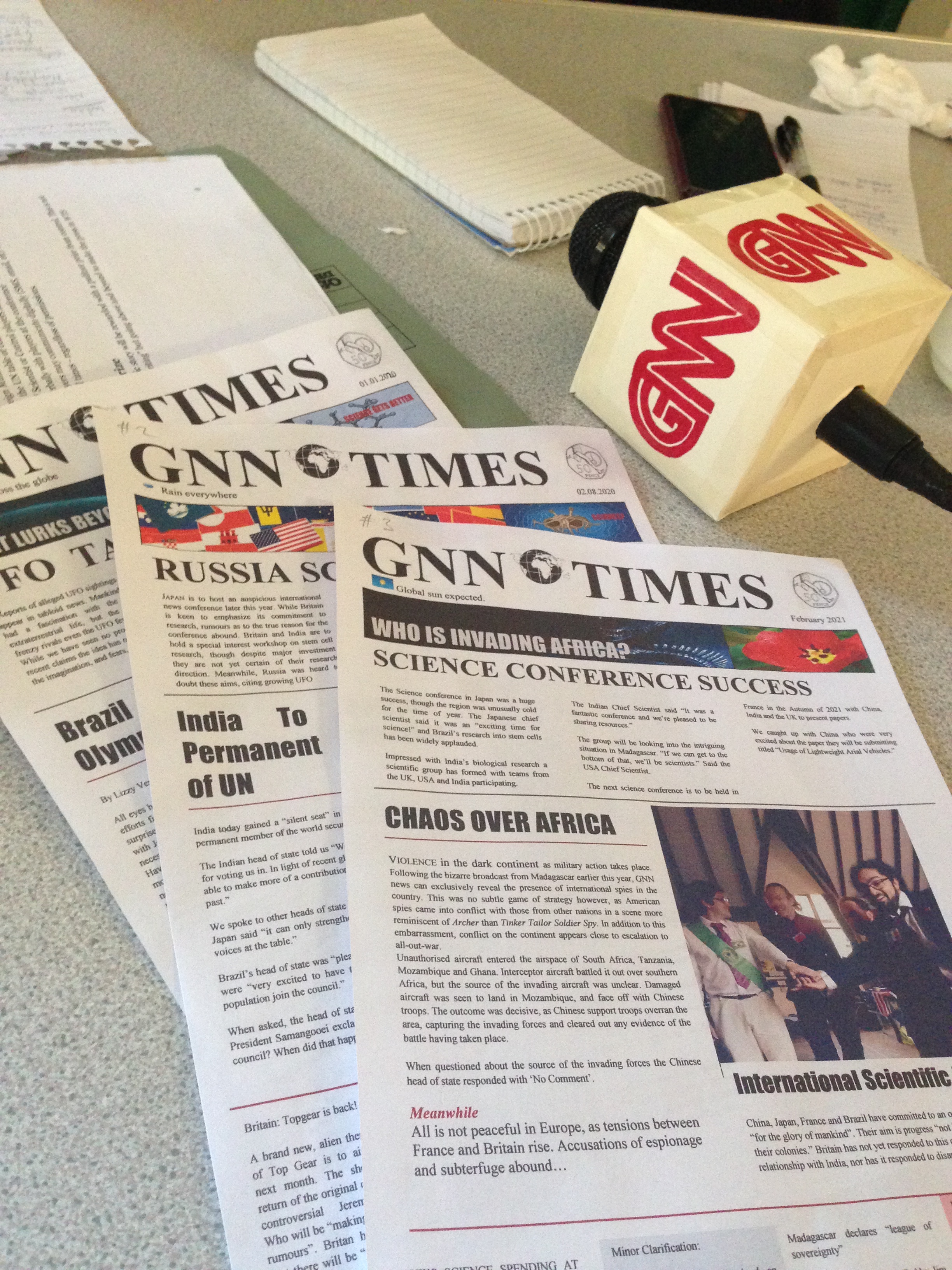
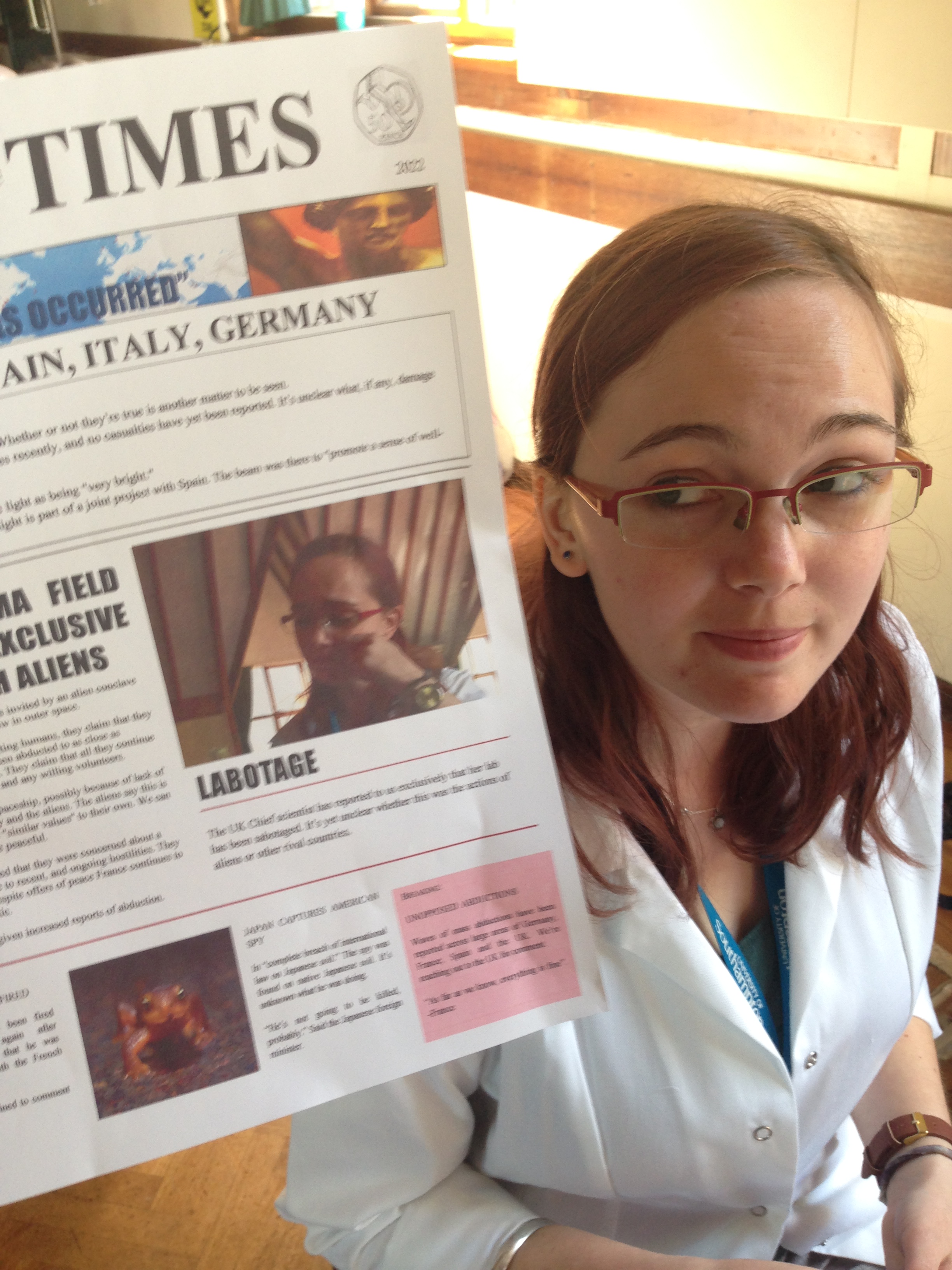
Imagine you are a small band of settlers looking for the ideal place to begin your great dynasty. You’ve travelled all over the land to find the most fertile, most beautiful, most defensible place. But Gary decides that actually, maybe if we settled on some scorching, inhospitable lava plains, that might be better. Gary is pretty stubborn leader so we’ve had to go along with it. Typical fucking Gary.

Who knew there were so many different types of dirt.
You could have picked any of these, Gary.

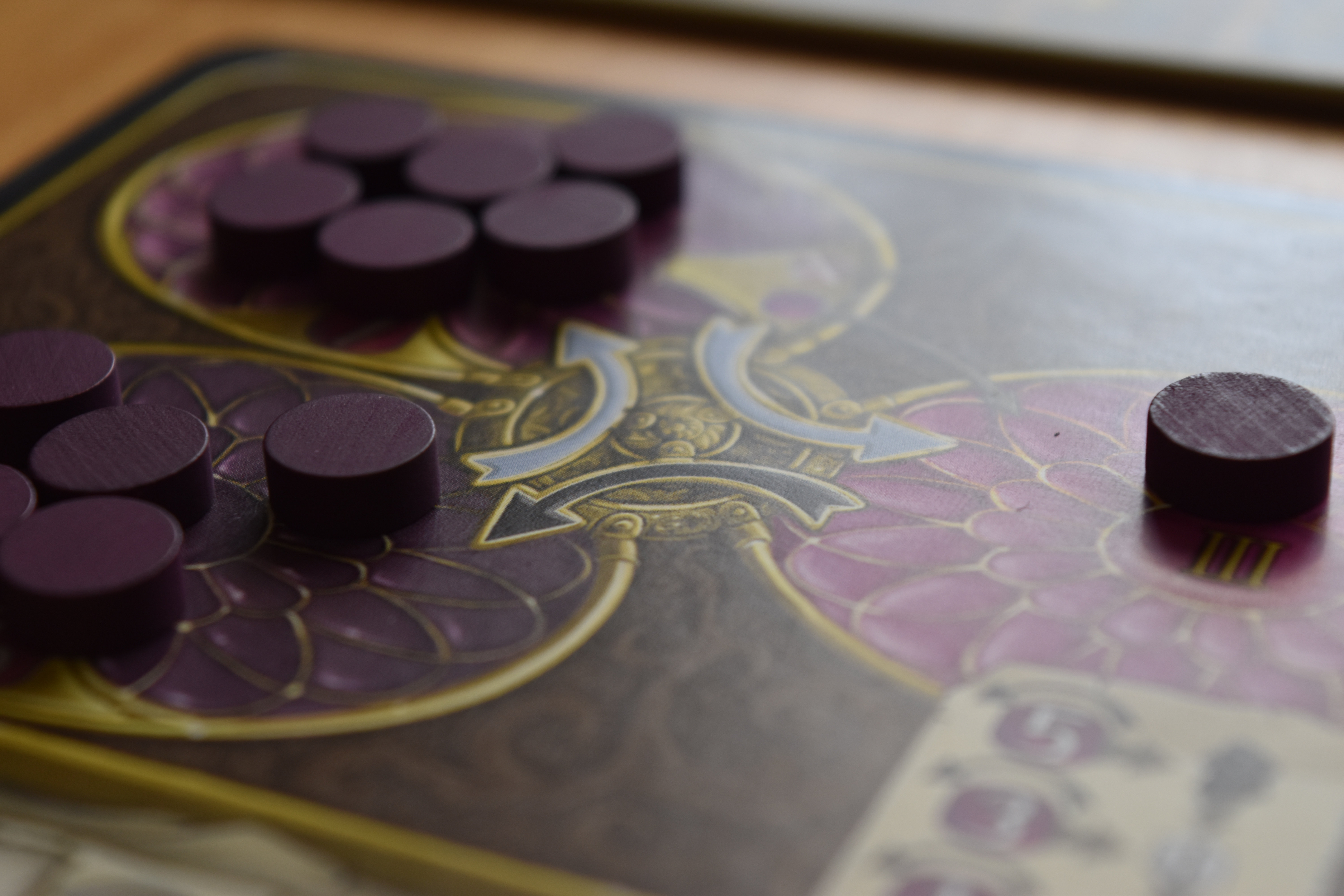
The list of things you can do in your turn isn’t particularly well-structured either – you can more or less keep doing all  of the things you want until you run out of resources (admittedly in some games this is a great thing, but you grow weary of the freedom rapidly). This makes competition with the other players minimal as no one can tactically end turns, or force extra resource spending. However one mechanic that is pretty good is ‘power’. Power is a physical resource in DSC_0116this game, which is purple and stored in some big dishes on your personal board. You can collect/receive it during turns or actions, which means that you transfer a little purple power pellet from one dish into the main dish. When you spend that power, you move the power pellet from the main dish to the beginning dish. In order to generate more power you have to move all of the purple pellets from the beginning dish to the main dish again in a little cycle. It’s a pretty neat cycle which requires forward planning, and allows unlimited but very tightly-constrained regeneration.

DSC_0126Unfortunately it’s only worth doing if you go heavily into a power farming strategy, or your race is particularly good at keeping power generated. For instance, Briony quite enjoys playing as the alchemists as their race ability, once the stronghold (a particularly important bit of wood) is built, generates a lot of power straight up. This means that you don’t have to compete for resources or jobs as you can mostly pay for everything with power, and you don’t have to keep putting a lot of effort into getting the power cycled around the dishes. She also enjoys this race as she’s spent almost every game playing as them, so she’s nailed the routine of what to do for the most effect. Then again she is the sort of person that can spend hours playing the first 100 turns of civilization over and over as one particular race to optimise strategy and timing. Bob simply cannot do this – she claims to enjoy fun.

Tasty bonus tiles.
Tasty bonus tiles.

As the game goes on your settlements begin to expand. Buildings are worth points, and once you’ve accrued enough your settlement becomes a city. This comes with a nice one-off bonus and also allows you to build a stronghold, unlocking a race ability. Along one side of the board there are a series of bonus tiles that offer a selection of lovely things e.g. extra victory points, some resources, a nice compliment about your hair. These are turned over once per round, and will state a requirement such as ‘Gain a buttload of power if you build five perfectly-domed city halls out of lava this turn’. This allows you to plan out your buildings to occur in rounds where you can get the most victory points from them. You can also imagine a giant stroking the bonus card seductively, clad in a leotard and heels for maximum gameshow effect. Whatever floats your boat.

In addition to this there is also an elemental temple track. In this there are four tracks representing each element. In order to go up in these tracks you must have a priest meeple (which can be gained by building certain buildings) or fulfill a job has that rewards you with that resource for free. Priests are sacrifically burned in the ‘totally-not a cult we promise, guys’ temple to push you up the track and also correspond to the bonus round tiles. DSC_0124For instance ‘if you are at least at level 4 in the Earth track gain a free visit from the Emperors of Xenu’*. We’re not particularly sure why this mechanic exists really. It’s adding an extra component to a game that already has a shit tonne of components, and to use would really take a lot of investment. Bob tried it once and even with a very cult-loving race it wasn’t really so much ‘viable’ as ‘fucking irritating’. We also aren’t really sure why they represent the elements… possibly because the earth is made from the basic four elements? Who knows, all we know is that that is bad science and the expansion will probably have a Helium and a Potassium track.

Once the game ends you get some final victory points that add to the ones generated throughout by your buildings or bonus’s. Points are awarded for the biggest city, how far up each track a player is, and some other excuses to have some points. It’s actually quite a nice way to end because it changes the scoring up, makes you feel good for getting more, and that you did better than you had originally thought. Overall the game has some really good mechanics – its downfall is that it has too many of them. This makes picking an effective strategy difficult and requiring a lot of experience with each race. We can’t help but feel that is doesn’t need quite that much stuff. There is a lot of it. Pieces, tiles, bonuses, tracks, races, resources, power, jobs, workers, buildings, giants in leotards – like the contents of a student’s bedroom floor (Nerds have ‘interesting’ university experiences).

Exhibit A - 'stuff'.
Exhibit A – ‘stuff’.

That being said, the two player version of the game is surprisingly good as a lot of the extra guffin is taken out. As a result of fewer players, the game progresses much faster, and you tend to get a grip on your race more quickly. Certainly playing it two player a few times would be the ideal way to understand the game, technique, and races before diving into a monster 6 person epic. Don’t be too put off from playing this game kids, there are a lot of positive reviews of itout there. We just feel like it was so close to being a truly classically epic game, but it got a bit too ahead of itself. Less is more, Terra Mystica, you don’t have to keep putting on extra frilly bits to please your target audience.

DSC_0133


*We respectfully request that the Church of Scientology, hallowed be your celebrities, please not sue us for these jokes. We haven’t got any money for you.


Sushi Dice: What is the Sound of One Hand Dinging?

Brutus Rating: 2 little fish hooks in the back.
Pairs well with: Sake or Ahasi beer.

6D-33-106

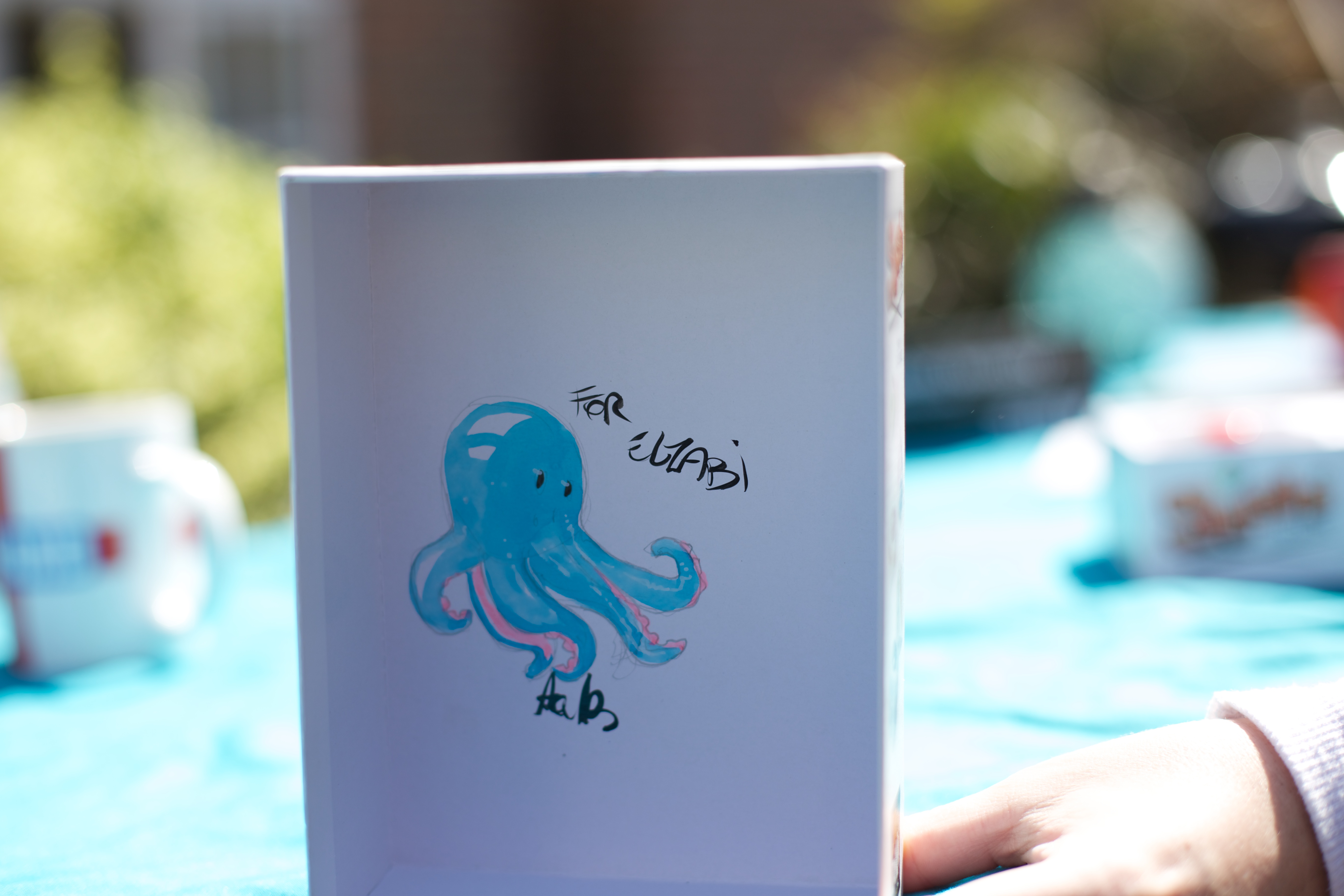
There are two ways to play Sushi Dice. The adult way, and the kids’ way. The adult way goes like this: You go to Essen Spiel with your friends and partner of choice and have a wonderful time (very important stage, this one). While there your friendly robot boyfriend should find the stand6D-33-104 where a new game called Sushi Dice is being exhibit and played (note, sushi is for some reason the current theme of choice for casual games – don’t confuse Sushi Dice for Sushi Go! or Sushi Express or some other nori-based nonsense). The game artist will hopefully be sitting at the stand, churning out little watercolour octopus drawings on the inner lids of games bought then and there. Friendly robot boyfriends know that this makes an excellent gift, and will buy it for their neurotic board game girlfriends (ie Bob).

Later on, when you and your wily gang of nerds are relaxing at a German Brauerei with beer 6D-33-117and bratwursts the length of your arm, you figure out the (very very simple) rules and have a go at playing. The game can be played by any number (>2) of people, but there are only ever two active players at a time. Each active player gets six dice, with are printed with sushi ingredient symbols. Three of the six dice have a star symbol, and three have a black skull.

To play, a deck of cards depicting sushi and other fish dishes (e.g. paella, fish and chips) is placed face down. Three cards are drawn from the top and laid face-up in the middle of the table.

6D-33-149

Players roll their dice until they match the ingredients of a fishy dish and if they get there first they get the dish card. Whoever has the most cards after an arbitrary length of game time wins. Then the round ends and the dice pass to the next pair of players.

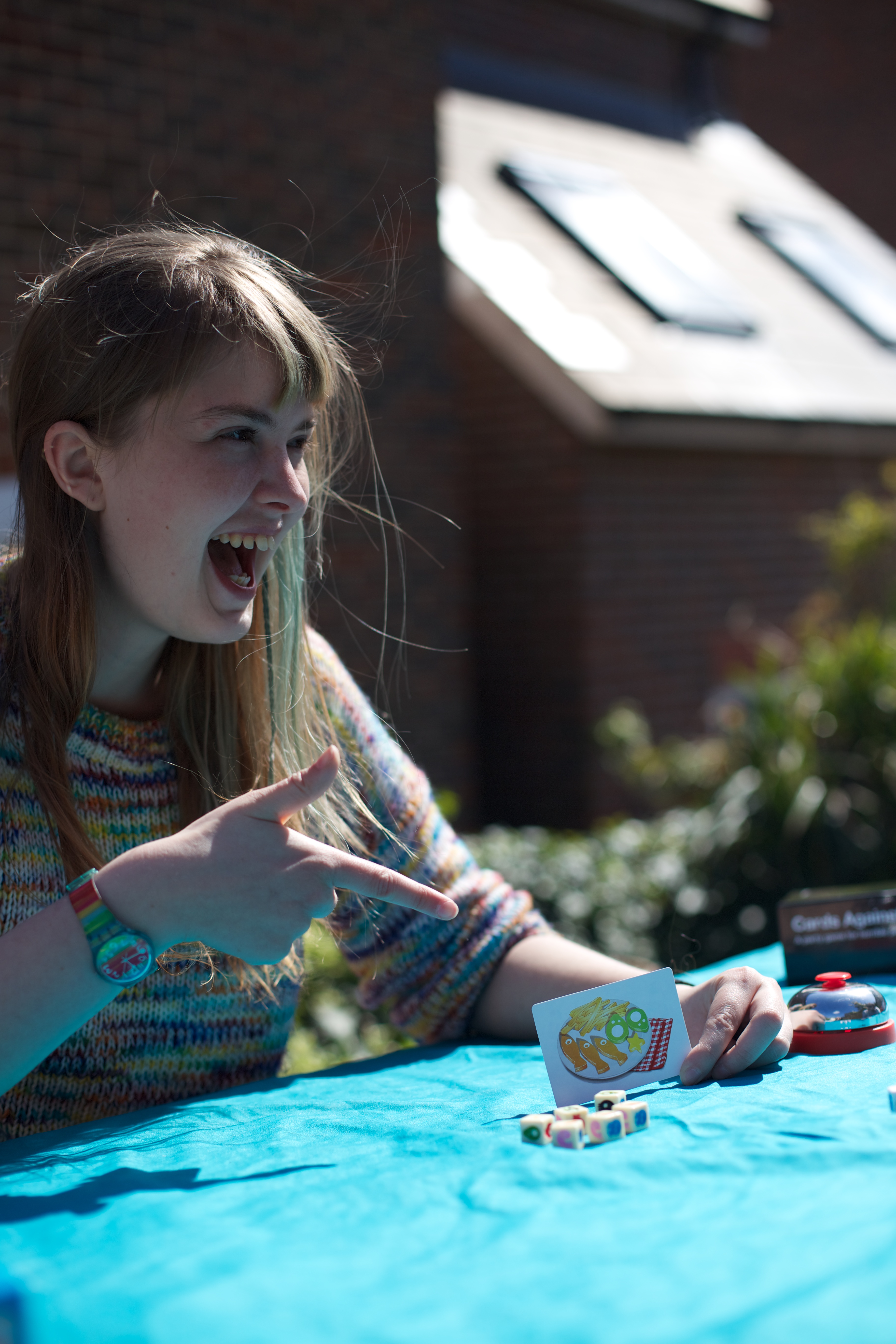
6D-33-122Stars are wild. If you see another player get a skull dice you can yell ‘YUCK!’ and they will have to re-roll all their dice. If a non-active player sees both active players roll a skull they can yell ‘CHOP’ and the round ends.

To signify that you, the plucky sushi chef, have completed an order of whichever fishy dish you’ve chosen, you ring the handily-included bell. Of course, when you play the grown-up version you’re in a tap-house, so it’s unlikely that a group of people ringing a service bell would be very popular. So instead of hitting the bell you instead say ‘Ding!’ This swiftly escalates to shouting ‘DING!’ while hitting the table but that’s still way better than being the dickheads with the bell, right?

6D-33-138

Of course, when you play the kids’ version you have to include the bell. Them’s the rules. You also have to become suddenly and tragically blind to cheating. As part of Bob’s plot to indoctrinate the youth of today with geeky values* she has become adept at rooting out decent games which are still child-appropriate.**Sushi Dice is pretty and brightly-coloured, easy to learn, and loud.

6D-33-141

DING!

Kids like loud***.

DING DING DING!

In fact the children Bob played this game with liked it so much they refused to stop playing it even after all the adults had lost interest.

(DINGING intensifies)

The two of them played it between themselves for a good while until the accusations of cheating got out of hand (they were both cheating, and they weren’t even playing to win). Then one of them continued to play it by herself, mainly just to be able to hit the bell every time she finished a combination.

6D-33-154

(DINGing continues, forever, until all meaning and time is lost to the sound of one hand dinging. And every time the bell rings, Bob’s dog barks. She has created a monster.)

That’s what we can consider a success story.


*Parents! Are you worried about your teenage children growing up to be hoodlums and drug fiends!? Well try this remedy on for size: Magic the Gathering! With this collectable card game your son or daughter will never have the money for drugs, and all their friends will commit no greater crime than failing to shower regularly! Hurray!

** Unfortunately she still hasn’t been able to stop saying ‘fuck’ in front of the kids. You can’t fight nature, man.

*** See the Twilight Imperium review for the moment when loud became unbearably loud.


Picture thanks to Dr Photographer


Super-Mega Interstellar Misery Farm on-the-Road Review: It’s Watch the Skies!

Brutus Rating: 7 out of 10 back-stabbings to the back.
Pairs Well With: Alien-enhanced protein shakes.

IMG_0685

We here at the Misery Farm have once been told off by you our loyal readers for doing ‘play through’ style game reviews when it’s only the first time one of us have played a game. This is probably fair, since trying to gain an overall impression of a game while learning the rules and often losing horribly is not particularly easy. So you’ll be pleased to know that we, here, at the Misery Farm, are offering a super-experienced review of Watch the Skies! We have played it twice.

'We can't eat those cows. Thanks though' -India
‘We can’t eat those cows. Thanks though’ -India

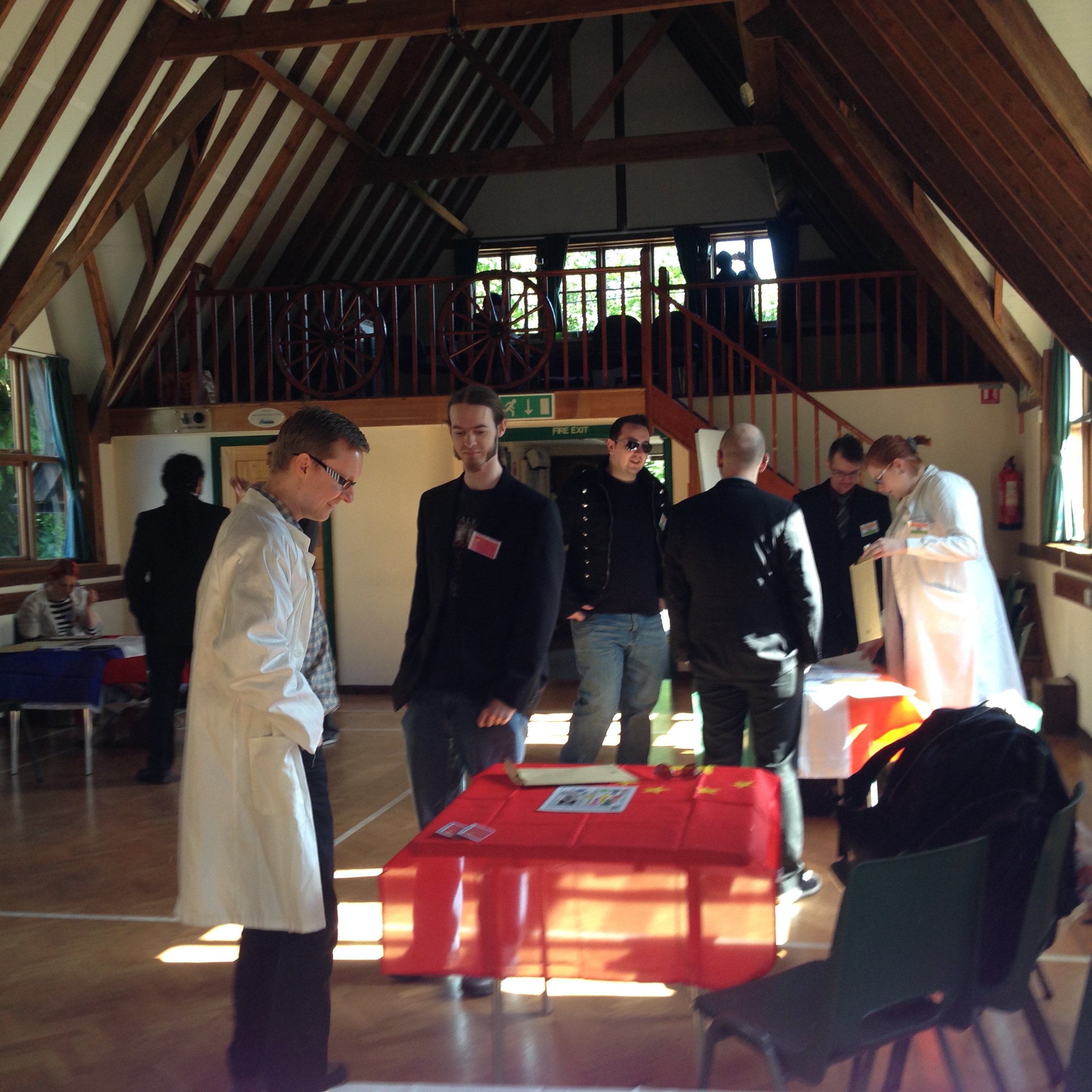
For those who don’t know, WtS is a ‘megagame’ designed to be played by around 50 people. If you think setting up Eldritch Horror or Twilight Imperium is a ball-ache, you ain’t seen nothing yet. Firstly, you need a great big space, preferably with some kind of upper-story balcony and some smaller adjoining rooms. Then you need big maps, and tables, and lots of bits and pieces of game. And lots and lots of tea.

IMG_0669

You also need a dedicated team of rules-explainers and –enforcers, who will basically herd the rest of the players to do the right thing at the right time (the Controllers). Usually these are also the organisers, and their state of being during the entire game appears to be one of high anxiety and stress. The first game we played in Southampton was organised by experienced controllers, and even they seemed close to breakdown at all stages. Our poor mates Charlie and Mac who organised the event this weekend didn’t stand a chance.

Your role as Controller: nervous blur

Teams represent countries, and are usually made up of four players; a Head of State to organise the others and divvy up resources, a scientist to develop exciting tech, a Foreign Secretary to sit on the UN council and hopefully avoid international disaster, and a military guy to explode stuff. Bonus points for dressing appropriately for your nation and role.

IMG_0642
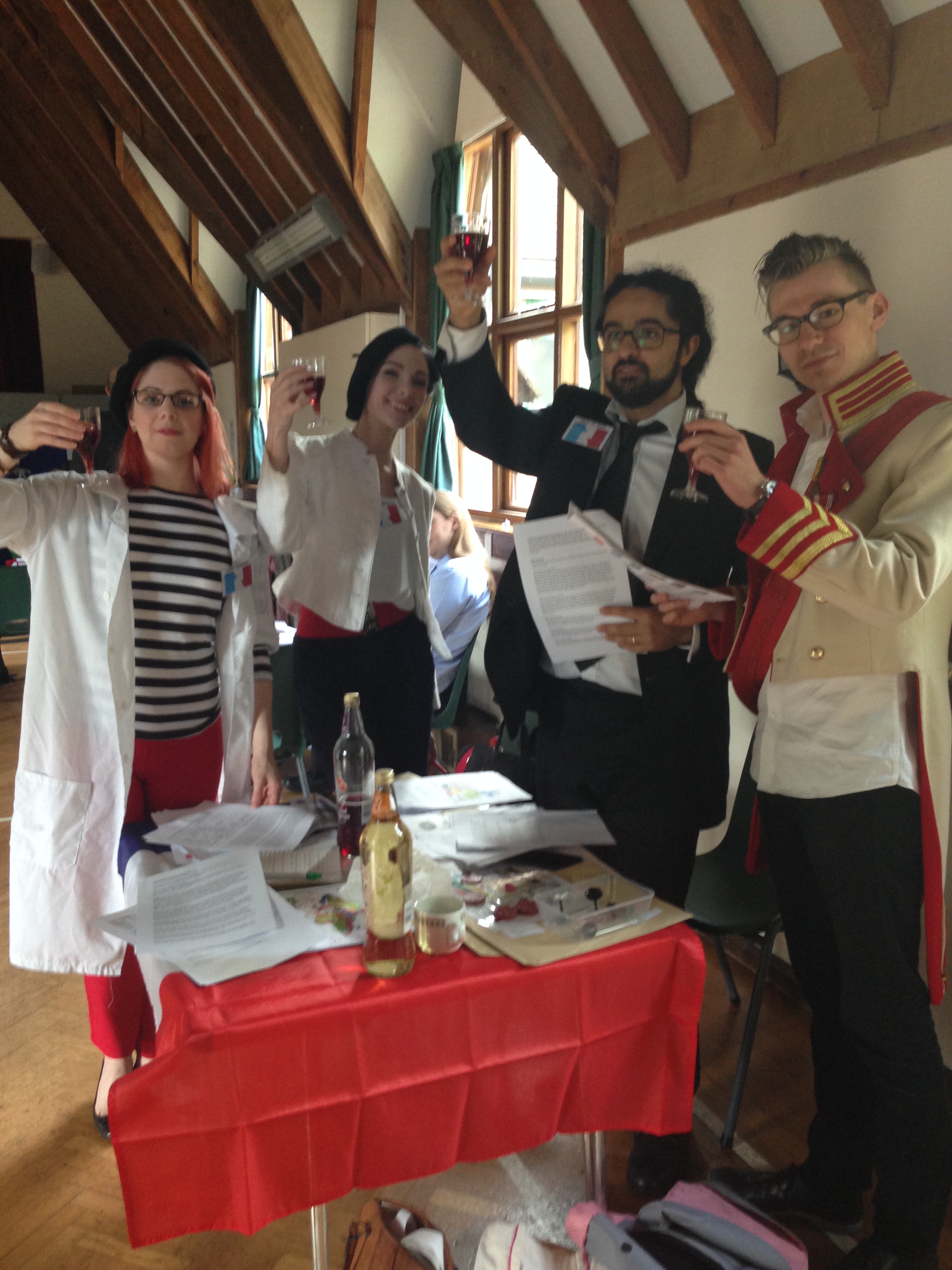
Oniony stereotype, 1967 Brigitte Bardot, Enthusiastic Suit, Les Mis with medals.

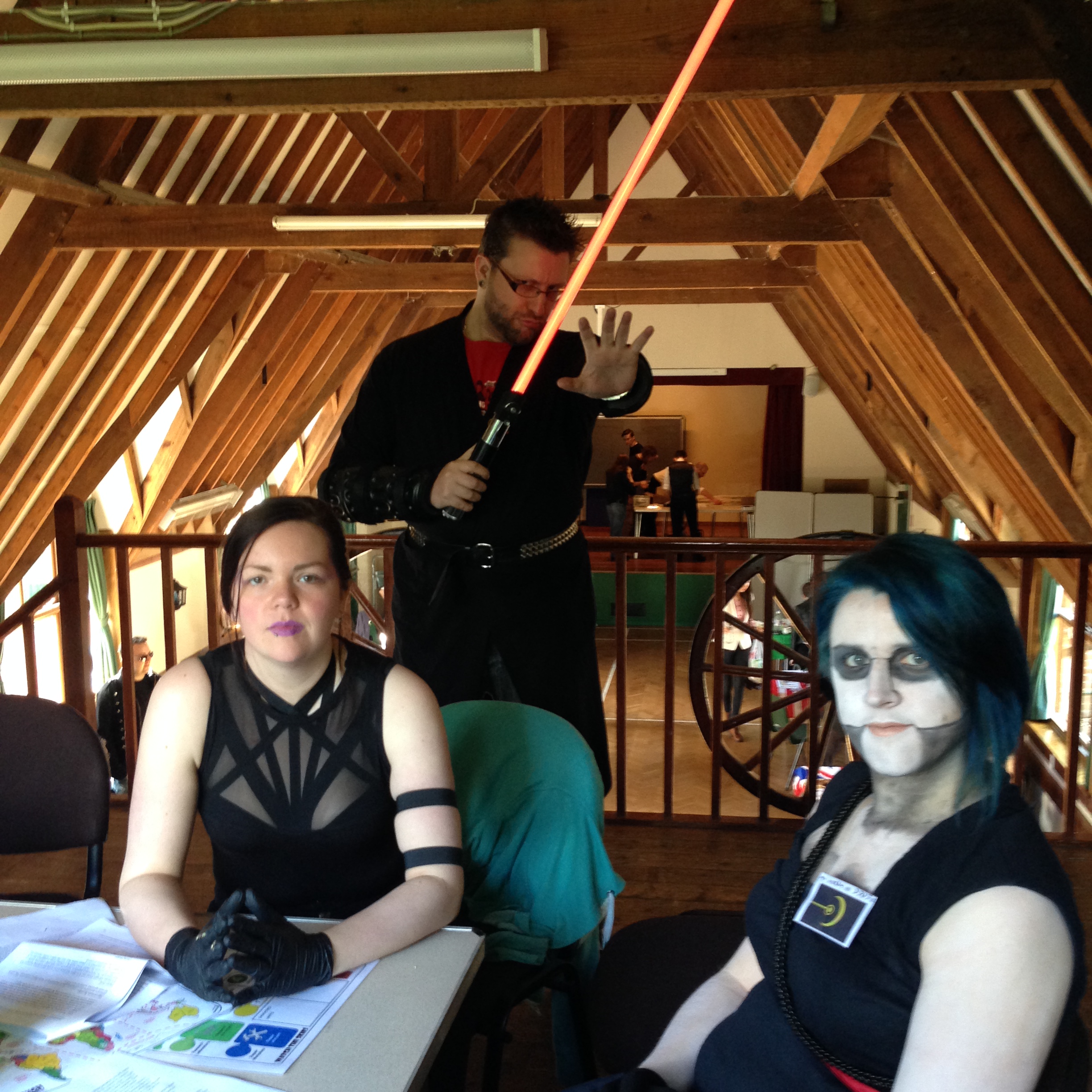
Up in the gallery sit the primary antagonists, the Grey Menace/aliens. Sightings have been rumoured for a while, but the public doesn’t know for sure that they exist. These guys might be good, they might be evil, they might be somewhere in between. All you know is that they’re showing up on Earth with alarming frequency, and they have some kind of mission. One final team is the Global News Network (GNN). They basically document what’s going on in the style of an international newsgroup, publishing a ‘newsletter’ as often as possible.

Bustling in early
Bustling in early

Bright and (very) early on Saturday morning, friends and acquaintances from all over the south of England gathered in a tiny village somewhere in the Oxford countryside for a good old-fashioned game of XCOM meets Model UN. Like the enthusiastic group of nerds that we are, everyone showed up early and eagerly, to the mild annoyance of the organisers who had barely had a chance to lay the flag-decked tables out. The aliens settled down in their balcony hideout, ready to watch the actions of the pathetic humans below them. While the humans obviously hoped for a peaceful outcome, they were not particularly comforted by the aliens’ Sith-Lord-meets-Borg-Queen aesthetic.

'Greetings earthlings, we come in peace'
‘Greetings earthlings, we come in peace’
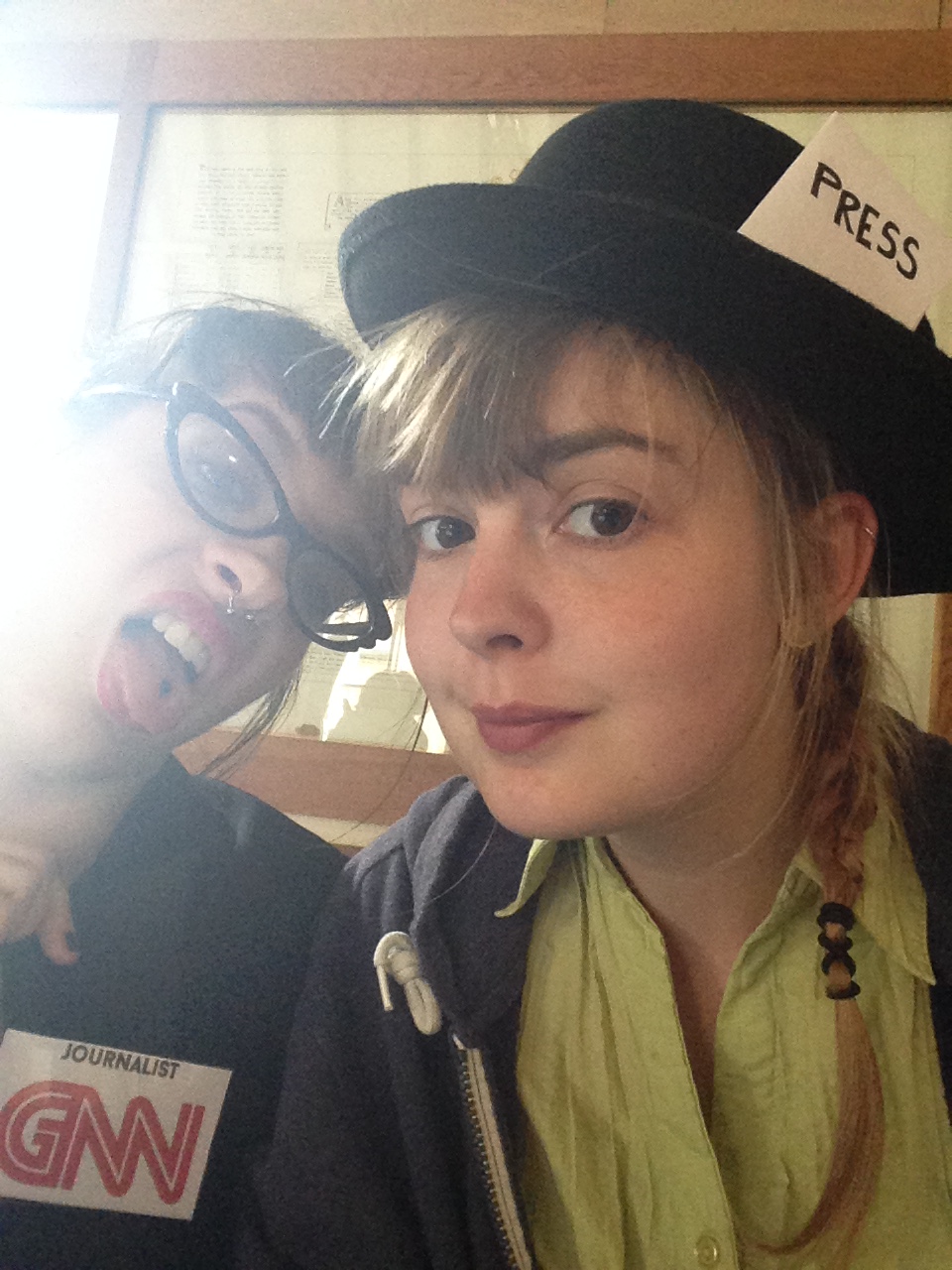
Super Handsome Reporters

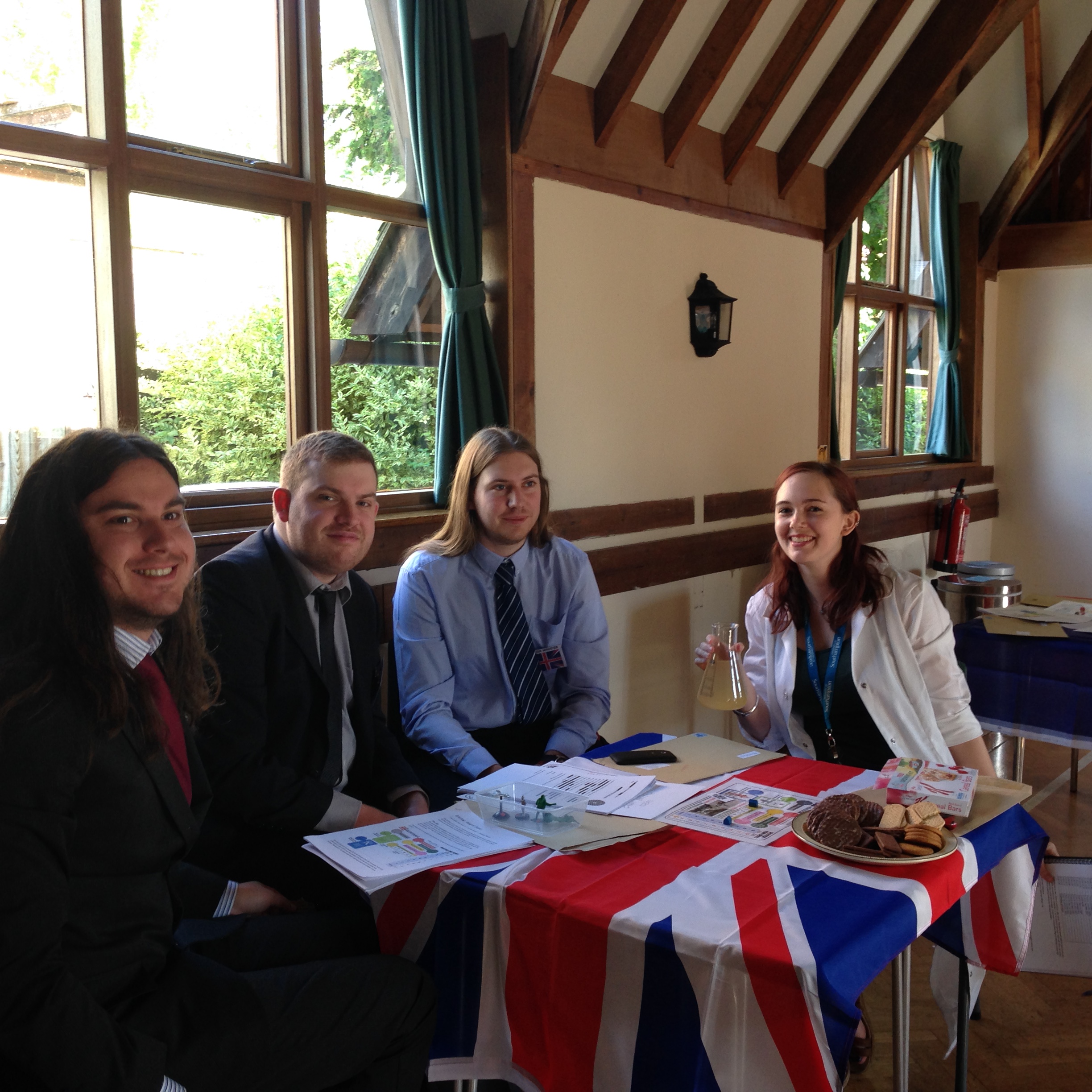
Lizzy and Bob were there representing the Misery Farm and, appropriately, playing as the global news team along with their beautiful and masterful ex-Cthulhu-GM Emma. Early optimism and merriment was only slightly marred by the presence of China one table over, who had brought along Durian sweets and were now stinking the place out with their gassy, eggy odour.*

 By late-morning the game was in full swing. France was already mildly inebriated from their grape drinks ** while Britain’s main bribery tactic appeared to be biscuit-based.

'Would you like a biscuit?' -Britain
‘Would you like a biscuit?’ -Britain

In the newsroom stress was high. It turns out that pumping out fancy-looking and moderately-highbrow front pages every 45 minutes is not easy. Finding the ‘big stories’ every turn is a particular challenge when heads of state constantly vie for your attention in the hope of increasing their public relations, while neglecting to mention juicier but less marketable stories. Everyone is still denying the existence of aliens, and no amount of coaxing will get the truth out of them.

'The penguin has been the official bird of America since 2017' -US chief of science
‘The penguin has been the official bird of America since 2017’ -US chief of science

The USA was particularly guilty of trying to distract us from the real stories (as it is in real life, so it is in Watch the Skies), as in the same turn that they invaded Angola, attacked Madagascar, and publically announced the existence of aliens, they begged for a front-page picture announcing a new Holly-Bollywood film release (Hot Runnings is to be released in 2022, and will feature rising starlet Hannah Hendrix as a functionally-dressed heroine who dreams of Olympic success).

IMG_0637 IMG_0643

The team were getting pretty excited with our shiny printing press. Bob, ever the organised-one when it comes to avoiding her PhD work, had brought her laptop, a printer and made an excellent (if awkward to fiddle with) template for news stories. Over the course of the day we trotted out eight different editions of the GNN Times, printing out ten copies of each issue and distributing them around the room. By the second issue we even had the genius realisation of how far technology has come when we realised we could actually take photos of things going on in the room and feature them on our papers!

IMG_0653 IMG_0664 IMG_0667

By the afternoon it was more or less chaos around the room world. This is no jibe at the

“LABOTAGE”

organisers – it’s pretty much an inevitable result of gathering 50 people in one place and givingthem alien technology. China was selling their babies to aliens, Brazil was trading cows for better, beefier cows, and France sabotaged the British laboratory to stop them getting ahead. Trying to keep up with it all was nearly impossible, and our newsletters reflected this by getting sillier and sillier.

After USA officially and publically declared the existence of alien life even the weather report at the top of our paper went from “Global rain” and “Cloud cover” to “Who even cares anymore?”

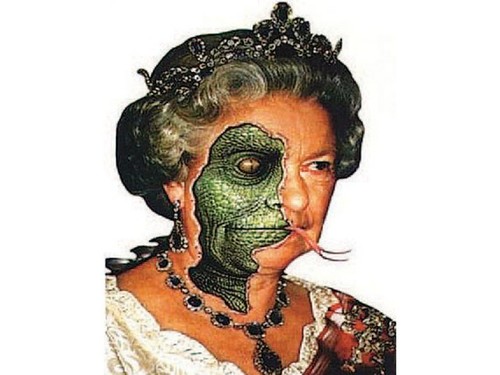
LizardQueen
Filler headline of the day: ‘Is the Queen a lizard alien? No.’

Our news-reporting tactics varied from actually occasionally being told about what the hell was happening from a few kind people to sneaking around and trying to eavesdrop for some excellent quotes.

IMG_0694
BREAKING NEWS: “France is going bat-shit crazy” –President of France

Occasionally we would saunter up to a head of state to ask them what the haps were, and they’d casually reply “Oh yeah, nothing much. Someone just destroyed an alien base in Angola, though.” Which would leave us running back to the desk excitedly to knock Emma off the table and quickly type it all up.

IMG_0678 IMG_0680 IMG_0677

Eventually we were awarded a Pulitzer Prize for … something. We actually don’t know, and norIMG_0716 do the organisers, but it apparently felt like time that we got one. We even managed to snag an interview with the aliens, who convinced Senior Correspondent Emma of their peaceful aims a few minutes before launching a psy-ops mission which made half of Europe believe that entire cities (buildings and all) had been abducted. Probably not the best way to convince us of their sincerity. Brazil, the ‘nice guys’ of the day, were the only team to continue to believe that the aliens were actually peaceful. ‘“Everything probably fine!” –Brazilian President’, shouted the smaller headlines.

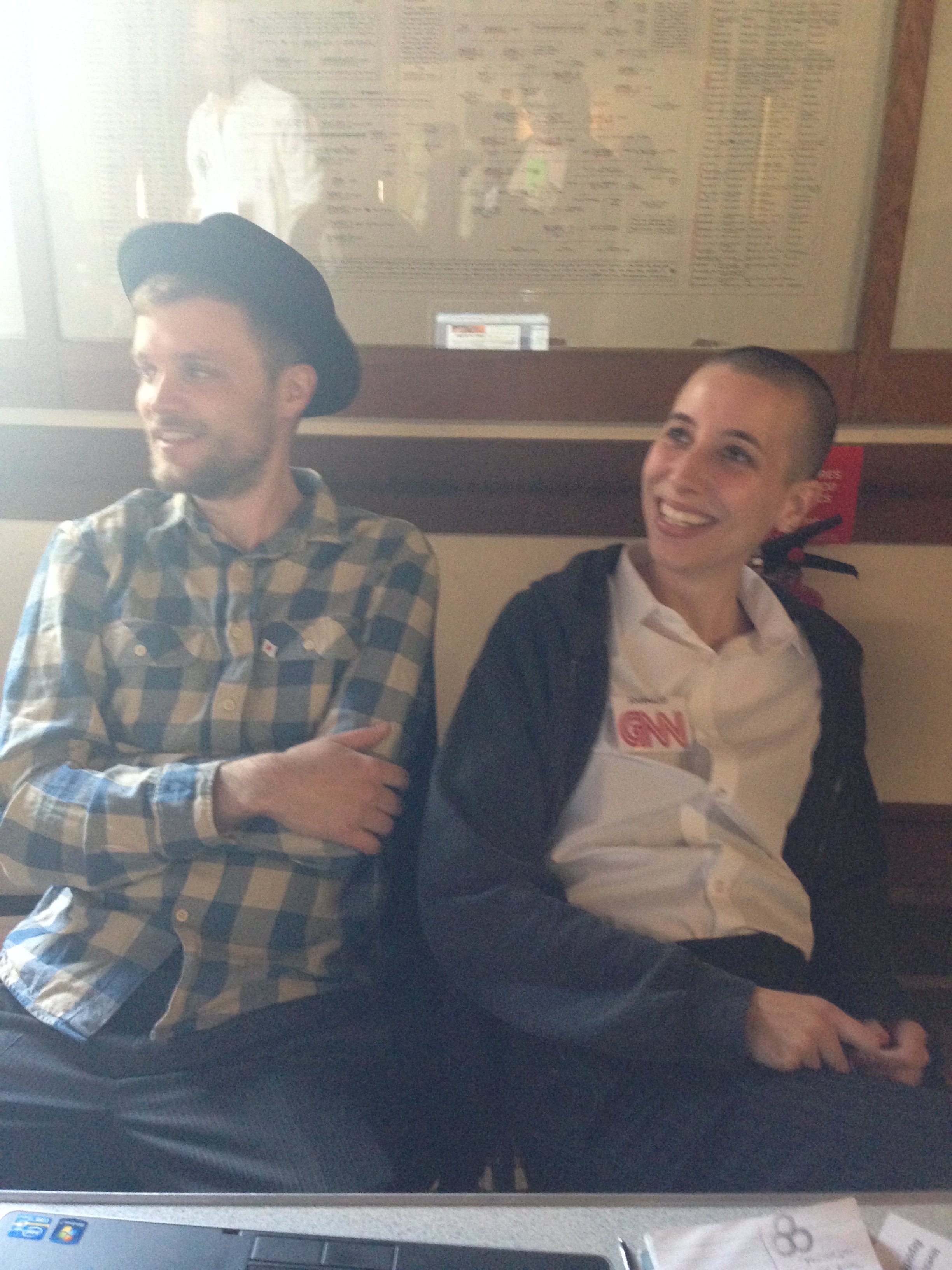
As the afternoon was coming to an end, China and the USA got bored and frustrated with the IMG_0723whole affair and not knowing what to do, so decided to nuke Brasilia. The whole room stopped and mouths were agape as the two defence ministers went rogue, and as even their heads of state froze and looked flabbergasted. Their reasons are still unclear, but Brazil was pretty upset considering they’d just built a theme park featuring alien-enhanced beef called ‘Brazil-Land’. When questioned, the USA claimed that it was because the aliens were communists, while China told us to go away as they’d created their own free and independent news media, which had already won 286 Pulitzer-equivalent prizes.

'Go away' - China
‘Go away’ – China

The game works on many levels. It’s role playing, it’s strategy, and it’s highly competitive. Alliances are made and broken as countries try to fulfil their secret objectives, and rumour, hearsay, and espionage tactics threaten to bring the whole thing down at any moment. Your ally from turn one might suddenly turn around and steal your research, or Russia might initiate a bioweapon attack on the aliens under the guise of returning the corpses shot down in air combat. Both of which happened, of course.

Japan's foreign secretary got so upset at how useless the UN were that he defected to GNN. As in real life, so it is in WtS!
Japan’s foreign secretary got so upset at how useless the UN were that he defected to GNN. As in real life, so it is in WtS!

All the same, it’s a lot like hard work. The stress is very real and exhausting. Toiling and planning for turn after turn only to fail an important dice roll at a crucial moment is incredibly frustrating. Worst of all, an effective costume pretty much demands high heels, which hurt like Hades after five hours of rushing around looking stern at heads of state.

'JUST FUCKING SHOOT THEM DOWN' - Britain
‘JUST FUCKING SHOOT THEM DOWN’ – Britain

At the end of the final round small summaries were given, and praise was given out to people in certain positions who had done particularly well. Dr Hates-Dice, Emma’s husband, was lauded as the best president the planet had seen, despite regular gaffes in what he’d said to the press (“We’re all tired and one of us is drunk” being particularly memorable). He had his face in the papers shaking hands with other heads of state twice and had been an excellent negotiator of pacts and treaties.

We earned out Pulitzer
We earned our Pulitzer

Meanwhile the overall best country turned out to be… Brazil! Despite having their capital nuked, they’d remained peaceful, resilient and friendly. Particularly to the aliens who, as it turned out, were actually quite nice apart from their anti-human prejudice.

IMG_0715Everyone applauded and collapsed and the wonderful beautiful organisers presented us with some beer which we gratefully crawled to after a hard day’s sky-watching. The beauty of the game continued to unravel for hours afterwards, as people discussed goings-on in different parts of the room across the day. So much happened over so many hours that it was impossible to have any idea of the full extent of what was happening at any one point. You might set something in motion at one point and have no idea of the consequences until hours later.

The first time we’d played Watch The Skies was amazing, this time was even better. Hard work, but amazing. Stay vigilant, humans. The next time it could be you.

                           IMG_0679 IMG_0645

*Apparently they tasted like cheese. Good work China.

** Fizzy grape juice in wine glasses.


We apologise for the quality of the photographs in this edition of Misery Farming. Bob’s point-and-click camera had an unfortunate case of early death and so we were forced to rely on an iPhone camera and prayer.  We blame Dr Photographer-Friend for forgetting to sign up.

 IMG_0725

Eldritch Horror: Misery, Doom, Tentacles. A normal Friday night in.

Brutus rating: 1/10 knives in the back
Pairs well with: some very strong whisky. Strong enough to forget the horrors you’ve seen.

6D-34-144

The Misery Farm’s friendly photographer-friend enjoys only three things: board games, cameras and suffering. This makes him a good misery photographer but a bad person. It has also adapted him to suit a game called Arkham Horror: a board game that brings nothing but relentless suffering. If you’ve not played it, then rest assured that it’s just hours and hours of trudging around dreary old Arkham before being eaten by a void-born tentacle-god.

When Eldritch Horror came out, Dr Photographer sold it to us as “It’s Arkham Horror, but fun.” Does being fun take the fun out of it? … No, it turns out!

Lizzy's tentacle.
Lizzy’s tentacle.

It’s big and it’s long and it’s tentacley. The board is a great chunky world map which you traverse, and there are lots and lots of extra cards and tokens and doodads which make setting it up annoying but playing it extremely satisfying. Like many ‘big’ games turns take a while and are divided into phases. They are, roughly, Doing Stuff, Stuff Getting Done To You, and Bad Stuff Happens (or ‘action’, ‘encounter’, and ‘mythos’ if you’re being fancy and accurate). The aim of the game is to solve mysteries and stop the hell-spawned Old Ones from rising up and devouring the universe. You will sometimes often fail at this.

10397047_10152420766204337_8447561979145296536_oEldritch is one of those games that gives you some excellent characters to work with if you want to get into the spirit of things with a little bit of the ol’ roleplaying. This makes it an immediate favourite for Lizzy already, and the rest of the team are just relieved that it’s a co-op and they can take a break from having to beat the crap out of her in case she gets ahead. Everyone each gets their own character (until they die, go insane, or the game ends) and a good group of friends will heavily encourage acting, an elaborately developed personality and a funny voice for the duration. The characters each have special abilities of some kind, their own set of stats and their own backstory.

6D-34-118

Of course, the game also doesn’t shy away from other classic Lovecraftian themes such as racial stereotyping. There’s an Asian lady who’s… really good at martial arts? Ok. And the Nigerian’s backstory is about wise village elders and spirits? Yup. Let’s just… yeah. And let’s not put on voices for those characters k? K.

And then there’s our own personal favourite: Silas Marsh. One for the ladies. His thing is that he’s better on sea-tiles. What’s his intricate and carefully woven backstory? He… quite likes the sea.

What?

Yep, that’s it. He just really likes the sea, you guys. He comes from a small seaport town, you won’t have heard of it. It’s in New England somewhere.

"I'm basically just producing slashfic now." -Dr Photographer
“I’m basically just producing slashfic now.” -Dr Photographer

Good.

So as mentioned above, Eldritch Horror is a co-op game, hence the small “knives-in-the-back” rating. It still gets one knife however, in case someone gets a death pact and has to kill one of their friends.

darkpact
You see this face? This is the face of ‘I just found out what a Dark Pact does.’

… Pardon?

Horrors?!
Horrors?!

Yup! That brings us right round to the main theme of the review, the game, and indeed life itself: never-ending horror. As with most good co-ops, at the end of every turn someone needs to trigger what’s known as Bad Stuff Happens (‘mythos phase’). For Eldritch Horror this means turning over a card and letting all hell break loose. Not got enough monsters on the board? Have some more. Not got enough terrifying gates to otherworldly and evil dimensions, floating around? Have some of those, too. Not feeling like there’s enough DOOM floating around? Better advance the DOOM track! Frankly if you’re not feeling overwhelmed and panicky once you’ve resolved all the conditions of the mythos card then you’re playing it wrong.

Big bag o'monsters
Big bag o’monsters

If the DOOM track reaches zero, or you’ve got too many inter-dimensional gates spitting monsters all over the board, or maybe just if great Cthulhu’s great alarm clock was set a little early, then congratulations, the Old Ones have woken up. When that happens you are more or less fucked, unless you can pull out some really fantastic dice rolls and co-operation. So yeah, pretty much fucked. Enjoy being devoured.

But of course, there are several other ways that things can go wrong for a plucky gang of adventurers during the ‘encounter’ phase. There’s that aforementioned “death pact” and other terrifying conditions (you don’t need all of your limbs for adventuring, right?) and there are monsters – those tend to want to attack you if you get too close. Sometimes you’re just on a lovely, optimistic quest for a ‘clue’ and instead you wind up beaten and imprisoned. There are really excellent cards that describe what happens in each situation and which skill-checks you need to pass, and you’ll always find yourself shouting at your character as you read it out.

When the horror gets too much, sometimes you have to turn into a starfish.

You see a terrifying crypt… good, that’s ok so far… you head towards it to explore… NO I FUCKING DON’T WHY WOULD I DO THAT… and suddenly an arm grabs you… OF COURSE IT BLOODY DOES I’M IN A SHITTING CRYPT WHAT DID I EXPECT? …Make a strength check to escape…  OKAY COME ON ARMS OF STEEL… SON OF A BISCUIT HOW DID THAT FAIL?? …if you fail you get dragged underground where shoggoths pull off your arm and beat you with it.

Strength check you say?

The game has an exciting balance of making you firefight all of the things going wrong and actually trying to scrabble your way towards victory. You may want to hoover up all of the lovely clue-juice, for example, depending on the current victory goal that you need to achieve, but you also don’t want to leave open five portals which more terrifying goat-spawn can clop through at any point.

One thing that seemed a little less balanced is the discrepancies between different numbers of players. We left Bob unsupervised once or twice and she had a few solo runs of the game, which she tells us was possibly a little too easy. Obviously we can only explain this by the game being easier with only one player, and nothing at all to do with Briony, Lizzy and the Camera-Man holding her back the rest of the time. It’s also absolutely impossible that she was playing it wrong. She’s a known rules junkie, our Bob, who never takes the ‘eh, that’s probably right?’ approach to little things like numbers of dice or how DOOM tracks work.

Big board o' horrors
Big board o’ horrors

We also didn’t have too much of the “one person controls all” problem that seems pervasive through a lot of co-op board games, but that might just be the particular team of plucky adventurers / arseholes that we are.

“Get the clue, we need it for the next victory condition!”
“… Hmm but I really want to explore Tunguska.”
“But the victory condition?”
“TUNGUSKA!”

6D-34-135

It’s also got great replayability as you can choose from a variety of world-eating monsters to struggle vainly against, and which affect the gameplay quite strongly. If you fancy your misery Shub-Niggurath-flavoured, for example, you’re going to be spending a lot of time losing your sanity to suicidal cultists. If it’s Yig, you’re going to be poisoned by snakes at least twenty times. If you’re in a Cthulhu mood then I’m afraid you’re going to be spending some time in the sea. There are goat-spawn too, and hellhounds.

The expansion adds to this with a host of new monsters, crippling ailments, and a frozen wasteland. Hurray!

To enjoy Eldritch Horror, you do have to enjoy a bit of misery for your adventures. Luckily, this is right up the street of a group of board game reviewers who’ve called themselves ‘The Misery Farm’. We’d certainly recommend it to people who only hate themselves a little. Most of you, probably.

He really likes the sea.

The real winner is Cthulhu. May the dark lord’s tentacles ever be long and terrifying.


Photos credited to Dr Photographer

The big bag o’ monsters was made during a game by the mighty-impressive Emma Field at JustAddCrochet, who is also featured in a photo as a starfish.

Libertalia: How to Pirate 101

Written by Briony, Bob, Lizzy.

Brutus Scale: 6/10
Pairs well with: white rum, dark rum, spiced rum. All of the rum!

This week, the team have decided to try their hand at pirating with Libertalia. More like Libert-arrr!-lia, am I right? No.

Spot the theme.
Spot the theme.

If there’s one thing the team have learned from the game, it’s that not one of them makes a good, or indeed effective, pirate. No sir. They did all the right things: dressed in pirate clothing gradually throughout the evening, drank for hours before attempting to win some loot, didn’t listen to the reading of the rules like any true badass pirate would, and yet the cards still did not fall in their favour.

Probably because they were continuously playing the wrong cards.

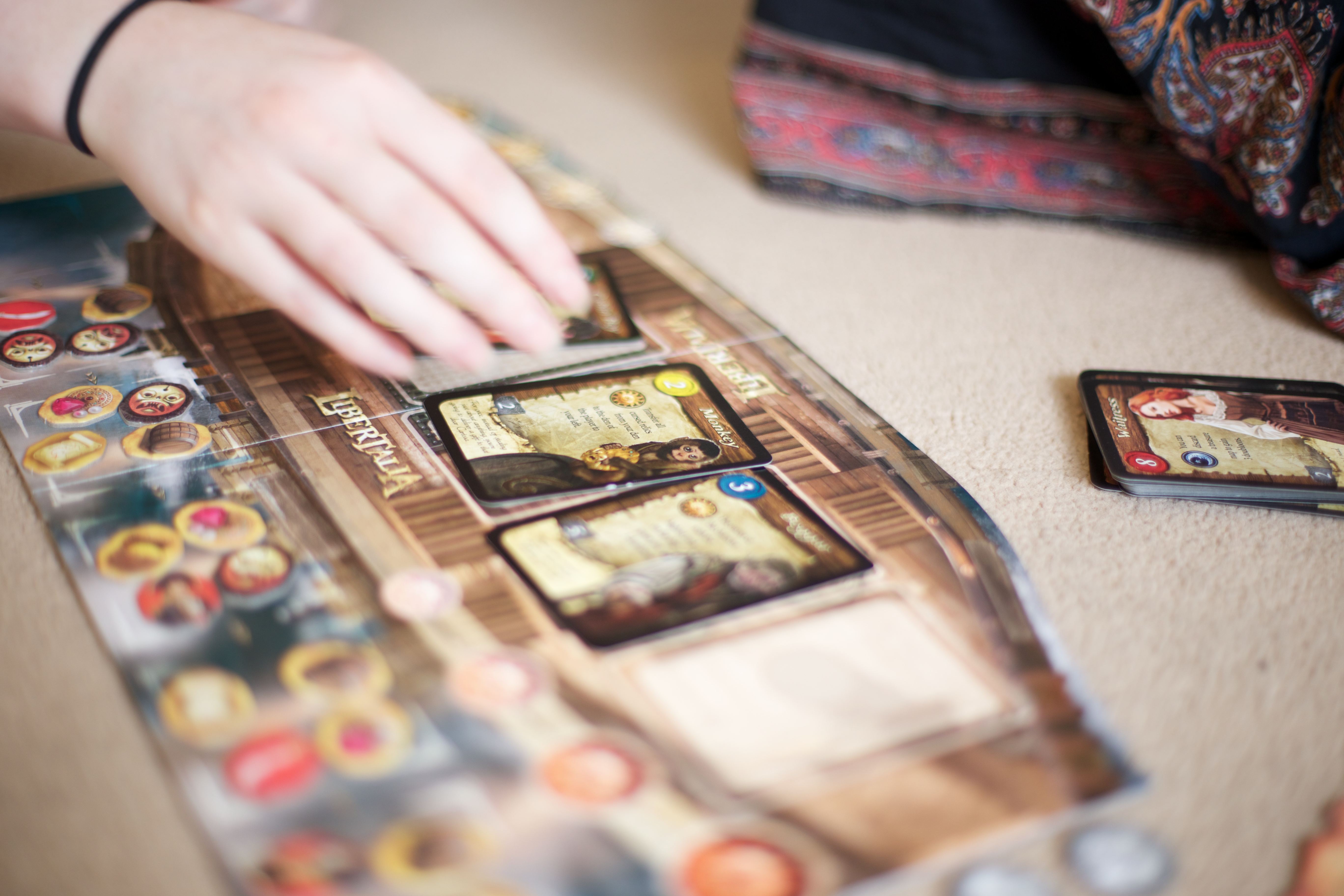
Is it a board because its a ship, or is it ship because its a board?

This has been the overriding theme of the game: you will never, ever play a decent card, but everyone around you will. And consistently at that. A majority of the game will be spent playing a card from a hand of 9 against your opponent’s selection much in the top trumps style of ‘highest card picks loot first’. The board has seven sections (representing days of the week), all of which feature a randomly drawn selection of loot.* Loot may include expensive shit like jewels and other shiny things classic pirates like, bad shit like curses, and the ability to murder another player’s card modelled on a particularly shiny scimitar. The player who placed the highest-rated card will pick whichever loot they find most appealing, and the rest will resolve in rank order. Whoever is left at the bottom rungs of the rank will find themselves lumbered with curses (worth negative points) or something else undesirable. Think, the captain’s old socks.

Furthermore, each player will have the same hand of cards as you, which brings out some great ‘will they/won’t they’ scenarios when considering who will play which card, and when. It also makes the fact that everyone always seems to have better cards than you somewhat baffling.

If pirates played cards this is almost certainly what it would look like.

Certainly remembering who has already played which card is what the pros would do – but we are not pros. Instead of simple and logical prediction such as ‘Bob has played the ‘waitress’ card, that means she won’t play that card again this round’, whimsical drunken pirate logic quickly turns that into ‘Bob has played the particularly untrustworthy-looking spaniard** this round, and it’s a Thursday and she had brown rice for dinner last night, therefore she will plat the Captain next’. Lizzy and generic male gaming buddy Pete aren’t falling into this trap at all, leading to most of the loot being split between them.

Misery Pirates.
Misery Pirates.

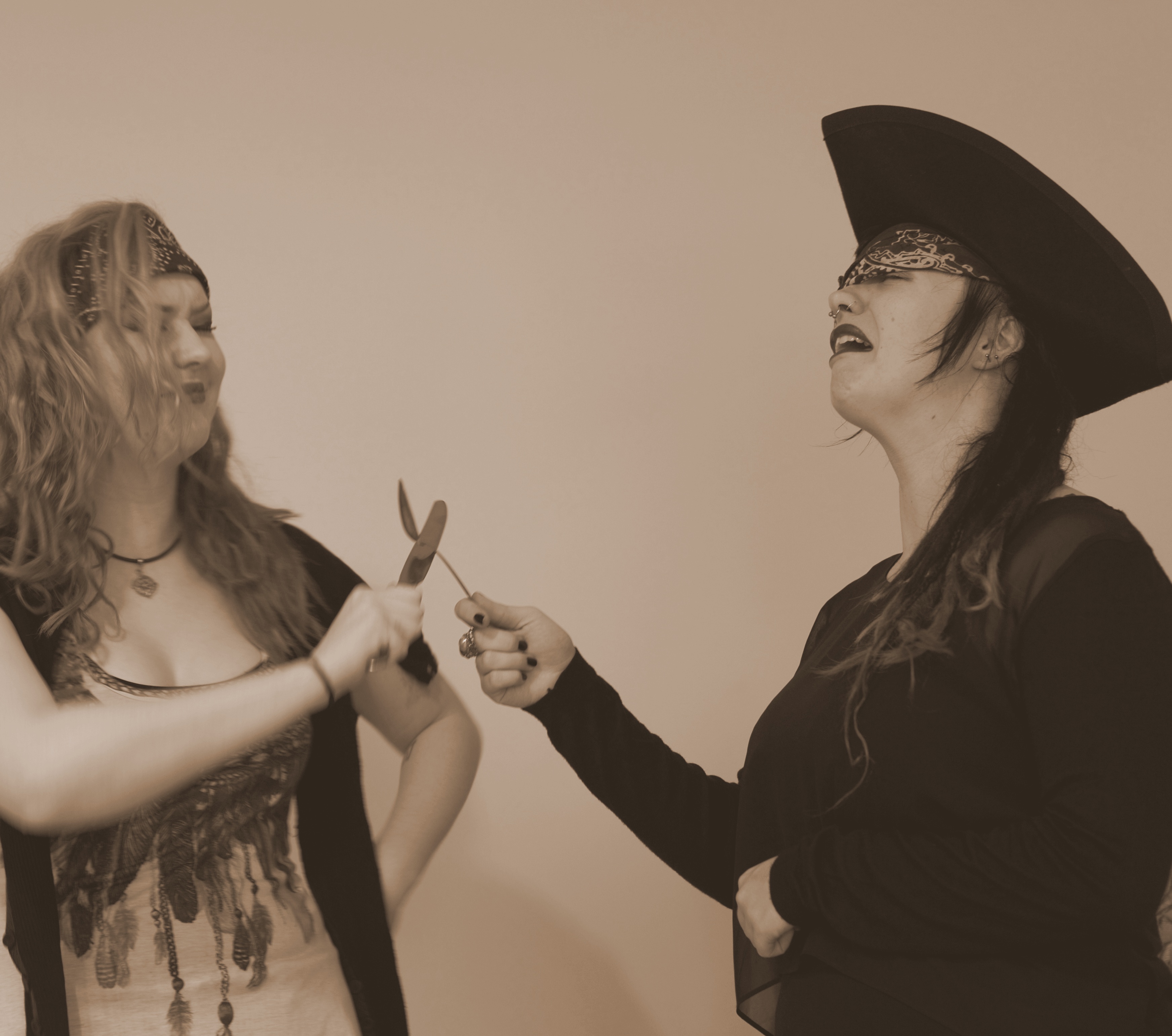
Fortunately for the Misery Farm, they do know how to ruin a good strategy. Despite many players doing well, winning treasures, and reaping large amounts of doubloons, there are some good back-stabbing abilities present in the game (no, Lizzy, put the knife down.), earning it a decent 6/10 knives in the back for our Brutus Scale. Bob and Briony have quickly taken on board (hey-oh!) that conjuring a good strategy is not for them this evening, and so have been killing off other characters, drinking more, and generally trying to mangle everyone else’s plans. Pirates shouldn’t have plans anyway. But apparently they should have spoons, because that’s the closest thing to a knife lying around.

As the game has progressed the playing field has levelled. The game is played over 3 weeks, which means 3 rounds of working your way through the 7 piles of loot on the board. It must be the Pirate Easter Holiday or something. By week three, Bob and Briony are more or less level with the other more sober players, still somehow consistently playing the least effective cards possible. As the player’s hand of cards change at the beginning of each week new characters and cards are dredged up, making the game more diverse with many possible future variations.

We wonder is she has starfish on her nipples like the Trident's of Smallworld. Doubloon for anyone who can confirm.
We wonder is she has starfish on her nipples like the Trident’s of Smallworld. Doubloon for anyone who can confirm.

In week 3 we encounter ‘Granny Wata’ who is supposed to be some sort of mythical sea sprite, but that matters not, for at the Misery Farm table she will be referred to as what she is portrayed as – ‘watery tart’, ‘Lady of Sea Things’, or indeed ‘that naked blue one’. Now, this card is a tricky one as it requires understanding and predicting your opponent’s strategies – the Granny Wata card only gives a player points when that is the only copy of the card in someone’s den (this is where your pirates go after they’ve been played in the ship, they take their boots off and have a nice sit down and a cuppa). In the final few turns of the game, every single player has managed to think the exact same thing ‘Holy shit, I need to play the naked blue card, cos mega doubloons. Quick, quick, quick!’

This, ladies and gentlemen, has led to an entire ship populated only by watery tarts.

*Slow clapping* well done team, I thought we were good at this board game malarkey. Despite this final mishap every single player has thoroughly enjoyed this game. It’s fast-paced, well-themed, diverse, and really forces you to try and put your dick in other player’s ears***. It turns out if you make the stabbing-in-the-back of your friends pirate themed, it sort out cancels out a lot of the resentment someone would normally feel compared to in other games. In addition this game is excellent to dress up and drink throughout. We recommend a good few play-throughs to anyone. Unless you actually are or have been a pirate, in which case it might just trigger some intense nostalgia and you may need to go to bed early.

The lesser known pirates 'see no evil', 'swish no evil', and 'vegetable peel no evil'.
The lesser known pirates ‘see no evil’, ‘swish no evil’, and ‘vegetable peel no evil’.

*We’d like to point your attention to Shut Up and Sit Down’s review of this game, if you would actually like to know how to play it. We do however take issue with their use of a reference pear in this game, as thematically-speaking some sort of citrus fruit would make more appropriate loot in the context of pirate diseases.**** You can also checkout Tabletop’s play-through, where you actually see it being played. Who knew?

** It turns out that there’s actually quite a lot of ‘era-themed’ racism and sexism in this game. Untrustworthy French people, Spanish spies, serving wenches with their boobs out. As long as you embrace it with a laugh and think ‘oh back in those times…’ we guess that makes it alright?

*** In the fun ‘don’t question this’ sense.

**** Lemons would be best in terms of vitamin C content, but lime would make a tasty daiquiri with all that rum.